
30 Minute Minimalist Dinners for Maximum Flavor
Why 20 Minute Meal Prep Is the Smartest Habit for Busy Weeknights
20 minute meal prep is one of the most effective ways to eat healthy on a packed schedule without spending hours in the kitchen.
Here’s a quick snapshot of what’s possible in just 20 minutes:
- 4 complete meal prep bowls with protein, grains, and vegetables
- A full week of mix-and-match components prepped in one session
- Freezer-friendly options like meatballs that keep for up to 2 months
- High-protein dinners hitting 30-40g of protein per serving
Top 20-minute meal prep ideas at a glance:
| Meal | Protein | Prep Time |
|---|---|---|
| Chicken, Rice & Broccoli Bowls | 26g | 20 min |
| Ginger-Soy Salmon Bites | ~35g | 20 min |
| Korean Beef Rice Bowls | ~30g | 20 min |
| 20-Minute Meatballs | 12g each | 20 min |
| Pesto Gnocchi with Shrimp | ~28g | 20 min |
Some weeks, cooking feels like the last thing you want to do. You get home tired, it’s already past 6 p.m., and the idea of a complicated dinner is just not happening.
The good news? You don’t need a lot of time to eat well. A single focused 20-minute session — done once or twice a week — can set you up with ready-to-grab meals for days.
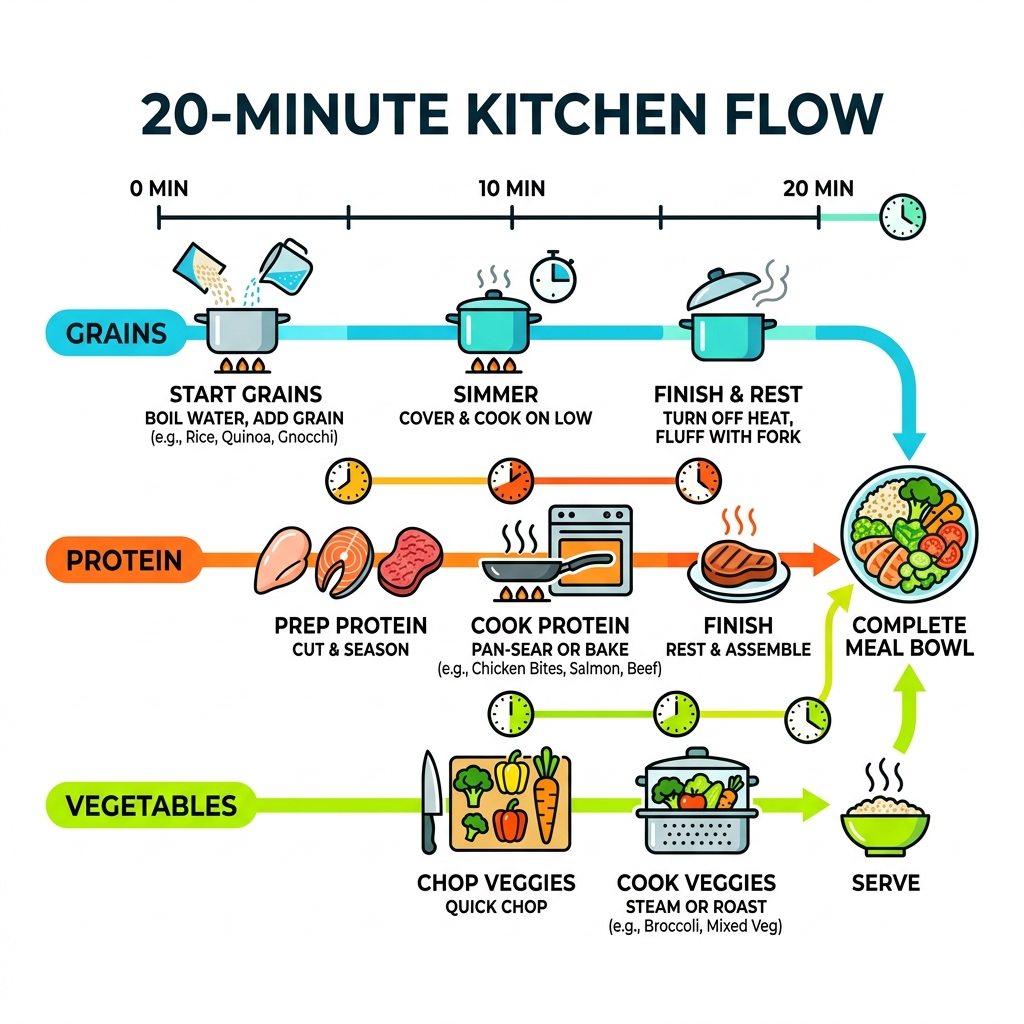
The secret is working smarter, not longer. Start your grains first. Cook your protein while those simmer. Chop your vegetables in between. By the time one thing finishes, everything else is nearly done too.
This article walks you through exactly how to make that happen — with simple recipes, smart shopping, and zero wasted effort.
Explore more about 20 minute meal prep:
The 20 Minute Meal Prep Strategy for Busy Weeknights
When we think about meal prepping, we often imagine spending an entire Sunday afternoon hunched over the stove. We’re here to tell you that’s simply not necessary. The core of a successful 20 minute meal prep strategy lies in efficiency and the “component method.” Instead of trying to cook five different gourmet recipes, we focus on prepping versatile building blocks that can be combined in minutes.

Scientific research consistently shows that eating home-cooked meals is linked to better nutritional intake, including lower consumption of ultra-processed foods and better weight management. By dedicating just 20 minutes, we reclaim control over our health. The key strategies we use include:
- Batching: Cooking a large amount of one base (like rice or chicken) that works for multiple meals.
- Multitasking: Utilizing every burner and appliance simultaneously. While the rice simmers, the chicken sears.
- Passive Cooking: Letting the oven or air fryer do the heavy lifting while we handle the “active” tasks like chopping.
- Component Prep: Storing proteins, grains, and veggies separately to prevent “meal fatigue” and keep textures fresh.
Beginner Steps for 20 Minute Meal Prep
If you’re new to this, the “20-minute flow” is your best friend. We recommend a specific order of operations to eliminate idle time:
- Start the Grains First: Whether it’s jasmine rice or quinoa, these usually take the longest (about 15-20 minutes). Get them on the stove or in the rice cooker immediately.
- Stack Your Tasks: While the water boils, season your protein.
- Parallel Processing: While the protein cooks in a skillet or oven, wash and chop your vegetables.
- Clean as You Go: Use the final 2-3 minutes of cooking time to rinse your cutting board and bowls.
Scaling Your 20 Minute Meal Prep for Families
Prepping for a family doesn’t have to double your time. To scale effectively, we focus on bulk proteins. Instead of one pound of chicken, cook three. Use two large sheet pans instead of one.
For families, we suggest using larger family-style containers for the fridge rather than individual portion bowls. This allows everyone to serve themselves based on their appetite. We also stick to “kid-friendly” flavor anchors like honey-garlic or mild taco seasoning, then add heat or complex sauces to the adult portions later.
Essential Tools and Minimalist Ingredients for Success
In a minimalist kitchen, we don’t need fancy gadgets. However, a few key tools can shave minutes off your prep time. An air fryer is a game-changer for 10-minute proteins like salmon bites or pork chops. An Instant Pot is perfect for “set-it-and-forget-it” grains or beans. High-quality sheet pans allow you to roast a protein and a vegetable at the same time, minimizing cleanup.
Our minimalist pantry usually consists of what we call “ready helpers” and “flavor anchors.”
The 5-Ingredient Minimalist Pantry List:
- Extra Virgin Olive Oil: For roasting and dressings.
- Garlic Powder & Smoked Paprika: Instant depth of flavor.
- Soy Sauce or Tamari: For savory, umami-rich glazes.
- Lemon or Lime Juice: To brighten up prepped meals before eating.
- Honey or Maple Syrup: To balance spicy or salty marinades.
High-Protein Foundations for Satiety
Protein is the anchor of any meal prep. It keeps us full and prevents the dreaded 4 p.m. energy crash. Scientific research on how protein boosts metabolism highlights that high-protein diets can increase the number of calories you burn and help maintain muscle mass.
For a fast 20 minute meal prep, we prioritize these proteins:
- Chicken Breast/Thighs: Cut into small pieces for 10-minute skillet cooking.
- Tofu: Pressed and cubed; it sears in just 5-8 minutes.
- Canned Beans: The ultimate “no-cook” protein—just rinse and go.
- Ground Turkey or Beef: Browns in under 10 minutes and is incredibly versatile.
Quick-Cook Grains and Vegetable Hacks
To keep your prep under the 20-minute mark, you have to be strategic with sides. Jasmine rice and quinoa are our favorites because they cook faster than brown rice.
If you’re really short on time, use 90-second microwavable grain pouches. For vegetables, we lean on pre-cut florets (broccoli or cauliflower) and frozen vegetable medleys. These are often frozen at peak freshness and require zero chopping, making them perfect for a “marathon” prep session.
7 Minimalist Recipes for Maximum Flavor
We believe you shouldn’t have to sacrifice taste for speed. Here is a comparison of our favorite quick-prep options:
| Recipe | Main Protein | Total Time | Protein Count (Approx) |
|---|---|---|---|
| Korean Beef Bowls | Ground Beef | 15 min | 30g |
| Lemon-Spinach Pasta | Chickpeas/Chicken | 20 min | 25g |
| Honey-Garlic Salmon | Salmon Fillet | 18 min | 34g |
| 20-Minute Meatballs | Ground Turkey | 20 min | 12g (per 2 balls) |
| Sheet-pan Sausage | Chicken Sausage | 20 min | 22g |
| Pesto Gnocchi | Shrimp | 15 min | 28g |
| Black Bean Tostadas | Canned Beans | 10 min | 15g |
Customizing Flavors with a Basic Template
The best part of 20 minute meal prep is that one base can become many different meals. We like to use a “flavor rotation” to keep things interesting:
- Southwest: Add black beans, corn, lime, and cumin to your chicken and rice.
- Mediterranean: Swap in chickpeas, cucumbers, feta, and a lemon-oregano dressing.
- Asian-Inspired: Use a ginger-soy glaze with sesame seeds and green onions.
- Herb Infusions: Toss your roasted veggies in fresh basil or parsley right before serving.
Adapting for Low-Carb and Gluten-Free Diets
Our templates are easily adaptable. If you’re going low-carb, swap the rice for cauliflower rice or zoodles (zucchini noodles). For gluten-free needs, ensure you use Tamari instead of traditional soy sauce and stick to naturally gluten-free grains like quinoa or rice. Lettuce wraps are another fantastic 20-minute option—just sear your protein and serve in sturdy Romaine leaves.
Storage, Reheating, and Food Safety Essentials
Proper storage is the difference between a delicious Wednesday lunch and a soggy disappointment. We always recommend using airtight glass containers. Glass doesn’t retain odors and is safer for reheating.
The 4-Day Rule: Most cooked proteins, grains, and vegetables stay fresh and safe for up to 4 days in the fridge. If you prep on Sunday, plan to finish those meals by Thursday. For Friday, we suggest freezing a portion or doing a “mini-prep” on Wednesday night.
How to Reheat Without Losing Texture
Reheating is an art. To keep your chicken from getting rubbery or your rice from drying out, try these hacks:
- The Splash Factor: Add 1-2 teaspoons of water or broth to your rice before microwaving. It creates steam that fluffs the grains.
- Separate Your Sauces: Store dressings and sauces in small separate jars. Add them after reheating.
- The Microwave Shield: Cover your bowl with a damp paper towel to trap moisture.
- Oven Refreshing: If you have an extra 5 minutes, reheating meatballs or salmon in a toaster oven at 350°F maintains a much better texture than the microwave.
Common Mistakes to Avoid
We’ve made all the mistakes so you don’t have to! Avoid these pitfalls to ensure your 20 minute meal prep is a success:
- Overcrowding the Pan: If you put too much chicken in one skillet, it will steam instead of sear, leaving it gray and bland. Use two pans if needed.
- Overcooking Greens: Spinach and kale wilt in seconds. Don’t cook them during prep; just tuck them raw into the container. The heat from the other ingredients will soften them perfectly when you reheat the meal.
- Skipping Seasoning: Prepped food loses a bit of its “punch” in the fridge. Season a little more boldly than you think you need to.
- Poor Container Choice: Avoid cheap plastic that doesn’t seal properly. If air gets in, your food gets dry.
Efficient Shopping and Weekly Planning
Efficiency starts at the grocery store. We recommend shopping with a “minimalist haul” mindset. Look for value packs of protein and seasonal produce which is often cheaper and more flavorful.
Sample Weekly 20-Minute Meal Plan
Here is how we structure a typical week using a “Power Hour” (which is really just two 20-minute sessions):
- Prep Session (Sunday – 20 Mins): Cook a large batch of jasmine rice, roast two sheet pans of chicken and broccoli, and mix a lemon-tahini dressing.
- Monday/Tuesday: Chicken and broccoli rice bowls with tahini.
- Wednesday: Use the leftover rice to make a quick 10-minute fried rice with frozen peas and an egg.
- Prep Session (Wednesday – 20 Mins): Pan-sear salmon bites and chop fresh cucumbers and bell peppers.
- Thursday/Friday: Salmon power bowls with fresh veggies and a splash of soy sauce.
Frequently Asked Questions about Quick Prep
How many meals can I realistically prep in 20 minutes?
In a focused 20-minute session, we can realistically prep 4 to 6 servings of a single “template” meal (like chicken, rice, and a veg). If you are multitasking well, you can prep two different types of meals (e.g., meatballs and a stir-fry) in about 25-30 minutes.
How do I keep my prepped vegetables from getting soggy?
The secret is moisture control. Let your cooked vegetables cool completely on a cooling rack before putting the lid on the container. This prevents steam from being trapped and turning the veggies mushy. Also, keep “wet” vegetables like tomatoes or cucumbers in a separate compartment or small container.
Can I freeze 20-minute prepped meals for later in the month?
Absolutely. Cooked proteins like meatballs, chicken sausage, and ground beef freeze beautifully for up to 2 months. Grains like rice and quinoa also freeze well. We recommend freezing in individual portions so you can grab a single “homemade TV dinner” whenever you’re in a pinch.
Conclusion
At Finance Savex, we believe that a minimalist lifestyle isn’t just about owning fewer things—it’s about creating sustainable habits that give you back your time and energy. 20 minute meal prep is a cornerstone of that philosophy. By simplifying your kitchen routine, you reduce stress, save money on takeout, and fuel your body with high-quality ingredients.
Ready to take the next step in your health journey? More info about healthy choices can be found on our blog, where we share more minimalist recipes and time-saving tips. Start small, stay consistent, and enjoy the freedom of a stress-free weeknight dinner!
