
4 Ingredient Veggie Stir Fry: Minimalist Magic
The Fastest Way to a Healthy Dinner Is Simpler Than You Think
A 4 ingredient veggie stir fry is one of the quickest, healthiest weeknight meals you can make — ready in as little as 10 minutes with almost no prep.
Here are the 4 core ingredients you need:
- Mixed vegetables (broccoli, bell peppers, carrots, snap peas — whatever you have)
- Soy sauce or tamari (low-sodium recommended)
- A sweetener (honey or maple syrup)
- An aromatic (garlic, ginger, or both)
That’s it. Those four elements give you a complete, flavorful meal.
The beauty of this approach? There’s no strict recipe to follow. Open your fridge, grab whatever vegetables are in there, and dinner is on the table before you’d even finish scrolling a delivery app.
Recipes from across the web confirm this works reliably — some versions clock in at just 10 minutes total, with as few as 152 calories per serving. Whether you’re cooking for one or feeding a family, the formula scales easily.
Below, we break down the best fast stir fry options side by side, so you can pick the version that fits your schedule and pantry.
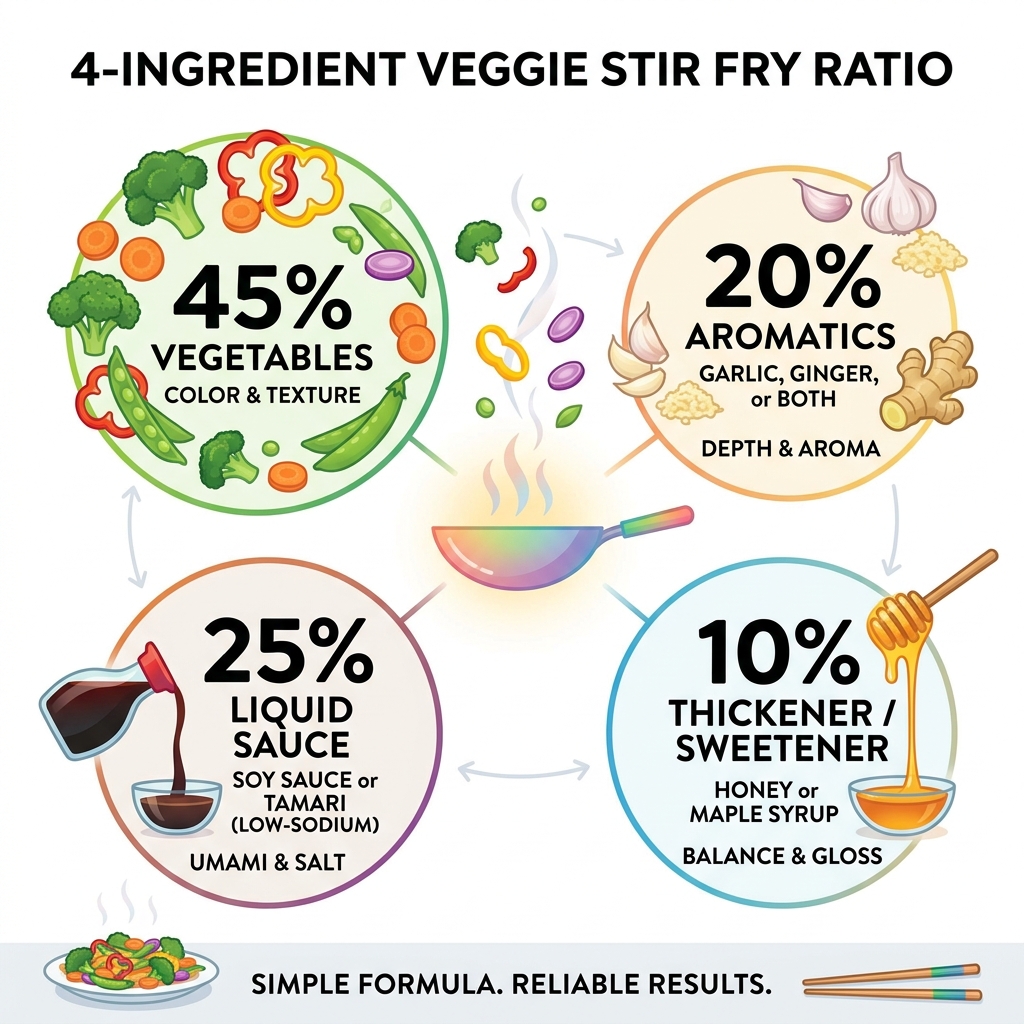
The Core Components of a 4 Ingredient Veggie Stir Fry
When we talk about “minimalist magic,” we are referring to the ability to create a restaurant-quality flavor profile using only a handful of pantry staples. The foundation of a 4 ingredient veggie stir fry relies on the synergy between salt, sweet, and aromatics.
- Soy Sauce: This provides the essential umami and saltiness. We always recommend using a low-sodium version to maintain control over the seasoning.
- Honey: A touch of sweetness balances the salt of the soy sauce and helps the sauce glaze the vegetables beautifully.
- Garlic: This is the soul of the dish. Whether minced, grated, or sliced, it provides a pungent depth that carries the entire meal. Scientific research on the health benefits of garlic suggests it may even support heart health, making your quick dinner a functional one too.
- Mixed Vegetables: This is your bulk and nutrition. You can use a pre-packaged stir fry mix to save time or forage through your crisper drawer for leftovers.
At Finance Savex, we believe that minimalist-stir-fry-for-quick-dinners are the ultimate solution for those who want to eat well without spending hours in the kitchen.
Crafting a Simple 4 Ingredient Veggie Stir Fry Sauce
While the basic soy-honey-garlic trio is unbeatable, you can create different flavor profiles by swapping just one or two items while keeping the “4-ingredient” constraint. One of our favorite variations involves creating a creamy, savory sauce that feels much more complex than it actually is.
To make a satay-style sauce, whisk together:
- Natural Peanut Butter: Acts as both a fat source and a thickener.
- Low-sodium Tamari: Keeps it gluten-free and adds deep saltiness.
- Maple Syrup: A vegan-friendly liquid sweetener that thins the peanut butter.
- Rice Vinegar: Adds the necessary acidity to cut through the richness.
The secret to a perfect sauce is emulsification. If your peanut butter is stiff, whisk it with the liquid ingredients until it becomes a smooth, pourable glaze. This sauce will naturally thicken as it hits the hot pan, clinging to every crevice of your vegetables.
Choosing the Best Vegetables for Your 4 Ingredient Veggie Stir Fry
Not all vegetables are created equal when it comes to the high-heat environment of a wok. To ensure your 4 ingredient veggie stir fry doesn’t turn into a soggy mess, we recommend choosing vegetables with different textures.
- The Crunch Factor: Broccoli florets and sliced carrots provide a satisfying bite.
- The Sweetness: Red and yellow bell peppers soften and release natural sugars when seared.
- The Freshness: Snap peas or snow peas add a bright green color and a crisp finish.
This recipe is a “fridge forage” hero. Have half a zucchini? Toss it in. A random onion? Slice it up. Using what you already have is the essence of budget-friendly-stir-fry-meals. Research suggests that stir-frying is excellent for nutrient retention because the cooking time is so brief, keeping those vitamins locked inside your veggies.
Step-by-Step: How to Master the 10-Minute Stir Fry
The goal here is speed without sacrificing quality. To achieve that “restaurant-style” finish, you need to understand a few basic principles of heat management.
- Mise en Place: This is a fancy French term for “get your stuff ready.” Because stir-frying happens in minutes, you cannot be chopping carrots while the garlic is burning. Have your sauce whisked and your veggies chopped before the heat goes on.
- The High Heat Rule: You want your pan (skillet or wok) to be very hot. When the oil shimmers, it’s ready. This creates wok hei—the “breath of the wok”—which gives the vegetables a seared, smoky flavor.
- Searing vs. Steaming: If you put too many vegetables in at once, the temperature drops, and the veggies release water, causing them to steam. If you’re doubling the recipe, cook in batches!
- The Finish: Pour the sauce in at the very end. It only needs 30 to 60 seconds to bubble and thicken into a glossy coating.
For more tips on speed, check out our guide on how-to-make-a-30-minute-stir-fry-without-breaking-a-sweat.
Avoiding Common Mistakes in Your 4 Ingredient Veggie Stir Fry
Even the simplest dishes have pitfalls. Here is how we avoid the most common stir-fry disasters:
- Don’t Overcrowd: As mentioned, too many veggies = mushy texture.
- Watch the Garlic: Garlic burns quickly. Add it with the hardier vegetables or just before the sauce to prevent it from turning bitter.
- Order of Operations: Always start with the “hard” vegetables (carrots, broccoli stems) and add “soft” vegetables (peppers, spinach, snap peas) later. This ensures everything reaches “crisp-tender” perfection at the same time.
- The “Watery” Trap: If using frozen vegetables, thaw and pat them dry first, or pre-microwave them for a minute to release excess moisture before they hit the pan.
Timing and Efficiency for Busy Weeknights
How fast is “fast”? Based on our research, a 4 ingredient veggie stir fry can be on the table in record time:
- Prep Time: 5 minutes (even less if using pre-cut veggies).
- Cook Time: 5-7 minutes.
- Total Time: 10-12 minutes.
If you are truly pressed for time, batch prepping your sauce on Sunday and keeping it in a jar in the fridge can shave even more minutes off your weeknight routine. This is why stir-fries are the ultimate fast-stir-fry-meals-for-one.
Customizing Your Meal: Proteins, Sides, and Dietary Needs
While the 4-ingredient base is a complete meal on its own, sometimes you need a bit more “heft” to keep you full. Adding a protein or a hearty base can transform this from a light side dish into a powerhouse dinner.
| Base/Protein | Prep Time | Benefit | Best For |
|---|---|---|---|
| Tofu | 5 mins | Plant-based protein, absorbs sauce | Vegans/Vegetarians |
| Chicken Breast | 8 mins | High protein, low fat | Weight loss |
| Shrimp | 3 mins | Fastest cooking protein | Ultra-busy nights |
| Quinoa | 10 mins | High fiber, soaks up sauce | Meal prepping |
| Brown Rice | 30 mins | Whole grain, nutty flavor | Hearty appetites |
For those looking to shed a few pounds while staying satisfied, we have a collection of healthy-chicken-stir-fry-recipes-for-weight-loss-and-happy-tummies that pair perfectly with these minimalist techniques.
Dietary Adaptations for Every Lifestyle
We want everyone to enjoy the magic of a 4 ingredient veggie stir fry, regardless of dietary restrictions.
- Vegan: Use maple syrup or agave instead of honey. Most soy sauces are naturally vegan, but always double-check the label.
- Gluten-Free: Swap soy sauce for Tamari or coconut aminos.
- Nut-Free: If using the peanut butter sauce variation, swap the peanut butter for sunflower seed butter or tahini for a similar creamy texture.
- Low-Carb/Keto: Use a sugar-free sweetener and serve the stir fry over cauliflower rice or enjoy it as a voluminous bowl of veggies.
Perfect Pairings and Side Dishes
What you serve under your stir fry is just as important as the stir fry itself.
- Minute Quinoa: This is our favorite hack. It cooks in about the same time as the stir fry and is excellent at absorbing every drop of sauce.
- Cauliflower Rice: Perfect for keeping things light and increasing your veggie intake even further.
- Rice Noodles: For a “takeout at home” feel, toss cooked rice noodles directly into the pan with the sauce.
- The Finishing Touches: Never underestimate the power of a garnish. A sprinkle of sesame seeds or a squeeze of fresh lime juice can elevate a 4-ingredient meal to something that looks like it cost $20 at a bistro.
Storage, Reheating, and Meal Prep Tips
One of the best things about a 4 ingredient veggie stir fry is that it actually holds up quite well for lunch the next day. In fact, some say the flavors deepen after sitting for a few hours.
- Storage: Place leftovers in an airtight glass container. It will stay fresh in the refrigerator for up to 4-5 days.
- Reheating: To maintain the “crunch,” we recommend reheating in a skillet over medium heat for 2-3 minutes. If you must use a microwave, add a teaspoon of water to keep the veggies from drying out.
- Freezing: While you shouldn’t freeze the cooked veggies (they get mushy), you can freeze batches of the sauce in ice cube trays. Pop a “sauce cube” into the pan with fresh veggies for a 5-minute meal.
Frequently Asked Questions about 4 Ingredient Stir Fries
How do I make my stir fry sauce thicker without cornstarch?
If you want a thick, glossy sauce but don’t want to use cornstarch, try using a nut butter (like the peanut butter mentioned earlier) or simply let the sauce reduce. As the honey or maple syrup heats up and the water evaporates, the sauce will naturally thicken into a glaze. Another option is using a bit of arrowroot powder or even a whisked egg at the very end for a “silky” texture.
Can I use frozen vegetables for a 4 ingredient veggie stir fry?
Absolutely! Frozen vegetables are often frozen at peak ripeness, meaning they are just as nutritious as fresh. The trick is to avoid the “steaming” effect. Either thaw them and pat them dry, or cook them on very high heat in small batches so the moisture evaporates quickly.
What is the best oil to use for high-heat stir-frying?
You need an oil with a high smoke point. Avocado oil, canola oil, or grapeseed oil are excellent choices. Avoid extra virgin olive oil or unrefined coconut oil for the actual frying, as they can burn and create a bitter taste at high temperatures. You can always drizzle a little toasted sesame oil at the very end for flavor!
Conclusion
At Finance Savex, we are dedicated to proving that healthy eating doesn’t have to be expensive, complicated, or time-consuming. The 4 ingredient veggie stir fry is the embodiment of our “minimalist magic” philosophy—using fewer items to create better results. By mastering this simple 10-minute technique, you reclaim your evenings and fuel your body with vibrant, nutrient-dense food.
Whether you’re clearing out the fridge or looking for a reliable weeknight staple, this stir fry is your secret weapon. Ready to simplify your kitchen even further? Click here for more quick and healthy minimalist recipes.
