
7 Days of Deliciousness: 1 Week Meal Prep for Weight Loss
Why 1 Week Meal Prep for Weight Loss Actually Works
1 week meal prep for weight loss is one of the most effective ways busy people can eat well, control portions, and lose weight without spending hours in the kitchen every day.
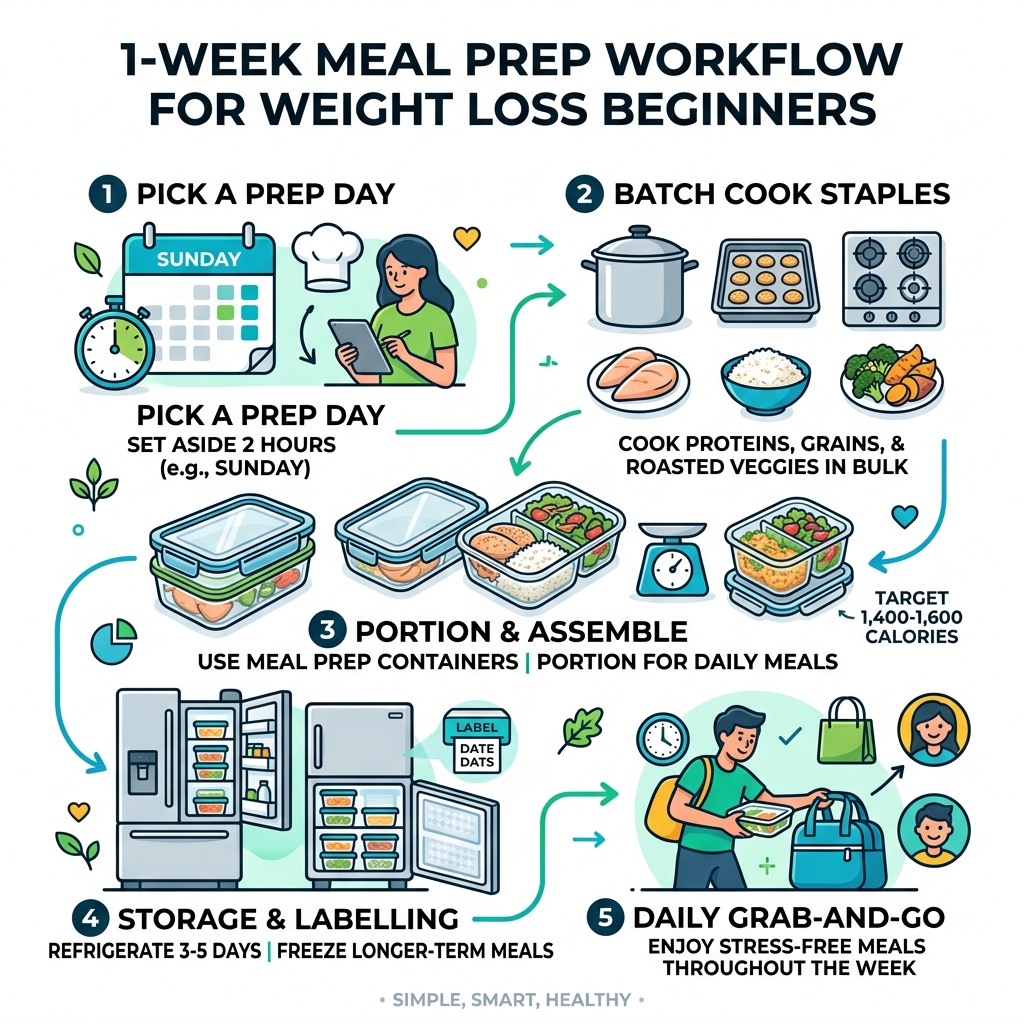
Here’s a quick overview of how it works:
- Pick a prep day (Sunday works well) and set aside 2 hours
- Batch cook your staples – proteins, grains, and roasted veggies
- Portion meals into containers for the week ahead
- Target 1,400-1,600 calories per day with high protein and fiber
- Refrigerate meals for 3-5 days and freeze anything beyond that
That’s the core of it. Everything else is just details.
Most people don’t fail at weight loss because of willpower. They fail because at 7 PM after a long day, the path of least resistance is takeout. Meal prep removes that decision entirely.
Research published in the International Journal of Behavioral Nutrition and Physical Activity found that people who plan their meals have higher diet quality and lower body weight – largely because fewer decisions means fewer opportunities to choose poorly.
The math is simple too. Home-prepped meals typically cost $3-6 per serving versus $10-20 for restaurant food. That’s real money back in your pocket every single week.
You don’t need fancy recipes or expensive ingredients. You just need a plan, a few hours, and the right containers.
The Core Principles of 1 Week Meal Prep for Weight Loss
When we talk about 1 week meal prep for weight loss, we aren’t just talking about cooking a lot of food at once. We are talking about a strategic approach to nutrition that ensures your body gets what it needs to shed fat while maintaining muscle.
According to scientific research on the link between meal planning and lower obesity rates, the simple act of planning ahead is a massive predictor of success. But what exactly should you be planning? We focus on three main pillars: the calorie deficit, high protein intake, and fiber.
The Calorie Deficit and TDEE
To lose weight, you must consume fewer calories than you burn. This is known as your Total Daily Energy Expenditure (TDEE). For most moderately active women, a target of 1,400 to 1,600 calories per day creates a sustainable 300-500 calorie deficit. For men, this often sits between 1,700 and 2,000. We recommend starting with a balanced-meal-prep-guide-for-singles/ to understand how these calories look on a plate.
The Magic Macro Split
While calories are king for weight loss, “macros” (macronutrients) are the queen for body composition. If you eat only 1,500 calories of donuts, you’ll lose weight, but you’ll feel terrible and lose muscle. Our 1-week plan targets a split of:
- 30% Protein: Vital for muscle preservation and keeping you full (satiety).
- 40% Carbs: Your brain and muscles’ preferred fuel source. We focus on complex carbs like quinoa, oats, and sweet potatoes.
- 30% Fats: Necessary for hormone health and absorbing vitamins.
The Power of Fiber and Satiety
One of the biggest mistakes we see in weight loss is ignoring fiber. High-fiber foods like beans, lentils, and cruciferous vegetables add volume to your meals without adding many calories. This “stretches” the stomach and signals to your brain that you are full. Aiming for 30g of fiber daily is a game-changer. For more on the basics, check out our guide on how-to-meal-prep-for-healthy-eating/.
Budget-Friendly Shopping and Prep Strategy
Many people assume that eating healthy is expensive. We are here to debunk that. In fact, a well-planned 1 week meal prep for weight loss can cost as little as $60 per week—that’s under $9 a day for all your meals and snacks!
Bulk Buying and Seasonal Staples
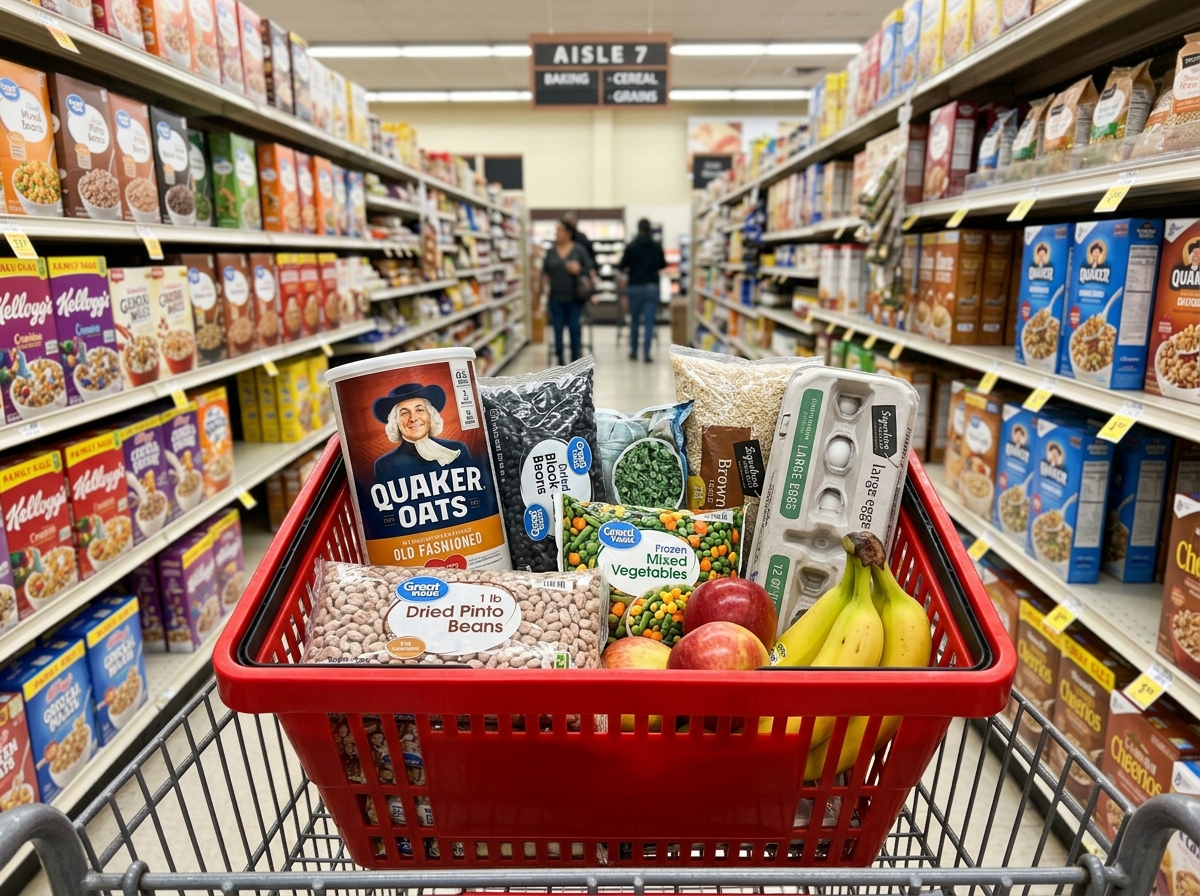
The secret to a low-budget plan is focusing on “pantry heroes.” Items like dried lentils, brown rice, and large tubs of oats cost pennies per serving. When we shop, we look for seasonal produce or, even better, the frozen aisle. Frozen vegetables are picked at peak ripeness and frozen immediately, often making them more nutrient-dense than “fresh” produce that has sat on a truck for a week.
We have a fantastic resource on minimalist-meals-for-tight-budgets-2/ that dives deeper into these savings.
Fresh vs. Frozen: The Comparison
| Food Item | Fresh Shelf Life | Frozen Shelf Life | Cost Benefit |
|---|---|---|---|
| Spinach | 5-7 Days | 8-12 Months | Frozen is 40% cheaper |
| Berries | 3-5 Days | 10-12 Months | Frozen avoids waste |
| Broccoli | 7-10 Days | 12 Months | Frozen is pre-chopped |
| Chicken | 2-3 Days | 6-9 Months | Bulk frozen saves $2/lb |
By utilizing frozen ingredients, you significantly reduce food waste, which is the biggest “hidden” cost in most grocery budgets. If you’re cooking for one, check out our frugal-meal-prep-ideas-for-singles-2/ for more tailored advice.
The $60 Shopping List Strategy
- Proteins: Large pack of chicken thighs, 1 dozen eggs, 2 cans of tuna, 1 block of tofu or bag of lentils.
- Grains: Large bag of brown rice or quinoa, old-fashioned oats.
- Produce: Bag of apples, bananas, 2 large bags of frozen mixed veggies, 1 bag of onions, 1 bag of sweet potatoes.
- Healthy Fats: One jar of peanut butter or a small bottle of olive oil.
For more tips on keeping costs down while eating like royalty, see our guide on cheap-healthy-meals-for-busy-adults/.
Your Detailed 7-Day Meal Prep for Weight Loss Plan
Ready to get cooking? This plan is designed to be prepped in about two hours on a Sunday. It provides roughly 1,500 calories a day, but you can easily scale the portions up or down based on your specific needs.
The Sunday Prep Workflow
To make this work, we use the “component” method. Instead of making seven different recipes, we cook large batches of base ingredients that can be mixed and matched.
- Grains: Cook 4 cups of brown rice or quinoa.
- Proteins: Roast a sheet pan of chicken thighs and bake a batch of turkey meatballs.
- Vegetables: Roast two sheet pans of mixed veggies (broccoli, peppers, onions) with olive oil and salt.
- Breakfast: Assemble your overnight oats or egg muffins.
We recommend reading how-to-batch-cook-for-one/ to master the timing of these steps.
The 7-Day Structure
- Monday-Wednesday: Fresh meals from the fridge.
- Thursday: A “refresh” day where you might toss together a quick healthy-chicken-stir-fry-recipes-for-weight-loss-and-happy-tummies/.
- Friday-Sunday: Use your frozen portions or quick easy-low-carb-meals-for-singles/.
For a deeper dive into scheduling, check out easy-meal-planning-for-busy-adults/.
High-Protein Breakfasts and Snacks for 1 Week Meal Prep for Weight Loss
Breakfast sets the metabolic tone for your day. If you start with sugar, you’ll crash by 10 AM. If you start with protein, you’ll stay full until lunch.
Our Favorite Breakfasts:
- Apple-Cinnamon Overnight Oats: Mix 1/2 cup oats, 1/2 cup milk (or water), a dash of cinnamon, and half a chopped apple. Store in mason jars.
- Vegetable Egg Muffins: Whisk 6 eggs with spinach and peppers. Pour into a muffin tin and bake at 350°F for 20 minutes. These are perfect for grab-and-go mornings.
- Greek Yogurt Parfait: 3/4 cup plain Greek yogurt topped with a handful of frozen berries.
Smart Weight Loss Snacks: Snacking isn’t the enemy; mindless snacking is. Keep these pre-portioned:
- Hard-Boiled Eggs: Two eggs provide 12g of protein for about 140 calories.
- Apple Slices with Almond Butter: The fiber in the apple and the healthy fats in the butter are a satiety powerhouse.
- Greek Yogurt Cucumber Cups: A refreshing, high-protein savory snack.
If you find yourself hungry in the evenings, try one of these quick-high-protein-dinners-for-one/ as a late-day meal instead of heavy snacking.
Satisfying Lunches and Dinners for 1 Week Meal Prep for Weight Loss
This is where the bulk of your 1 week meal prep for weight loss happens. The goal is to avoid “soggy salad syndrome” and keep things flavorful.
Lunch: The Mason Jar Salad Method To keep salads fresh for 5 days, layer them in this order:
- Dressing: At the very bottom.
- Hard Veggies: Chickpeas, cucumbers, or carrots (they won’t soak up the dressing).
- Protein: Quinoa, chicken, or tofu.
- Soft Veggies: Tomatoes or corn.
- Greens: Spinach or kale at the very top, far away from the dressing.
When you’re ready to eat, just shake it into a bowl! For more lunch inspiration, see minimalist-meal-prep-for-work-lunches/.
Dinner: Sheet Pan and Bowl Concepts
- Mediterranean Quinoa Bowls: Use your pre-cooked quinoa, add roasted veggies, turkey meatballs, and a dollop of hummus.
- Sheet Pan Salmon: Fresh or frozen salmon fillets roasted alongside asparagus. This is a classic 5-ingredient-healthy-dinner-recipes-for-singles/.
- Turkey Meatball Pasta: Use whole-wheat rotini or zucchini noodles with your prepped meatballs and a low-sugar marinara sauce.
Using these simple-meal-prep-recipes-for-healthy-eating/ ensures you never feel deprived while staying on track with your goals.
Storage, Safety, and Customization Tips
You’ve done the work; now you need to make sure the food stays delicious and safe.
The 3-5 Day Rule
Most cooked proteins, grains, and vegetables stay fresh in the refrigerator for 3 to 5 days. If you are prepping for a full 7 days, we recommend keeping 4 days’ worth in the fridge and putting the remaining 3 days’ worth in the freezer immediately.
Reheating for Freshness
Nobody likes rubbery chicken. When reheating, add a teaspoon of water to the container and cover it loosely. This creates steam that keeps the food moist. According to scientific research on safe internal temperatures for reheating leftovers, you should ensure your food reaches an internal temperature of 165°F (74°C) to eliminate any bacteria.
Container Choice Matters
We are huge fans of glass airtight containers. Unlike plastic, glass doesn’t leach chemicals when heated, doesn’t absorb food odors, and lasts a lifetime. For more quick hacks, check out our quick-meal-prep-tips-for-singles/.
Customizing for Dietary Needs
Our plan is a template, not a cage.
- Vegan: Swap chicken/eggs for chickpeas, lentils, or tempeh.
- Low-Carb: Swap rice and quinoa for cauliflower rice or extra greens. See easy-low-carb-meals-for-singles-2/ for specific swaps.
- High-Activity: If you are training for a marathon or hitting the gym hard, add an extra 1/2 cup of grains to your lunches.
Frequently Asked Questions about 1 Week Meal Prep for Weight Loss
How many calories should I target for weight loss?
For most people, a range of 1,400 to 1,600 calories is a safe and effective starting point. However, it’s always best to calculate your specific TDEE and aim for a 300-500 calorie deficit. If you feel dizzy or excessively hungry, increase your protein and vegetable intake first.
How do I prevent my prepped meals from getting soggy?
The secret is separation. Keep dressings in small separate containers or at the bottom of a mason jar. Don’t add “wet” ingredients like tomatoes or sliced cucumbers directly onto greens until the day you eat them if possible. Also, let your cooked food cool completely before putting the lid on the container to prevent condensation.
Can I meal prep if I have a very small budget?
Absolutely. In fact, meal prepping is the best way to save money. By buying in bulk and using frozen staples, you avoid the “convenience tax” of pre-packaged foods. Focus on eggs, oats, beans, and frozen veggies—they are the most nutrient-dense bang for your buck.
Conclusion
At Finance Savex, we believe that healthy eating shouldn’t be a part-time job. By mastering 1 week meal prep for weight loss, you are reclaiming your time and your health. Consistency is the only “secret” to weight loss, and meal prep is the tool that makes consistency possible.
Start small. Maybe this week you only prep your lunches. Once you see how much time and stress that saves you, you can move on to full-week prep. If you need a refresher on the basics, our guide on how-to-batch-cook-for-one-2/ is always here to help.
Ready to take the next step? Start your journey with our healthy choices guide and discover how simple, minimalist cooking can transform your life. Happy prepping!
