
How to Master the Art of Healthy Stir Fry for Weight Loss
Why a Healthy Stir Fry Is the Smartest Weeknight Meal You Can Make
A healthy stir fry is one of the fastest, most nutritious meals you can cook — ready in as little as 15 to 30 minutes, packed with vegetables and lean protein, and easy to customize for almost any diet.
Here’s what makes a stir fry healthy at a glance:
- Lean protein (chicken, shrimp, tofu, or beef) keeps you full and supports muscle
- High-fiber vegetables (broccoli, bell peppers, snap peas, carrots) add volume with few calories
- Low-sodium homemade sauce made with soy sauce, garlic, ginger, and a cornstarch thickener
- Healthy cooking oil with a high smoke point, like avocado or coconut oil
- Whole grain or low-carb base such as brown rice, quinoa, or cauliflower rice
A single serving can deliver 28–35g of protein and under 350 calories — making it one of the most weight-loss-friendly meals in any home cook’s rotation.
Stir frying is rooted in traditional Chinese cooking: high heat, constant movement, and fast execution. That’s exactly why it works so well for busy people. You’re not slow-cooking anything. You’re in and out of the kitchen in half an hour with a complete, balanced meal.
The challenge most people run into? Soggy vegetables, dry chicken, or a sauce that tastes flat. This guide solves all of that.
The Anatomy of a Nutritious and Healthy Stir Fry
To create a healthy stir fry that actually helps with weight loss, we need to focus on nutrient density. This means maximizing the vitamins and minerals while keeping the caloric load manageable. The beauty of this dish lies in its balance: you get a hit of protein, a mountain of fiber, and just enough healthy fats to keep you satisfied.
When we build our stir fries, we prioritize lean proteins and a rainbow of vegetables. However, the “hidden” calories and health-sappers usually lurk in the sauce and the base. By choosing a low-sodium option for your soy sauce or switching to coconut aminos, you can slash the salt content by up to 70%. This prevents the water retention and bloating often associated with restaurant-style takeout.
The base of your bowl also matters. While white rice is traditional, it can be a calorie trap. For those of us focused on weight loss, swapping grains for high-volume, low-calorie alternatives is a game-changer.
| Base Type | Calories (per cup) | Net Carbs | Best For |
|---|---|---|---|
| White Rice | 205 | 45g | Traditional taste |
| Brown Rice | 216 | 44g | Fiber and satiety |
| Cauliflower Rice | 25 | 2g | Maximum weight loss |
| shirataki noodles | 20 | 0g | Keto/Low-carb |
| quinoa | 222 | 34g | High protein/Vegan |
Best Vegetables for Volume and Crunch
Vegetables are the stars of a healthy stir fry. They provide the “crunch” that makes the meal satisfying and the volume that keeps us full. We recommend aiming for about 8 cups of raw vegetables per batch to serve 4-6 people.
- Broccoli: A nutritional powerhouse that acts like a sponge for sauce.
- Bell Peppers: Use red, yellow, and green for a boost of Vitamin C (one serving can provide nearly 100% of your daily needs!).
- Snap Peas: These add a lovely sweetness and stay crisp even under high heat.
- Carrots: Slice them into thin matchsticks so they cook quickly.
- Mushrooms: These provide an earthy “umami” flavor that mimics meat.
- Asian greens and vegetables: Don’t be afraid to try bok choy, Napa cabbage, or water chestnuts for authentic texture.
Lean Proteins for Satiety
Protein is essential for weight loss because it has a high thermic effect and keeps hunger at bay. For a quick weeknight meal, we love using chicken breast or shrimp because they cook in under 10 minutes. If you are flying solo, check out these fast-stir-fry-meals-for-one/ to keep portions in check.
Tofu is another excellent choice for a plant-based healthy stir fry, while lean beef (like top round or flank steak) works well if you slice it thinly against the grain.
Essential Techniques for the Perfect Healthy Stir Fry
Stir frying is more than just “tossing things in a pan.” It is a specific Chinese cooking technique that relies on high heat and speed. The goal is to sear the outside of the food while keeping the inside tender.
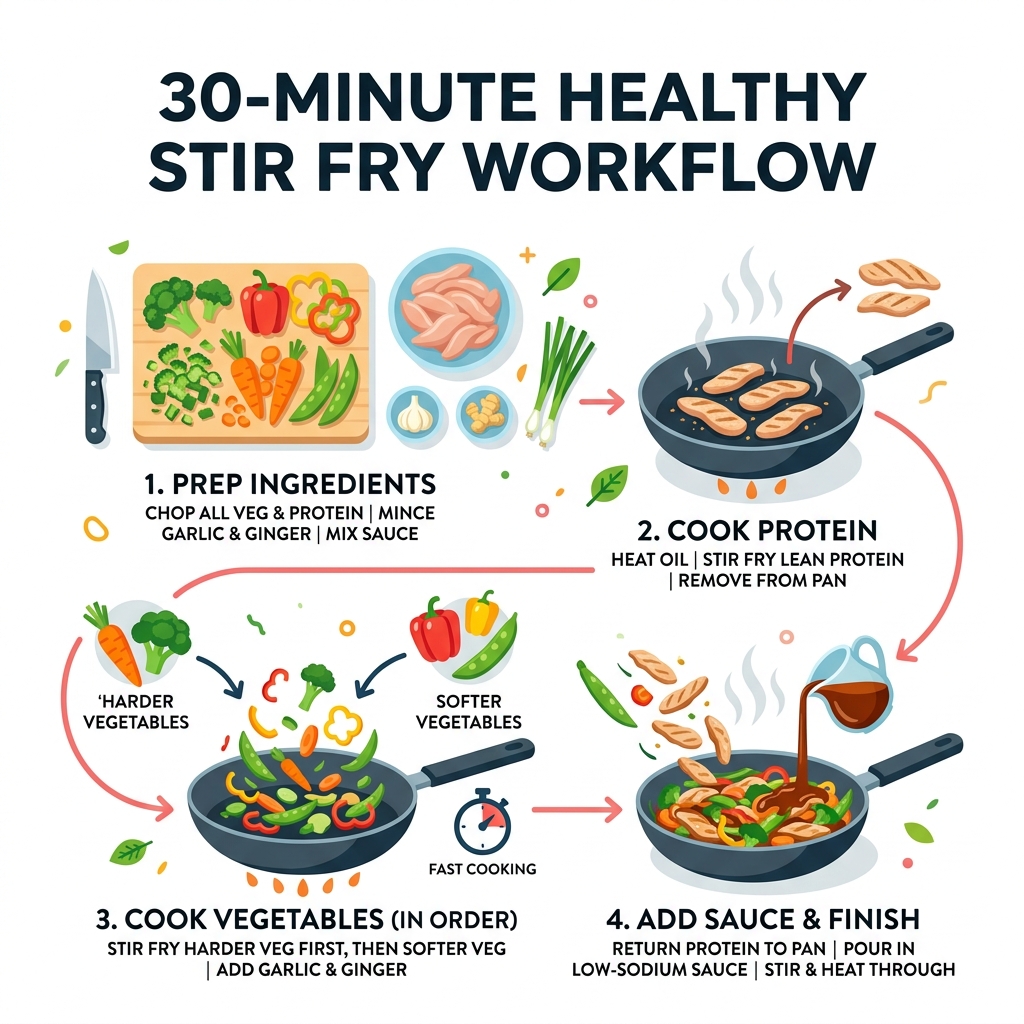
The most important rule? Prep everything before you turn on the stove. Because the cooking process happens so fast, you won’t have time to chop a carrot while the garlic is browning.

Essential Tools for a Healthy Stir Fry
You don’t need a professional kitchen, but a few key tools make the process much easier:
- The Pan: A large skillet works perfectly for most home stoves. If you want to get serious, a cast iron wok holds heat beautifully and provides those signature seared edges.
- The Oil: Since we are cooking at high temperatures, you must use an oil with a high smoke point. avocado oil is our favorite choice because it is heart-healthy and won’t burn or become bitter. Avoid extra-virgin olive oil or toasted sesame oil for the actual frying stage; save the sesame oil for a flavorful garnish at the end.
The Proper Cooking Order for Crisp-Tender Results
To avoid the dreaded “soggy stir fry,” you must add ingredients in stages. If you dump everything in at once, the moisture from the veggies will steam the meat, leaving it gray and tough.
- Aromatics First: Start with onions, ginger, and garlic. Sauté them just until fragrant (about 30-60 seconds).
- The Protein: Cook your meat or tofu next, then remove it from the pan once it’s browned. This prevents it from overcooking while the veggies soften.
- Hard Vegetables: Add carrots and broccoli florets first, as they take the longest.
- Soft Vegetables: Bell peppers, mushrooms, and leafy greens go in last.
- Sauce Integration: Once the veggies are “crisp-tender,” add the protein back in and pour your sauce over the top.
For more tips on keeping things simple, see our guide on minimalist-stir-fry-for-quick-dinners/.
Crafting Flavorful Low-Sodium Stir Fry Sauces
Most bottled sauces are loaded with sugar, corn syrup, and excessive salt. Making your own at home takes five minutes and tastes infinitely fresher.
The secret to a “restaurant-style” sauce that clings to your food is a thickener. We recommend using cornstarch or arrowroot powder. Mix it with cold liquid before adding it to the hot pan to avoid clumps. For a bright, tangy finish, a splash of rice vinegar is essential, and a few drops of toasted sesame oil will provide that irresistible nutty aroma.
Quick Variations of Healthy Stir Fry Sauces
You can change the entire vibe of your healthy stir fry just by swapping a few sauce ingredients:
- Teriyaki: Soy sauce, ginger, garlic, and a touch of honey.
- Peanut Sauce: Whisk in a tablespoon of natural peanut butter with lime juice and soy sauce.
- Ginger-Soy: Heavy on the fresh grated ginger and garlic for an immunity boost.
- Sriracha-Lime: For those who like a spicy kick!
If you’re watching your wallet, these budget-friendly-stir-fry-meals/ show how to make these sauces using basic pantry staples.
Smart Substitutions for Dietary Needs
- Gluten-Free: Use tamari or coconut aminos instead of traditional soy sauce.
- Vegan: Swap honey for maple syrup or brown sugar.
- Low-Carb: Use shirataki noodles or zucchini noodles (zoodles) as your base.
Meal Prep and Storage for Busy Lifestyles
Stir fries are a meal prepper’s dream. You can chop all your vegetables on Sunday and keep them in an airtight container for up to 4 days.
When stored in the fridge, a cooked healthy stir fry stays fresh for about 3-4 days. While you can freeze stir fry for up to 3 months, be aware that some vegetables (like peppers) may lose their crunch after thawing.
How to Use Frozen Vegetables Effectively
Don’t have time to chop? Vegetable stir-fry mixes from the freezer aisle are a valid time-saving hack. To prevent them from getting mushy:
- Do not thaw them first; throw them straight into a very hot pan.
- Cook in small batches so the pan stays hot enough to evaporate the extra moisture immediately.
- Use a lid for the first 2 minutes to help steam the centers, then remove the lid to sear the outsides.
Reheating Tips to Maintain Texture
The microwave is convenient, but the stovetop is king for reheating. Toss your leftovers back into a hot skillet with a tiny splash of water or broth. This “refreshes” the sauce and prevents the vegetables from becoming limp and soggy.
Frequently Asked Questions about Healthy Stir Fry
How do I prevent chicken from drying out?
The biggest mistake is overcooking the meat. We recommend “velveting” your chicken—tossing the bite-sized pieces in a little cornstarch and soy sauce before cooking. This creates a protective barrier that locks in moisture. Always sear the chicken first, remove it when it is about 90% done, and only add it back at the very end to warm through with the sauce.
What are the most common stir fry mistakes?
- Low Heat: If the pan isn’t sizzling, you’re stewing, not frying.
- Overcrowding: If you put too much in the pan at once, the temperature drops, and the food steams. Cook in batches if necessary!
- Overcooking Veggies: Aim for “crisp-tender.” If they are floppy, you’ve gone too far.
How can I make my stir fry more filling for weight loss?
If you find yourself hungry an hour after eating, increase your vegetable volume! You can eat massive amounts of broccoli and cabbage for very few calories. Also, don’t fear healthy fats—adding a small handful of cashews or a sprinkle of sesame seeds provides the satiety signals your brain needs to feel “done.”
Conclusion
At Finance Savex, our minimalist cooking philosophy is all about removing the barriers to healthy eating. You don’t need a 20-ingredient list to make a spectacular meal. By mastering the healthy stir fry, you’re gaining a 30-minute superpower that fits perfectly into a busy, health-conscious lifestyle.
Ready to fill your kitchen with more easy, nutritious wins? Explore more budget-friendly healthy meals on our blog and start your journey toward effortless weight loss today!
