
Which Easy Almond Flour Muffins Actually Taste Good
Not All Almond Flour Muffins Are Worth Eating — Here Are the Ones That Are
Easy almond flour muffins are one of the best quick, healthy bakes you can make in under 30 minutes. But not every recipe delivers on taste and texture.
Here are the top things to know before you bake:
- Use blanched, finely ground almond flour — not almond meal. Coarse flour makes grainy, dense muffins.
- Liquid sweeteners (maple syrup, honey) produce moister muffins than granulated sugar.
- Most recipes take 10 minutes to prep and 14–25 minutes to bake.
- They are naturally gluten-free, grain-free, and lower-carb — no special swaps needed.
- Nutrition per muffin ranges from ~163–262 calories, 13–23g fat, 6–9g protein, and 3–5g net carbs depending on the recipe.
| Feature | Typical Almond Flour Muffin |
|---|---|
| Prep time | 5–15 minutes |
| Bake time | 14–25 minutes |
| Calories per muffin | 163–262 kcal |
| Net carbs | 1–5g |
| Protein | 6–9g |
| Gluten-free? | Yes |
| Freezer-friendly? | Yes, up to 6 months |
Almond flour muffins have become a go-to for busy people who want something genuinely filling without a lot of effort or ingredients. The problem is that a bad recipe — wrong flour type, wrong sweetener, wrong oven temp — can leave you with a sad, crumbly puck that tastes nothing like a real muffin.
This guide cuts through the noise. We tested and compared the most popular recipes to show you which ones actually taste good and why.

Almond Flour vs. Almond Meal: Choosing the Right Texture
If there is one mistake that ruins easy almond flour muffins more than any other, it is using the wrong bag of nuts. We have seen many beginners grab a bag of “almond meal” thinking it is the same thing. It isn’t, and your taste buds will know the difference immediately.
Almond flour is made from blanched almonds. This means the skins have been removed before the nuts are ground into a “super-fine” powder. The result is a light, cream-colored flour that mimics the texture of traditional wheat flour. This is how you get that soft, bakery-style crumb we all crave.
Almond meal, on the other hand, is usually made from whole almonds with the skins still on. It is ground more coarsely, resulting in a speckled, gritty texture. If you use almond meal in a muffin, it will likely turn out dense, dark, and grainy—more like a health bar than a fluffy treat.
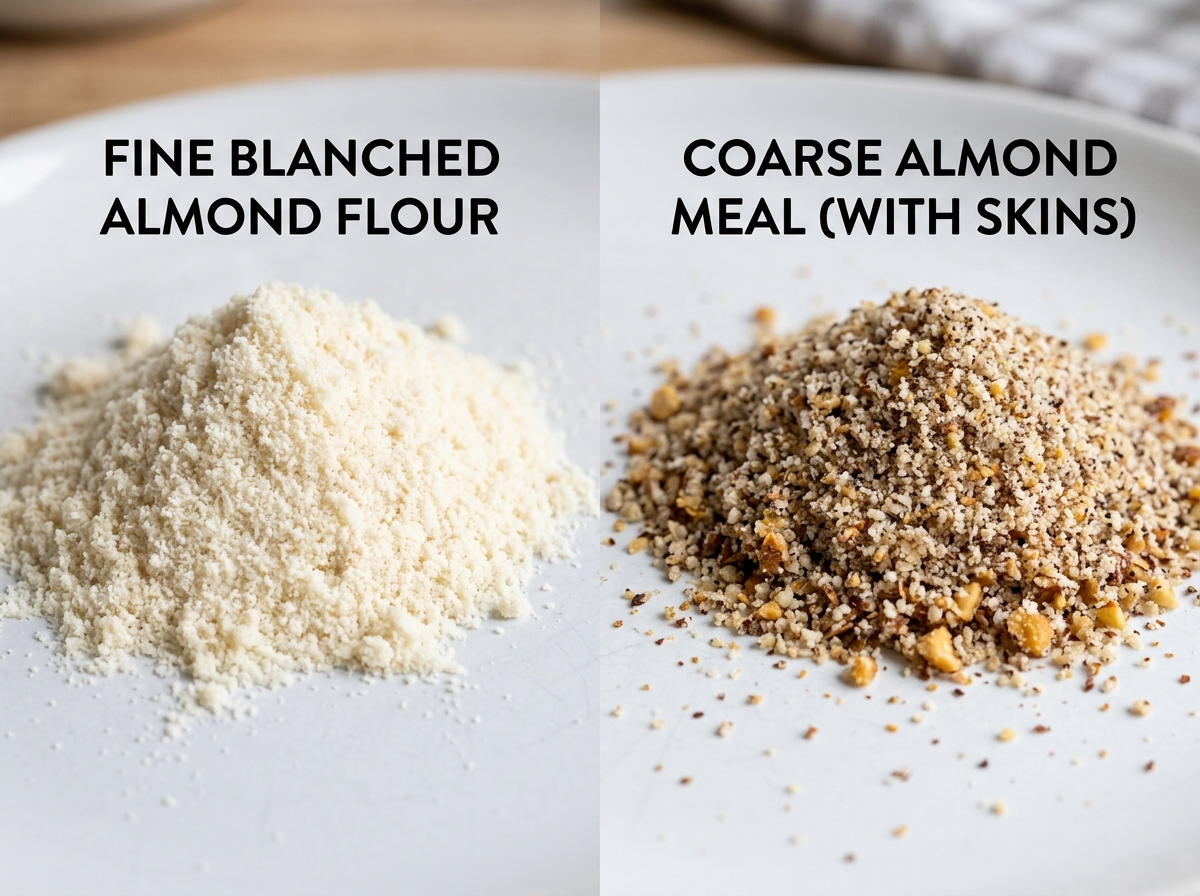
For the best results, look for brands that specify “super-fine” and “blanched” on the label. High-quality options are often recommended by experts for their consistent results. If your flour seems a bit clumpy, a quick sift can help, but generally, a good whisking is enough to ensure your muffins don’t have “flour pockets.”
The Secret to Perfect Easy Almond Flour Muffins
Baking with almond flour is a science, not a guessing game. Because almonds are high in fat and protein but contain no gluten, they absorb moisture differently than wheat. To get that perfect rise and a moist interior, you need to pay attention to your “wet” ingredients.
Sweetener Showdown: Liquid vs. Granulated
In our experience, liquid sweeteners are the secret weapon for easy almond flour muffins. While you can use granulated sugar or erythritol, liquid options like maple syrup or honey provide superior moisture.
| Sweetener Type | Effect on Muffin | Best For |
|---|---|---|
| Maple Syrup | High moisture, distinct flavor | Autumn flavors, blueberry |
| Honey | Very moist, milder taste | Toddler-friendly, plain base |
| Sugar-Free Syrup | Low carb, very liquid | Keto-specific recipes |
| Granulated Sugar | Can be drier, creates “crunch” | Muffin tops, crumble toppings |
Using a liquid sweetener helps the almond flour bind together, preventing the common “crumbly” disaster. If you are looking for a neutral base to let your mix-ins shine, a minimalist 5-ingredient approach is a fantastic starting point.
The Power of Room Temperature
We cannot stress this enough: use room temperature eggs! If you add cold eggs to melted coconut oil or butter, the fat will seize up and create clumps in your batter. This leads to an uneven bake. If you’re in a rush, place your eggs in a bowl of warm water for 10 minutes to take the chill off.
For more tips on keeping things simple in the kitchen, check out our guide on simple gluten-free recipes for singles.
Why Minimalist Ingredients Work for Easy Almond Flour Muffins
At Finance Savex, we are obsessed with minimalist cooking. The beauty of easy almond flour muffins is that they often require only 4 to 6 ingredients. By stripping away the fillers, you are left with a nutrient-dense snack packed with healthy fats and protein.
A basic recipe usually looks like this:
- Almond flour (the base)
- Eggs (the structure)
- Liquid sweetener (the moisture/flavor)
- Baking powder (the lift)
- A pinch of salt or vanilla
This simplicity makes them perfect for low-cost breakfast ideas for singles. You aren’t buying ten different types of flour just to make one batch of muffins. If you want a straightforward reference on the ingredient itself, the almond flour overview is a helpful starting point.
Essential Equipment for Success
You don’t need a professional kitchen to bake these, but a few specific tools will make your life much easier.
- Silicone Muffin Liners: Almond flour can be sticky. Even “non-stick” pans can struggle. Silicone liners or high-quality parchment paper liners ensure your muffins actually come out of the tin in one piece.
- A Sturdy Whisk: Since we recommend a one-bowl method to save on washing up, a good whisk helps incorporate the eggs and sweetener into the flour smoothly.
- Oven Thermometer: Almond flour is sensitive. It tends to brown very quickly. Many home ovens run hot, so a thermometer helps you ensure you are actually baking at 325°F or 350°F to prevent burnt bottoms.
- Wire Cooling Rack: If you leave almond flour muffins in the hot tin, they will continue to cook and can become soggy from the steam. Moving them to a rack is essential.
Top Flavor Variations and Dietary Adaptations
One of the reasons we love easy almond flour muffins is that the base recipe is a “blank canvas.” Once you master the basic batter, you can adapt it to fit almost any diet or craving.
Customizing Your Easy Almond Flour Muffins
Whether you want something sweet for dessert or a savory grab-and-go snack, here are the most popular ways to mix it up:
- Blueberry: Use frozen berries to enjoy them year-round. Expert tip: toss the berries in a teaspoon of almond flour before folding them in to prevent them from sinking to the bottom.
- Chocolate Chip: Use dark chocolate chips for a rich, Paleo-friendly treat.
- Lemon Poppy Seed: Add a tablespoon of lemon zest and a teaspoon of poppy seeds for a bright, keto-friendly version.
- Savory: Omit the sweetener and add cooked bacon bits, shredded cheddar, and chives.
- Pumpkin Spice: Add pumpkin purée and cinnamon for a cozy fall vibe. Just be careful not to add too much liquid!
For more inspiration on quick morning meals, see our 5-ingredient breakfast recipes for singles.
Dietary Swaps
- Vegan: While eggs provide the best structure, many readers have had success using “flax eggs” (1 tbsp flax meal + 3 tbsp water). The muffins will be denser and less fluffy.
- Dairy-Free: Most almond flour recipes already use coconut oil or almond milk, making them naturally dairy-free. You can also use dairy-free yogurt or sour cream to add extra tang and moisture.
- Keto: Stick to sugar-free sweeteners like monk fruit or allulose. Almond flour is already the gold standard for keto baking because of its low net carb count (often only 3-5g per muffin).
If you enjoy these, you might also like our easy breakfast bowls for busy mornings.
Pro Tips to Avoid Dense or Burnt Muffins
Baking with nut flours requires a slightly different touch than wheat. If your muffins are coming out like bricks or looking like charcoal, try these adjustments.
- Watch the Temperature: Many experts recommend baking almond flour treats at 325°F (163°C) rather than the standard 350°F. Because of the high fat content in almonds, they brown and burn much faster than wheat flour.
- Don’t Overmix: Even though there is no gluten to overwork, overmixing can still lead to a dense muffin by deflating the air bubbles created by the eggs. Mix until “just combined.”
- The Lemon Juice Trick: If your recipe uses baking soda, adding a teaspoon of lemon juice or apple cider vinegar helps activate it, giving the muffins a better rise. Don’t worry, you won’t taste the lemon!
- The Toothpick Test: Insert a toothpick into the center. If it comes out clean or with just a few dry crumbs, they are done. If it’s gummy, give them another 2-3 minutes.
- Cooling is Mandatory: This is the hardest part. Almond flour muffins are very fragile when hot. They need at least 10-15 minutes in the pan, then another 20 minutes on a wire rack to “set.” If you eat them right away, they might feel damp or crumbly.
For those truly hectic mornings, we also recommend checking out our 5-minute healthy breakfast bowls for one for an even faster option.
Frequently Asked Questions about Almond Flour Baking
Why are my almond flour muffins falling apart?
This usually happens for two reasons: not enough binder or not enough cooling time. Eggs are the primary binder in these recipes. If you tried to reduce the egg count or used a small egg, the muffin won’t hold its shape. Also, these muffins “firm up” as they cool. If you try to peel off the liner while they are steaming hot, half the muffin will stay stuck to the paper.
Can I substitute coconut flour for almond flour?
No. This is a common mistake that leads to very dry, inedible muffins. Coconut flour is highly absorbent—it acts like a sponge. If you try to swap it 1:1 for almond flour, your batter will turn into a dry paste. Generally, you only need about 1/4 cup of coconut flour for every 1 cup of almond flour, and you would need to significantly increase the liquid and eggs. It is better to find a recipe specifically designed for coconut flour.
How should I store and freeze these muffins?
Because of their high moisture and fat content, easy almond flour muffins can spoil faster than wheat muffins if left on the counter.
- Room Temp: 1-2 days in an airtight container.
- Fridge: Up to 1 week. This is our preferred method as it keeps them firm.
- Freezer: Up to 3-6 months. We recommend wrapping them individually in parchment paper and then placing them in a freezer-safe bag. To reheat, just pop one in the microwave for 20-30 seconds or let it thaw on the counter overnight.
Conclusion
At Finance Savex, we believe that eating healthy shouldn’t be expensive, complicated, or time-consuming. Easy almond flour muffins are the ultimate minimalist hack for busy people. They provide a high-protein, low-carb alternative to sugary cereal or processed granola bars, and they take less time to make than a round-trip to the local bakery.
By choosing super-fine blanched flour, using liquid sweeteners for moisture, and letting them cool properly, you can enjoy a muffin that actually tastes good—not just “good for being healthy,” but genuinely delicious.
Ready to take your kitchen game to the next level? Explore more healthy choices for your kitchen on our pillar page, where we share our favorite ultra-simple recipes designed for your busy lifestyle. Happy baking!
