
How to Make a Chicken and Vegetable Sheet Pan Dinner That Doesn’t Suck
Why a Chicken and Vegetable Sheet Pan Dinner Is Your Weeknight Superhero
A chicken and vegetable sheet pan dinner is one of the fastest, easiest ways to get a healthy, complete meal on the table — with almost no cleanup.
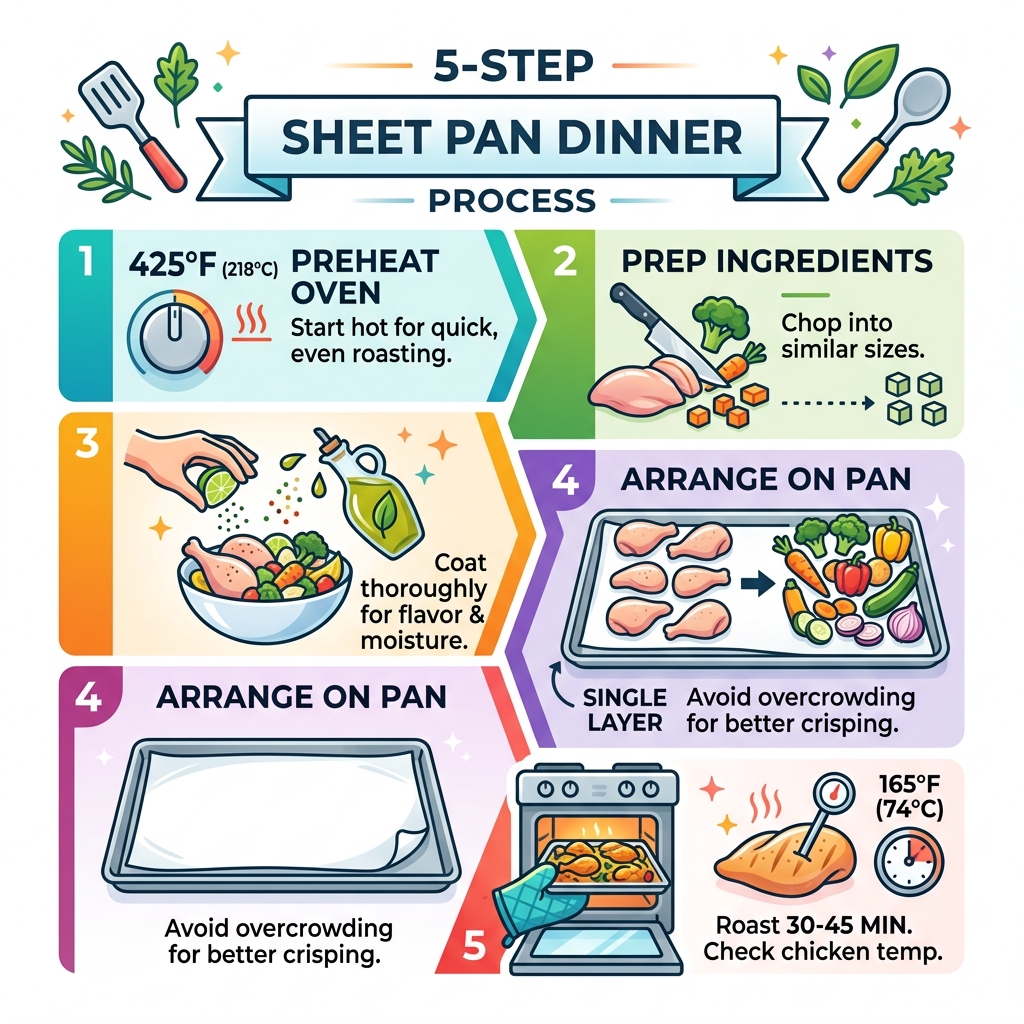
Here’s the quick version of how to make one:
- Preheat your oven to 425°F
- Chop your vegetables into similar-sized pieces
- Season chicken and vegetables with oil and spices
- Arrange everything in a single layer on a lined sheet pan
- Roast for 30-45 minutes until chicken reaches 165°F internally
That’s genuinely it.
After a long day, the last thing you want is a sink full of dishes and a complicated recipe. Sheet pan dinners solve both problems at once. Everything — your protein, your vegetables, your seasoning — goes on one pan and into one oven.
The problem is that most sheet pan chicken dinners end up disappointing. The chicken is dry. The vegetables are soggy. Nothing has any real flavor.
That doesn’t have to be you.
With a few smart techniques — the right temperature, staggered cooking times, and a solid spice blend — you can pull a genuinely delicious meal out of the oven in under an hour, with about 15 minutes of actual hands-on work.
One popular version of this dish delivers 39g of protein and around 394 calories per serving, making it a genuinely nutritious option — not just a convenient one.
The Anatomy of a Perfect Chicken and Vegetable Sheet Pan Dinner
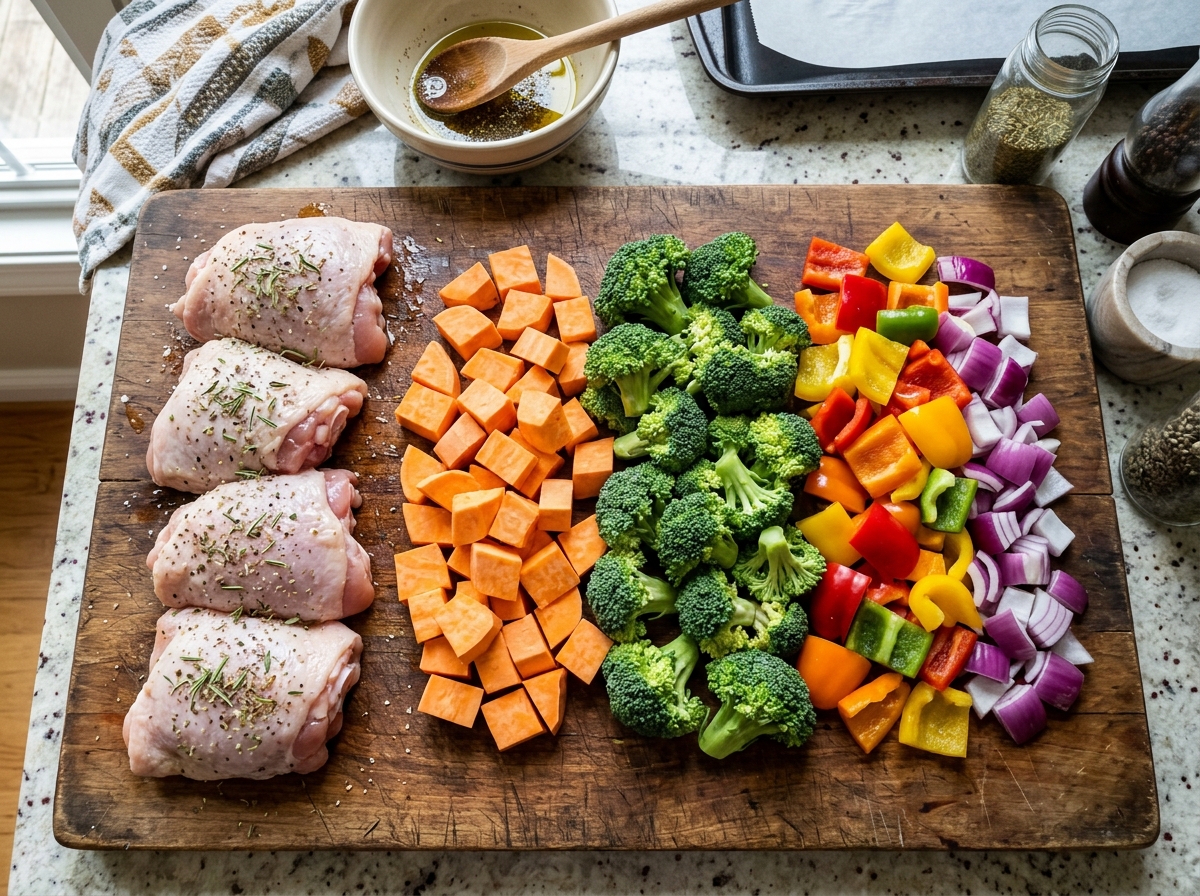
To make a chicken and vegetable sheet pan dinner that actually tastes like it came from a restaurant, we need to look at the components. It’s not just about throwing random items onto a tray; it’s about balancing textures and flavors.
When we build these meals, we aim for a “rainbow” of vegetables. Not only does this look beautiful on a Pinterest board, but it also ensures a diverse range of vitamins and minerals. Think of your sheet pan as a canvas where protein and fiber meet high-heat caramelization.
At Finance Savex, we love efficiency. This method fits perfectly into our philosophy of minimalist, healthy cooking. If you are looking for more ways to simplify your kitchen life, check out our guide on easy-sheet-pan-dinner-recipes.
Choosing the Right Chicken and Vegetable Sheet Pan Dinner Ingredients
The biggest debate in the sheet pan world is: Thighs or Breasts?
- Chicken Thighs (Bone-in, Skin-on): These are the gold standard for roasting. They are incredibly forgiving and rarely dry out. The fat from the skin renders down, essentially “basting” your vegetables in delicious chicken flavor.
- Chicken Breasts: These are leaner and higher in protein, but they require a watchful eye. To keep them juicy, we recommend cutting them into uniform 1-inch cubes or thin strips so they cook quickly alongside the veggies.
For the vegetables, variety is key. Harder root vegetables like sweet potatoes and red potatoes provide satisfying carbohydrates, while bell peppers and red onions add sweetness and moisture. If you want a Mediterranean vibe, adding wedges of red onion and whole garlic cloves is a game-changer. For a different flavor profile, you might want to try the-easiest-balsamic-chicken-sheet-pan-recipe-for-busy-nights.
Essential Seasonings and Dietary Adaptations
A chicken and vegetable sheet pan dinner is only as good as its spice cabinet. A base of avocado oil (which has a high smoke point) combined with smoked paprika, dried oregano, garlic powder, and lemon zest works for almost any vegetable combination.
One of the best things about this meal is how easily it adapts to different diets:
- Paleo & Whole30: Simply ensure your spice blend has no added sugar and skip the dairy. Use avocado oil instead of butter.
- Gluten-Free: This meal is naturally gluten-free as long as your spices are pure.
- Dairy-Free: Most recipes are dairy-free by default, but you can add a salty kick at the end with olives instead of cheese.
- The “Flavor Pop”: If you aren’t strictly dairy-free, a sprinkle of feta cheese or freshly grated Parmesan in the last two minutes of cooking adds a professional touch.
Master the Prep: Chopping and Staggering for Even Cooking
The secret to a non-soggy dinner lies in the prep work. If you chop a potato into a giant hunk and a zucchini into a tiny slice, one will be raw while the other is mush.
We recommend using a large 15×21-inch three-quarter size baking tray. This gives the ingredients “room to breathe.” If you crowd the pan, the moisture escaping the vegetables has nowhere to go, so it stays on the pan and steams everything. Steamed chicken is sad chicken; we want roasted chicken.
Roasting is also an excellent way to maintain the health benefits of your produce. According to scientific research on vegetable nutrient retention during roasting, this method can help preserve important antioxidants compared to boiling.
Always line your pan with parchment paper. Not only does it prevent sticking, but it reduces your cleanup time to roughly 30 seconds.
Handling Different Cooking Times
Not all vegetables are created equal. Some need a marathon in the oven, while others only need a sprint.
- The Head Start: Root vegetables like carrots and potatoes should go in first. Give them a 10-minute head start at 425°F before adding the chicken and softer veggies.
- The Middle Ground: Chicken pieces, bell peppers, and onions usually take 20–25 minutes.
- The Quick Finish: Delicate greens like broccolini, asparagus, or cherry tomatoes should only be added in the last 10 minutes. If you want that trendy “charred” look on your broccolini, toss it in oil and salt, add it at the very end, and turn the broiler on for the final 2 minutes.
Common Mistakes to Avoid
- Overcrowding: If the ingredients are overlapping, use two pans. Airflow is the difference between “crispy” and “soggy.”
- Uneven Cuts: Aim for uniform “bite-sized” pieces.
- Skipping the Oil: You need enough oil to coat every surface. This facilitates the Maillard reaction (browning) and prevents the chicken from drying out.
- Cold Pans: Some experts suggest preheating the sheet pan itself before adding the food to get an immediate sear on the bottom of the vegetables.
Roasting Secrets for Juicy Chicken and Crispy Veggies
The magic number for a chicken and vegetable sheet pan dinner is 425°F. This high heat ensures the exterior of the chicken browns while the inside stays moist. If you go lower (like 350°F), the chicken will leak its juices before it browning, leading to a watery pan.
Use a meat thermometer. It is the only way to be 100% sure your dinner is safe and delicious. Chicken is done at 165°F. For bone-in thighs, we sometimes aim for 170°F–175°F, as the dark meat handles higher heat well and becomes even more tender.
| Chicken Cut | Prep Style | Average Cook Time at 425°F |
|---|---|---|
| Bone-in Thighs | Whole | 35–45 Minutes |
| Boneless Thighs | Whole or Halved | 25–30 Minutes |
| Chicken Breast | 1-inch Cubes | 15–20 Minutes |
| Chicken Breast | Thin Strips | 12–15 Minutes |
If you’re looking for more ways to keep costs down while eating well, check out our tips on affordable-sheet-pan-dinners.
Scaling Your Chicken and Vegetable Sheet Pan Dinner for Crowds
Feeding a family of six? One pan won’t cut it. When scaling up, use two separate sheet pans. Place one on the upper rack and one on the lower rack. Halfway through the cooking time, rotate them (top to bottom and front to back) to ensure even heat distribution.
How to Prevent Dry Chicken Every Time
If you struggle with dry meat, consider a 20-minute quick marinade. Even a simple mixture of olive oil, lemon juice, and garlic can create a protective barrier that seals in moisture.
Another pro tip: Let the meat rest. When the pan comes out of the oven, don’t cut into the chicken immediately. Give it 5 minutes. This allows the juices to redistribute through the meat rather than running out onto the tray.
Finishing Touches and Serving Suggestions
The difference between a “basic” meal and a “wow” meal is what you do after the oven dings. Freshness is the key.
- Acidity: A fresh squeeze of lemon juice over the entire pan right before serving cuts through the richness of the roasted fat.
- Garnishes: Fresh parsley, cilantro, or green onions add a pop of color and a burst of “alive” flavor.
- The “Secret” Ingredient: Quick-pickled red onions. While the chicken is roasting, soak sliced red onions in a mix of vinegar, water, and salt. Topping your finished dish with these adds a bright, tangy crunch that balances the roasted sweetness of the veggies.
- Texture: Castelvetrano olives or toasted pine nuts can add a buttery or crunchy element.
While this is a complete meal on its own, you can stretch it further by serving it over a bed of quinoa or brown rice. For those focused on weight loss, our healthy-chicken-stir-fry-recipes-for-weight-loss-and-happy-tummies offer similar high-protein, low-calorie inspiration.
Meal Prep and Storage Guide
The chicken and vegetable sheet pan dinner is a meal prep champion. Because the vegetables are roasted, they hold up much better in the fridge than steamed or boiled greens.
- Storage: Place leftovers in airtight containers once they have cooled. They will stay fresh in the refrigerator for up to 4 days.
- Freezing: You can freeze the cooked chicken and hardier vegetables (like potatoes and carrots) for up to 3 months. Zucchini or bell peppers may become a bit soft after thawing.
- Reheating:
- The Best Way: Reheat in a 350°F oven or an air fryer for 5-7 minutes. This preserves the texture.
- The Quick Way: Microwave for 2 minutes, but be aware the skin won’t stay crispy.
- The Skillet Way: Toss everything into a hot skillet with a teaspoon of oil to “re-crisp” the edges.
Frequently Asked Questions about Sheet Pan Cooking
Why is my chicken and vegetable sheet pan dinner watery?
This usually happens for two reasons: overcrowding the pan or a low oven temperature. When vegetables are too close together, they steam each other. If the oven isn’t hot enough, the chicken releases its water content before the surface can sear. Always use 400°F-425°F and give your food space!
Can I use frozen vegetables for this recipe?
Yes, you can! However, frozen vegetables release more water than fresh ones. To prevent sogginess, don’t thaw them first—throw them straight onto the pan from the freezer, use a little extra oil, and ensure they are spread out in a very thin layer so the extra moisture can evaporate quickly.
Is it safe to roast raw chicken and vegetables together?
Absolutely. As long as the chicken reaches an internal temperature of 165°F, any juices that touch the vegetables are fully cooked and safe to eat. In fact, those juices are what make the vegetables taste so good!
Conclusion
At Finance Savex, we believe that healthy eating shouldn’t be a second job. Mastering the chicken and vegetable sheet pan dinner is the ultimate “life hack” for the busy professional or parent. It’s minimalist, it’s cost-effective, and it’s genuinely delicious when done right.
By focusing on high heat, staggered timing, and bold seasonings, you can turn a humble tray of ingredients into a weeknight masterpiece. If you enjoyed this guide and want more time-saving kitchen tips, Explore more quick recipes on our site!
