
Delicious Stir Fry Recipes That Clock in Under 400 Calories
Why a 300 Calorie Stir Fry Is the Smartest Weeknight Meal You’re Not Making Yet
A 300 calorie stir fry is one of the fastest, most flexible low-calorie meals you can make — ready in under 30 minutes with minimal cleanup.
Here are some great options that clock in at 300 calories or under per serving:
| Recipe | Calories per Serving | Cook Time |
|---|---|---|
| Low Calorie Vegetable Stir Fry | 118 kcal | 15 min |
| Sweet Chilli Chicken Stir Fry | 164 kcal | 20 min |
| One-Skillet Chicken and Broccoli | 130 kcal | 30 min |
| Low Calorie Chicken Stir Fry | 220 kcal | 20 min |
| Green Bean and Meatball Stir Fry | 226 kcal | 30 min |
| Healthy Chicken Stir Fry | 235 kcal | 30 min |
| Easy Chicken and Veggies Stir Fry | 264 kcal | 30 min |
| Shrimp and Asparagus Stir Fry | ~283 kcal | 20 min |
These recipes use lean proteins, high-volume vegetables, and light sauces to keep calories low without sacrificing flavor.
The secret? Stir frying is naturally a low-calorie cooking method. High heat, quick cooking, and minimal oil mean you get a nutrient-dense meal fast.
Whether you’re watching your weight, eating cleaner, or just need dinner on the table in 30 minutes — these recipes deliver.
Top Recipes for a 300 Calorie Stir Fry
Finding the perfect 300 calorie stir fry doesn’t mean you have to settle for bland steamed vegetables. By choosing the right proteins and mastering a few simple sauce swaps, you can enjoy a massive plate of food that satisfies your cravings while keeping your calorie count in check. We love these recipes because they are “takeout fake-outs”—they taste like your favorite restaurant dishes but without the hidden fats and sugars.
Shrimp and Asparagus Stir Fry
This is a powerhouse meal for anyone looking to stay under that 300-calorie mark. Shrimp is incredibly lean and cooks in just minutes. By pairing one pound of raw shrimp with one pound of fresh asparagus, you create a high-volume meal. To keep it light, we recommend using about 283 calories per serving. The trick here is to use a bright sauce of lemon juice, low-sodium soy sauce, and aromatics like ginger and garlic.
Sweet Chilli Chicken Stir Fry
If you love a bit of heat and sweetness, this version is a winner at only 164 calories per serving. The secret to keeping this so low is using konjac noodles (which are about 4 calories per serving) and a zero-sugar sweet chili sauce. It’s an excellent way to get that “noodle fix” without the heavy carbohydrate load of traditional wheat noodles.
Low Calorie Vegetable Stir Fry
For those nights when you want to go meatless, a pure vegetable stir fry can clock in as low as 118 calories for a massive 2-cup serving. We fill ours with broccoli, bell peppers, and carrots. The sauce uses a touch of maple syrup and soy sauce for a savory-sweet balance that makes the veggies the star of the show.
Chicken and Broccoli
The classic! Our version of budget-friendly stir fry meals focuses on chicken breast and plenty of broccoli florets. At roughly 235 to 282 calories per serving, it provides a hefty dose of protein (around 29g-34g) which keeps you full for hours.
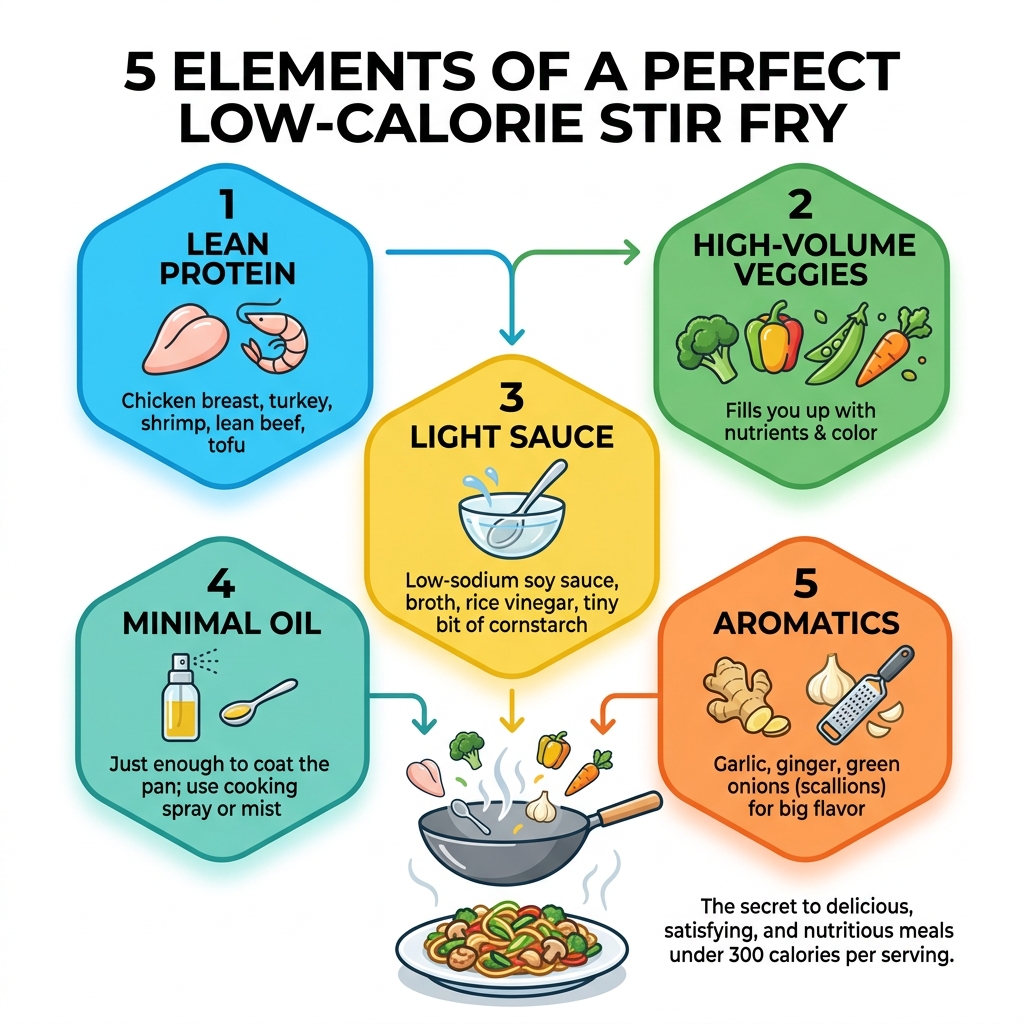
To ensure success with any of these recipes, remember the golden rule of stir-frying: high-heat searing. You want your pan screaming hot so the food sears rather than steams. This creates that authentic charred flavor without needing extra oil.
Essential Ingredients for a Healthy Stir Fry
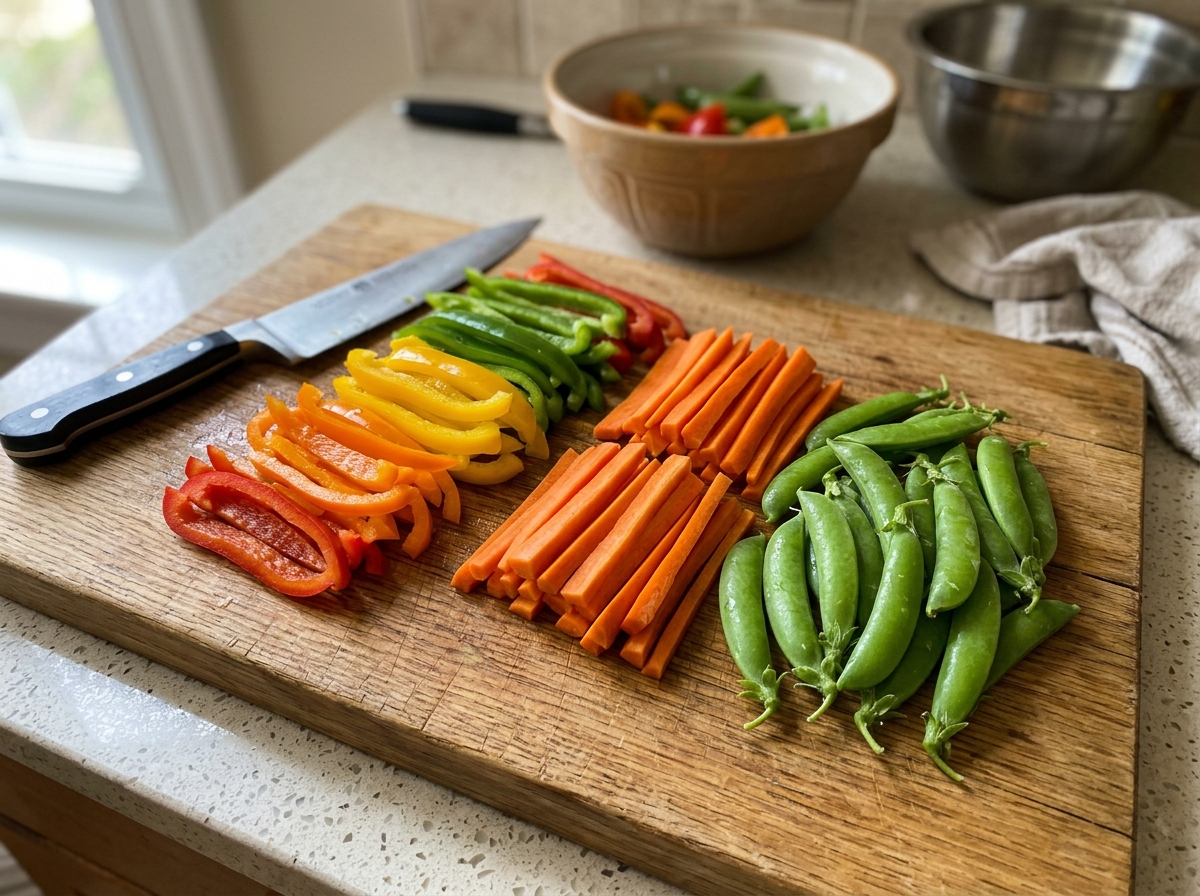
When we build a 300 calorie stir fry, we look at ingredients as tools for both nutrition and volume. You want to fill your plate so high that you don’t feel like you’re “dieting.”
- Micronutrients and Fiber: Vegetables like bell peppers and broccoli aren’t just low in calories; they are packed with Vitamin C and fiber, which aids digestion and keeps you satiated.
- Aromatics: Never skip the fresh ginger and garlic. These add massive flavor for almost zero calories. If you’re in a rush, ginger paste or jarred minced garlic are great time-saving hacks.
- Low-Sodium Soy Sauce: Traditional soy sauce is a sodium bomb. We always reach for the low-sodium version or liquid aminos to keep bloating at bay.
- Rice Vinegar: This adds a necessary tang that cuts through the saltiness of the sauce without adding any fat.
Best Proteins for a 300 Calorie Stir Fry
Choosing the right protein is the difference between a 300-calorie meal and a 600-calorie one. We always recommend minimalist stir fry for quick dinners using these lean options:
- Chicken Breast: Skinless and boneless is the gold standard. Slice it thin against the grain so it stays tender during the high-heat cook.
- Shrimp: Perhaps the most “bang for your buck” protein. You can eat a large portion of shrimp for very few calories.
- Tofu: For a plant-based boost, extra-firm tofu is great. Press it well to remove water so it gets nice and crispy in the pan.
- Pork Tenderloin: Often overlooked, pork tenderloin is almost as lean as chicken breast. A quick toss in a teaspoon of cornstarch before cooking (a technique called “velveting”) keeps it incredibly juicy.
High-Volume Vegetables to Bulk Up Your 300 Calorie Stir Fry
If you want a giant portion, you need high-volume, low-calorie vegetables. These allow you to eat more food for fewer calories:
- Cabbage: Whether it’s Napa or green cabbage, shredded cabbage adds incredible bulk and a lovely crunch.
- Broccoli: The ultimate stir fry staple. It soaks up the sauce perfectly.
- Zucchini and Mushrooms: These have high water content and take on the flavors of your seasonings beautifully.
- Asian Greens: Bok choy and choy sum are nutrient-dense and wilt down just enough to add texture without being heavy.
Pro Techniques to Reduce Calories Without Losing Flavor
You don’t need a half-cup of oil to make a great stir fry. In fact, most of that oil just ends up making the vegetables soggy.
| Technique | Traditional Method | Low-Calorie Pro Method |
|---|---|---|
| Oil Usage | 3-4 tablespoons of vegetable oil (360-480 kcal) | 1-calorie oil spray or 1 tsp avocado oil (40 kcal) |
| Sautéing | Frying in deep oil | Water-flash sautéing (adding 1 tbsp water to create steam) |
| Pan Type | Standard stainless steel (requires more oil) | High-quality non-stick ceramic or seasoned carbon steel wok |
One of our favorite stir-frying technique basics is the “order of operations.” Start with your aromatics (garlic/ginger), then add your “hard” vegetables like carrots and broccoli. Add a splash of water and cover for 60 seconds to steam them slightly. Then, remove them, sear your protein, and toss everything back together with the sauce at the very end.
Uniform Cutting: This is vital. If your chicken chunks are huge and your peppers are tiny, one will be burnt while the other is raw. Aim for bite-sized, even pieces.
Finishing Oils: Instead of cooking with sesame oil (which has a low smoke point), use it as a “finishing oil.” A tiny half-teaspoon drizzled over the finished dish provides a massive toasted aroma for very few calories.
Customizing Your 300 Calorie Stir Fry for Any Diet
The beauty of the stir fry is its adaptability. Whether you are Keto, Vegan, or Gluten-Free, you can tweak the base 300-calorie template to fit your needs.
Low-Carb and Keto Substitutions for a 300 Calorie Stir Fry
If you’re ditching the rice, you have plenty of delicious alternatives to keep your meal under 300 calories:
- Cauliflower Rice: A classic for a reason. It’s a great vessel for sauce.
- Zoodles: Zucchini noodles add a fresh, light element.
- Konjac Noodles: These are a “miracle” for calorie counters. At almost zero calories, they provide the texture of rice noodles without the carbs.
- Liquid Aminos: Use this instead of soy sauce if you are avoiding soy or looking for extra amino acids.
For more single-serving inspiration, check out our guide on fast stir fry meals for one.
Vegan and Gluten-Free Adaptations
- Gluten-Free: Always swap soy sauce for Tamari. It tastes almost identical but is brewed without wheat. Also, ensure your cornstarch is certified gluten-free if you use it to thicken the sauce.
- Vegan: Use tofu, tempeh, or just double up on the mushrooms for a “meaty” texture. Swap honey for maple syrup or a pinch of brown sugar in your sauce.
- Toppings: Sesame seeds and fresh herbs like cilantro or green onions add a professional finish and a pop of freshness without adding significant calories.
Frequently Asked Questions about Low-Calorie Stir Fries
How can I make stir fry sauce lower in calories?
Traditional sauces often rely on heavy amounts of sugar and oil. To lighten yours, use a broth base (vegetable or low-sodium chicken broth) as the bulk of the liquid. Thicken it with a small cornstarch slurry (1 tsp cornstarch mixed with 1 tsp water) rather than reducing it for ages. Use stevia or a tiny amount of honey for sweetness, and lean heavily on rice vinegar, ginger paste, and garlic for the “kick.”
Can I meal prep stir fry for the week?
Yes! Stir fries are excellent for meal prep. We recommend storing them in glass airtight containers. They generally stay fresh for about 3 to 4 days in the fridge. One tip: if you’re using konjac noodles or zoodles, store them in a separate compartment or add them fresh when reheating to prevent them from getting too soft.
What is the best oil for high-heat stir frying?
We recommend avocado oil because it has a very high smoke point, meaning it won’t burn and become bitter at high temperatures. Coconut oil is also a good choice. For the absolute lowest calorie count, use a high-quality oil spray. Avoid using extra virgin olive oil or toasted sesame oil for the actual frying, as they break down at high heat.
Conclusion
At Finance Savex, we believe that eating healthy shouldn’t cost you hours in the kitchen or a fortune at the grocery store. By focusing on minimalist cooking—using just 4 or 5 high-quality ingredients—you can create a 300 calorie stir fry that tastes better than takeout and supports your wellness goals.
Ready to simplify your dinner routine? Start with one of the recipes above tonight. You’ll save time, save money, and feel great knowing exactly what went into your meal.
