
Stir Fry Noodles That Are Actually Good for You
Healthy Stir Fry Noodles: Your 30-Minute Weeknight Fix
Healthy stir fry noodles are a fast, nutritious dinner you can make at home in 30 minutes or less — with fewer calories, less sodium, and far more vegetables than typical takeout versions.
Quick answer: what makes stir fry noodles healthy?
- Whole grain or rice noodles as the base (more fiber, better macros)
- 6+ cups of vegetables like broccoli, bell peppers, carrots, and mushrooms
- Lean protein such as chicken, tofu, or shrimp
- Homemade sauce using low-sodium soy sauce, garlic, and ginger — no mystery oils or additives
- Minimal oil, cooked fast over high heat to keep nutrients intact
A single homemade serving typically lands between 330–467 calories with up to 45g of protein and 6–8g of fiber — a genuinely balanced meal.
The problem with takeout stir fry noodles? They tend to be heavy on oil, light on vegetables, and packed with sodium. Making them at home flips that equation completely. You control every ingredient, and the whole thing comes together in the time it would take to wait for a delivery.
Whether you’re cleaning out the fridge or cooking from a shopping list, this guide walks you through everything — from picking the right noodles to building a sauce that actually tastes like something.
Why Homemade Healthy Stir Fry Noodles Beat Takeout
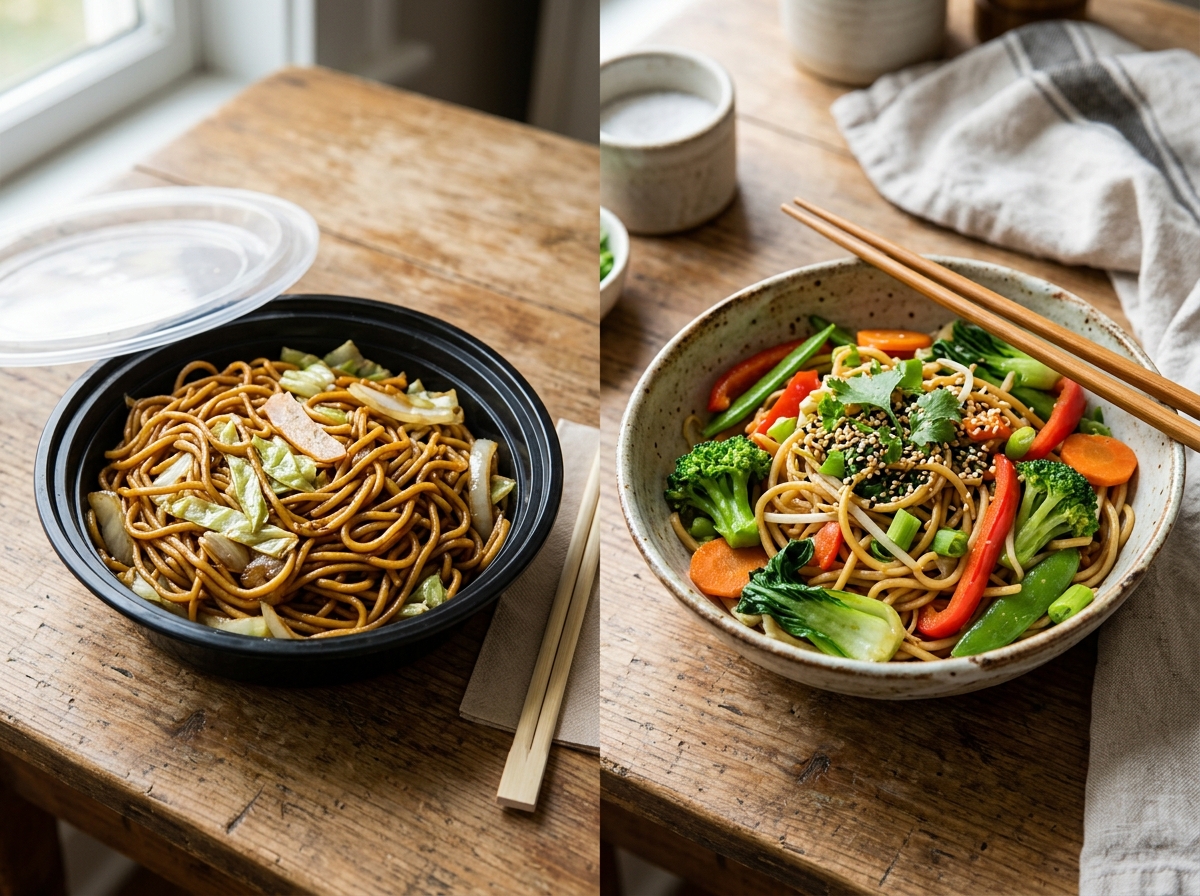
We’ve all been there: staring at a cardboard carton of oily, salty lo mein that somehow costs $20 and leaves us feeling sluggish an hour later. When we choose to make healthy stir fry noodles at home, we aren’t just saving money; we are taking back control of our nutrition.
Takeout versions are notorious for “hidden” ingredients. To make the food shelf-stable and hyper-palatable, restaurants often use excessive amounts of refined sugar, high-sodium broths, and heavy oils. By contrast, our homemade version prioritizes whole-food ingredients. We can swap out the refined white flour noodles for fiber-rich alternatives and use a fraction of the oil while still achieving that signature “wok hei” (breath of the wok) flavor.
The Nutritional Profile of Healthy Stir Fry Noodles
The beauty of a stir fry is its balance. Unlike a bowl of plain pasta, a healthy stir fry noodles dish is designed to be “veggie-forward.” We recommend a ratio that might surprise you: about 6 cups of fresh vegetables to only 6 ounces of dry noodles. This volume-eating strategy allows you to feel incredibly full while keeping the calorie count low.
The statistics speak for themselves. A well-balanced veggie stir fry can offer around 340 calories per serving while providing 9g of protein and 6g of fiber. Some protein-heavy versions can even reach 45g of protein per serving, making it an ideal post-workout meal. It’s no wonder this approach to cooking has garnered over 15.2k shares on popular healthy recipe platforms—it’s the ultimate “fake-out” Friday meal that loves you back.
Choosing the Best Base: From Soba to Rice Noodles
The foundation of any great stir fry is the noodle. While many of us grew up on instant ramen packets (usually fried and packed with preservatives), there is a world of more nutritious options available at any local grocery store.
When selecting your base, consider the texture and the nutritional density. Here is how the most common options stack up:
| Noodle Type | Best For | Key Benefit |
|---|---|---|
| Buckwheat Soba | Nutty flavor, earthy dishes | High fiber, contains manganese |
| Brown Rice Noodles | Light, gluten-free stir fries | Easy to digest, whole grain |
| Whole Wheat Spaghetti | Budget-friendly, pantry staple | High fiber, surprisingly authentic texture |
| Udon | Thick, chewy, slurpy textures | Satisfying “bite,” great for thick sauces |
| Egg Noodles | Traditional Lo Mein style | Good protein content, classic flavor |
Low-Carb and Gluten-Free Healthy Stir Fry Noodles
If you are looking to cut carbs even further or need a strictly gluten-free meal, you don’t have to skip the stir fry. We love using “zoodles” (zucchini noodles) or spaghetti squash as a base. These options drop the calorie count significantly while adding an extra serving of greens to your day.
For those who want a traditional noodle feel without the gluten, rice noodles or glass noodles (made from mung bean or sweet potato starch) are excellent. Just remember to swap standard soy sauce for tamari, which is naturally gluten-free. For more ideas on keeping costs down while eating well, check out our guide on budget-friendly-stir-fry-meals.
Building Your Bowl: Vegetables and Lean Proteins
The secret to a 30-minute meal isn’t just fast cooking; it’s the mise en place. Because stir frying happens over high heat in a matter of minutes, you cannot be chopping carrots while the garlic is already browning. We always suggest prepping every single ingredient before the heat even touches the pan.
How to Prepare Vegetables for Optimal Texture
To get that restaurant-quality “crisp-tender” finish, we have to respect the cooking times of different vegetables. We suggest cutting your veggies into uniform sizes—think matchsticks (julienne) or small florets. This ensures everything cooks evenly.
- Hard Veggies First: Start with carrots, broccoli florets, and onions. These need about 3–4 minutes to soften.
- Medium Veggies Second: Add bell peppers, snap peas, and mushrooms. These only need 2–3 minutes to become vibrant and tender.
- Leafy Greens Last: Bok choy, spinach, or bean sprouts should go in during the final minute. They wilt almost instantly and retain their nutrients better when exposed to heat briefly.
For more tips on how to keep your kitchen sessions short and sweet, dive into our minimalist-stir-fry-for-quick-dinners.
Lean Protein Swaps for Every Diet
Protein is what turns a side dish into a filling main event. To keep your healthy stir fry noodles lean, we recommend:
- Chicken Breast: Slice it thinly against the grain. A quick toss in a teaspoon of cornstarch and a splash of low sodium soy sauce before cooking (a simplified “velveting” technique) keeps it juicy.
- Crispy Tofu: Use extra-firm tofu and press it to remove moisture. Crumbling the tofu instead of cubing it can mimic the texture of ground meat, which is a favorite trick of ours for vegan versions.
- Shrimp: These cook in under 3 minutes and are incredibly low in fat.
- Edamame: A fantastic plant-based protein boost that adds a great pop of green.
The 30-Minute Masterclass: Step-by-Step Instructions
Ready to cook? Follow this workflow to ensure your healthy stir fry noodles turn out perfect every time.
- Boil the Noodles: Cook your noodles for 1–2 minutes less than the package directions. They should be slightly underdone because they will finish cooking in the sauce. Drain and rinse with cold water to stop the cooking process.
- Whisk the Sauce: In a small bowl, combine low sodium soy sauce, a splash of rice vinegar, hoisin, and a teaspoon of cornstarch. Adding maple syrup or honey provides a natural sweetness without refined sugar.
- Sear the Protein: Heat a large skillet or wok over high heat with a tablespoon of sesame oil. Cook your protein until browned, then remove it from the pan.
- Stir Fry the Veggies: Add your vegetables in stages (hardest to softest). Keep them moving!
- The Grand Finale: Add the noodles and protein back into the pan. Pour the sauce over the top. Toss everything together for 1–2 minutes until the sauce bubbles and thickens, coating every strand.
- Garnish: Top with sesame seeds, green onions, or red pepper flakes for heat.
Avoiding Common Stir Fry Mistakes
Even the best cooks can run into trouble. If you’ve ever ended up with a soggy mess, you likely fell into one of these traps:
- Mushy Noodles: This happens when you overboil them at the start. Remember: they should be “al dente” before they hit the pan.
- Soggy Vegetables: This is usually caused by overcrowding the pan. If you have a lot of veggies, cook them in two batches. This allows the moisture to evaporate so they sear rather than steam.
- Dry Sauce: If the noodles soak up all the liquid, add a splash of vegetable broth or water to loosen things up.
If you’re cooking for one and want to avoid waste, our guide on fast-stir-fry-meals-for-one has specific scaling tips.
Meal Prep and Storage for Busy Weeknights
One of the reasons we love healthy stir fry noodles is that they are incredibly meal-prep friendly. In fact, many people find that the flavors actually deepen after a night in the fridge.
- Storage: Place leftovers in an airtight container. They will stay fresh in the refrigerator for 3–4 days.
- Reheating: Avoid the microwave if possible, as it can make noodles rubbery. Instead, toss them back into a hot skillet with a teaspoon of water for 2 minutes.
- Freezing: While you can freeze stir fry, be aware that some vegetables (like peppers) may lose their crunch. We recommend freezing the sauce and pre-chopped veggies separately, then cooking fresh noodles when you’re ready to eat.
For more single-serving meal prep inspiration, check out our simple-pasta-recipes-for-singles.
Frequently Asked Questions about Healthy Stir Fry Noodles
Can I use regular spaghetti for stir fry?
Absolutely! Many home cooks use whole-wheat spaghetti or linguine as a budget-friendly shortcut. Since spaghetti is made from durum wheat, it holds its shape well during the high-heat tossing process.
How do I keep my noodles from sticking together?
After draining your cooked noodles, toss them with a teaspoon of sesame oil. This creates a light barrier that prevents them from clumping into a ball while you prep your vegetables.
Is stir fry sauce high in sugar?
Takeout sauce often is, but yours doesn’t have to be. By using rice vinegar, fresh ginger, and garlic, you get massive flavor without needing cups of sugar. A tablespoon of honey or maple syrup for the whole pan is usually enough to balance the saltiness of the soy sauce.
Conclusion
At Finance Savex, we believe that eating well shouldn’t require a culinary degree or a massive grocery budget. Healthy stir fry noodles represent the pinnacle of minimalist cooking: they are fast, infinitely customizable, and packed with the nutrients your body needs to thrive.
By mastering the 30-minute stir fry workflow, you can save money on takeout while improving your health one slurpy bite at a time. Ready to expand your kitchen repertoire? Discover more budget-friendly healthy meals on our blog and start simplifying your weeknights today.
