
The Quick and the Fed with These Fast Protein Packed Breakfasts
Why Your Morning Meal Needs More Protein
A fast protein packed breakfast is one of the simplest upgrades you can make to your day. If you’re short on time but want a breakfast that actually keeps you full, here are the best options:
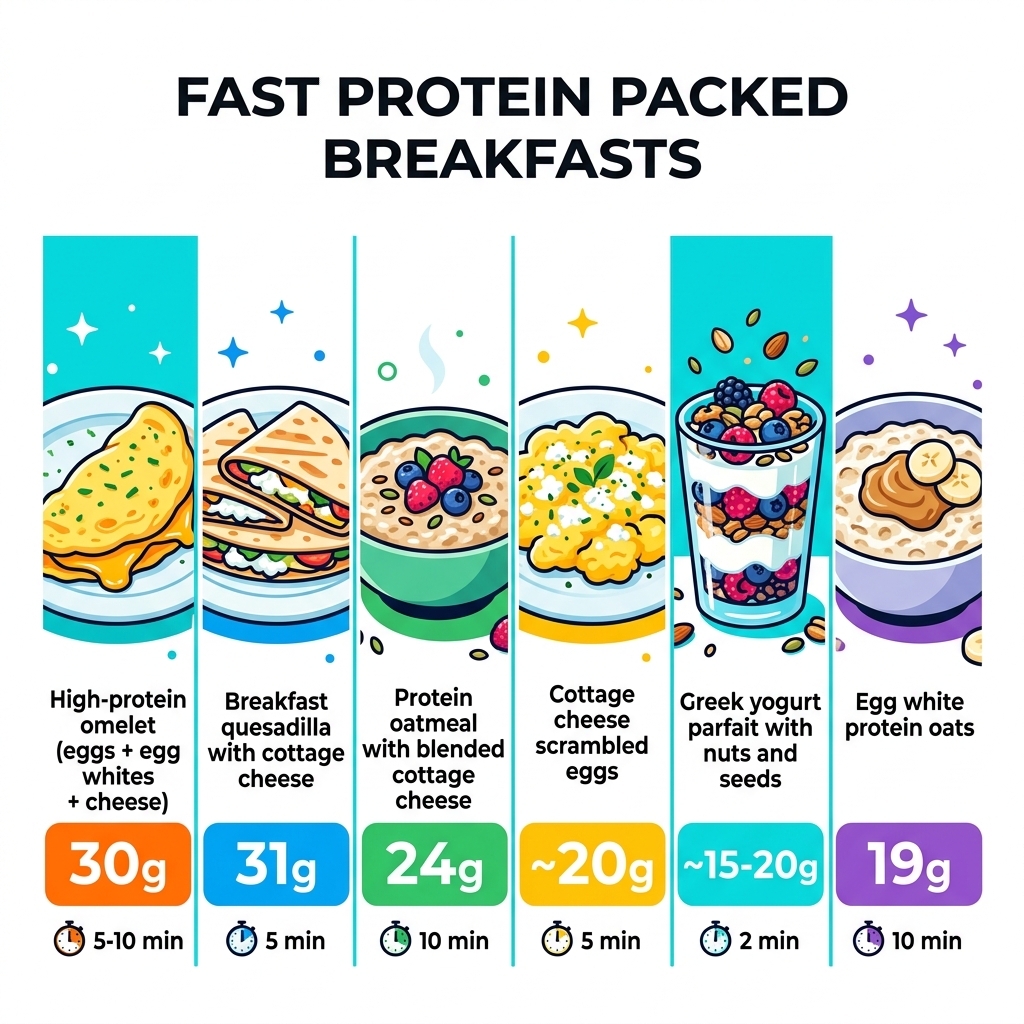
Top fast protein packed breakfasts (10 minutes or less):
| Breakfast | Protein | Time |
|---|---|---|
| High-protein omelet (eggs + egg whites + cheese) | 30g | 5-10 min |
| Breakfast quesadilla with cottage cheese | 31g | 5 min |
| Protein oatmeal with blended cottage cheese | 24g | 10 min |
| Cottage cheese scrambled eggs | ~20g | 5 min |
| Greek yogurt parfait with nuts and seeds | ~15-20g | 2 min |
| Egg white protein oats | 19g | 10 min |
Most adults need 15-33 grams of protein at breakfast – that’s roughly 20-30% of your daily protein needs, according to registered dietitians.
Here’s the honest truth: most breakfasts are built around carbs. Toast, cereal, a banana on the run. They’re fast, sure. But they leave you hungry by 10am and reaching for snacks before lunch even starts.
Protein changes that equation.
Research suggests that eating protein in the morning helps regulate hunger hormones, supports muscle maintenance, and keeps blood sugar more stable throughout the day. That’s a lot of benefit for just a few extra grams.
The good news? You don’t need a complicated meal plan or an hour in the kitchen. Several high-protein breakfasts clock in at 5 minutes flat using everyday ingredients like eggs, cottage cheese, and Greek yogurt.
This guide rounds up the best fast, protein-rich breakfast options – so you can eat well even on your busiest mornings.
Common fast protein packed breakfast vocab:
Why a Fast Protein Packed Breakfast is Your Morning Secret Weapon
We’ve all been there: you grab a bagel or a sugary cereal bar because you’re rushing out the door, only to find your stomach growling before your first 10:00 AM meeting. When we prioritize a fast protein packed breakfast, we aren’t just filling our bellies; we are fueling our biology.
Protein is the most satiating macronutrient. It takes longer to digest than carbohydrates, providing a steady stream of energy rather than a quick spike and an inevitable crash. By hitting a range of 15 to 33 grams of protein in the morning, you are covering approximately 20% to 30% of your daily protein needs. This isn’t just about gym gains; it’s about metabolic health. Starting your day with protein can actually help you burn more calories through the thermic effect of food and significantly decrease those pesky mid-afternoon snack cravings.
If you’re looking for a warm, comforting way to hit these numbers, our Protein Oatmeal (24g Protein!) – Finance Savex Recipe is a game-changer. For those managing a tight budget, you can also explore these low-cost breakfast ideas for singles to keep your wallet as full as your stomach.
How much protein should a fast protein packed breakfast ideally contain?
Registered dietitians generally recommend a minimum of 15 grams of protein per meal to trigger muscle protein synthesis and promote fullness. However, if your goal is weight management or heavy athletic performance, aiming for 25 to 30 grams is the “sweet spot.”
Think of 15 grams as your baseline for a “high-protein” label. Many of the recipes we love, like a loaded omelet or a cottage cheese bowl, easily soar past 20 grams. When you hit that 20% to 30% of your daily value first thing in the morning, you’re setting a foundation that makes it much easier to meet your nutritional goals for the rest of the day.
The science of morning satiety
Why does protein work so well? It’s all about the chemistry. Protein intake influences the secretion of satiety hormones like peptide YY and cholecystokinin, while simultaneously suppressing ghrelin—the “hunger hormone.”
Furthermore, the amino acids found in high-protein foods are essential for cognitive focus. Ever feel “brain fog” after a heavy pancake breakfast? That’s often a result of blood sugar fluctuations. A fast protein packed breakfast stabilizes those levels, keeping you sharp and focused until lunch.
Top 10-Minute Recipes for a Fast Protein Packed Breakfast

You don’t need a sous-chef to eat like a king. Some of the most effective protein boosters are already in your fridge: egg whites, Greek yogurt, and the newly trendy cottage cheese.
One of our favorite rapid-fire meals is the High Protein Omelet | Healthy Breakfast Idea – Finance Savex Recipe. By mixing whole eggs with liquid egg whites, you can double the protein content without significantly increasing the calorie count. If you prefer a bowl format, check out these 5-minute healthy breakfast bowls for one.
To help you choose the best base for your morning, here is a quick comparison:
| Base Ingredient | Typical Protein Amount | Time to Prepare |
|---|---|---|
| 1 cup Greek Yogurt | 20-23g | 1 min |
| 1/2 cup Cottage Cheese | 14g | 1 min |
| 3 Large Eggs | 18g | 5 min |
| 1/2 cup Egg Whites | 13g | 4 min |
| 1/2 cup Rolled Oats (dry) | 5g (boost with toppings!) | 5-10 min |
The 5-Minute High-Protein Quesadilla
This is a Finance Savex favorite because it uses a clever “one-pan” technique. You whisk two eggs with a dollop of cottage cheese and a spoonful of salsa (a great “mom trick” for instant seasoning). Pour the mixture into a nonstick skillet, and while the eggs are still wet, press a tortilla directly onto them.
Once the eggs are set, flip the whole thing over so the tortilla is on the bottom. Add a sprinkle of cheese and some pre-cooked chicken or black beans, fold it in half, and crisp it up. This simple hack delivers a whopping 31 grams of protein in just five minutes. For more inspiration on quick savory starts, read our guide: don’t go bacon my heart with these fast high-protein breakfast ideas.
Creamy Protein Oats without the Powder
Many people find protein powder can make oatmeal gritty or overly sweet. The secret to a fast protein packed breakfast in a bowl is liquid egg whites.
Cook your oats with a mix of milk and water. Once they start to thicken, slowly whisk in 1/4 to 1/2 cup of liquid egg whites. The key is to whisk constantly for 2 to 4 minutes. This creates a fluffy, custard-like texture without any “eggy” taste. You’ll end up with about 19 grams of protein before you even add toppings like peanut butter or hemp seeds. For more microwave-friendly hacks, see these egg-cellent healthy microwave breakfast recipes for early birds.
Smart Meal Prep for Busy Mornings
If “fast” to you means “zero minutes of cooking on Tuesday morning,” meal prep is your best friend. Batch cooking on a Sunday allows you to enjoy a hot, composed meal that just needs a quick reheat.
Using silicone molds to bake “egg bites” (similar to the famous coffee shop version) is a brilliant way to prep. You can blend cottage cheese and eggs for a velvety texture, pour them into the molds with some spinach and bacon, and bake. In the morning, you just grab three bites for an easy 18 grams of protein.
For those who love a variety of flavors, easy breakfast bowls for busy mornings are another great prep option. If you have a little more time on the weekend, these 30-minute recipes for people who value sleep will set you up for the entire week.
Freezer-Friendly Protein Wraps
Breakfast burritos are the ultimate grab-and-go fast protein packed breakfast. We recommend using whole grain tortillas for extra fiber. Fill them with scrambled eggs, black beans, and a bit of sausage or soy crumbles.
A pro tip for freezing: let the fillings cool completely before wrapping to prevent the tortilla from getting soggy. Wrap them tightly in foil or plastic wrap. They stay good in the freezer for up to six months and provide about 24 grams of protein per serving.
Make-Ahead Egg Bites and Frittatas
Frittatas are essentially the “everything but the kitchen sink” of the breakfast world. You can use leftover roasted vegetables from dinner, mix them with a dozen eggs and a cup of cottage cheese, and bake it in a large sheet pan or skillet. Once cooled, slice it into wedges. These wedges can be eaten cold or reheated in a skillet for a crispy edge. They are perfectly portable and packed with nutrition.
Plant-Based and Pantry Staple Protein Boosters
You don’t need meat or even eggs to get a high-protein start. The plant kingdom is full of heavy hitters if you know where to look. Pantry staples like chia seeds, hemp hearts, and nut butters can turn a standard meal into a fast protein packed breakfast.
If you are looking for simple, minimalist plant-based ideas, our 5-ingredient breakfast recipes for singles is a great resource. And for those following specific low-carb plant diets, check out these fast keto breakfasts.
Can I make a fast protein packed breakfast without eggs?
Absolutely! Here are four egg-free ways to hit your protein goals:
- Tofu Scramble: Crumble extra-firm tofu into a pan with nutritional yeast and turmeric. It has a similar texture to eggs and is loaded with plant protein.
- Greek Yogurt Parfait: One cup of non-fat Greek yogurt has about 23g of protein. Layer it with berries and a handful of almonds.
- Lentil Smoothies: It sounds wild, but adding cooked red lentils to a smoothie provides a massive protein and fiber boost without changing the flavor much.
- Seitan Strips: For a savory “bacon” alternative, seitan is one of the most protein-dense plant foods available.
Natural boosters for everyday staples
If you’re sticking to a basic bowl of cereal or toast, you can still “level up” the protein:
- Chia Seeds: Add 2 tablespoons to your yogurt or oats for 4g of protein and 11g of fiber.
- Hemp Hearts: These have a mild, nutty flavor and offer about 10g of complete protein per 3 tablespoons.
- Unflavored Protein Powder: This is great for stirring into coffee (pro-tip: dissolve it in a little cold milk first to avoid clumping) or mixing into pancake batter.
Frequently Asked Questions about High-Protein Mornings
How do I add protein powder to recipes without ruining the texture?
The biggest mistake people make is adding protein powder to boiling liquids, which can cause it to “clump” or develop a rubbery texture. If you’re making oats, stir the powder in at the very end after you’ve removed the pot from the heat. For smoothies, use a blender to ensure total integration. If you’re using it in coffee, whisk it into your creamer or a small amount of cold water before adding the hot coffee.
What are the best vegetarian protein sources for breakfast?
Greek yogurt and cottage cheese are the undisputed champions for vegetarians. However, don’t overlook tempeh, pumpkin seeds (pepitas), and nutritional yeast. Even a “breakfast salad” with chickpeas and a tahini dressing can be a refreshing and high-protein way to start a summer morning. As the joke goes—don’t knock a breakfast salad until you’ve tried it!
How can I make these recipes dairy-free or gluten-free?
For dairy-free needs, look for high-protein plant yogurts (usually soy or pea-protein based) or use silken tofu in smoothies. Nutritional yeast can provide a cheesy flavor to scrambles without the lactose. For gluten-free options, ensure your oats are certified gluten-free and swap flour tortillas for almond flour or corn versions.
Conclusion
At Finance Savex, we believe that healthy eating shouldn’t be a second job. Our mission is to provide ultra-simple, time-saving meals for busy lifestyles. Whether it’s a 5-minute quesadilla or a batch of egg bites you prepped on Sunday, a fast protein packed breakfast is the ultimate tool to reclaim your morning energy.
By focusing on minimalist recipes with 4-5 key ingredients, you can spend less time at the stove and more time conquering your day. For more inspiration on how to simplify your kitchen routine, explore our full collection of quick recipes. Eat well, save time, and stay fed!
