Seasonal Decor for a Small Apartment: A Simple Swap System
Change four small things four times a year and keep the rest in one flat box. A swap system for seasonal decor with palette ideas and natural materials for spring, summer, fall and winter.
Seasonal touches are one of the pleasures of having a home, and one of the first things to go when closets are scarce. A wreath, a box of ornaments and a stack of themed cushions each need a place to live for most of the year, and a small home has none to spare.
Seasonal decor for a small apartment works better as a swap system than as a collection. You choose a handful of spots, change only those four times a year, and keep everything that is out of season in one flat box. The room shifts with the calendar, and nothing new needs a shelf.
Why a swap system beats a collection
A collection grows. Each year adds a few more objects, and each object is on display for a few weeks and in storage for the rest. In a compact room, extra decorations also crowd surfaces that were already full, so the seasonal layer often makes the place look busier instead of fresher.
A swap replaces instead of adding. The cushion count stays the same, the tray stays the same size, the vase stays where it is. Only the covers, colors and stems change. The room keeps its breathing space all year, and the change is still obvious the moment you walk in.
Pick your four swap points
Three or four points are enough for a living area. Choose things that are already part of the room and that sit where the eye lands first.
- Cushion covers. Keep the inserts and change only the covers. Two covers fold to almost nothing.
- A throw. Light cotton or linen for the warm half of the year, something heavier for the cold half.
- One tray. The tray on the coffee table or by the entry stays put, and the two or three items on it rotate.
- One vase of stems. A single vase with whatever the season offers is the most visible change for the least storage.
If you have open shelves, one shelf can serve as an optional fifth point: change a single object or a small print and leave the rest alone. The method for building a balanced shelf in the first place is in the guide to shelf styling for a small apartment.
A palette for each season
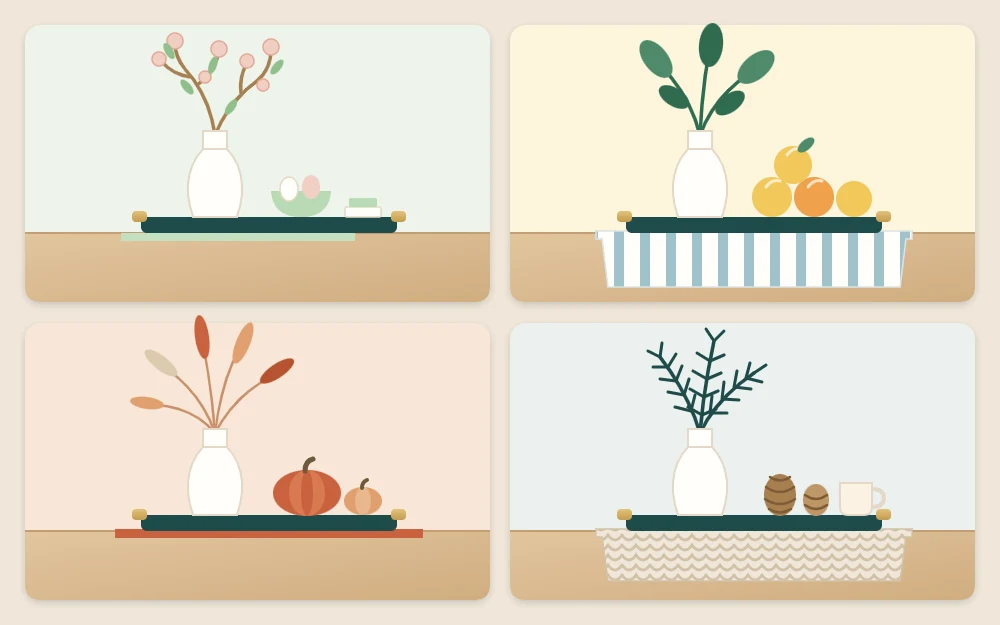
Seasonal colors sit on top of your base palette. They do not replace it. Keep the walls, sofa, rug and curtains as they are, and let one or two accent colors shift. The combinations below are suggestions to adapt to what you already own.
| Season | Accent colors | Natural material | Fabric feel |
|---|---|---|---|
| Spring | Fresh green, blush | Budding or flowering branches | Crisp cotton |
| Summer | Lemon yellow, clear blue or a simple stripe | Citrus in a bowl, leafy stems | Light linen |
| Fall | Rust, ochre, deep olive | Dried grasses, seed heads | Brushed cotton, wool blends |
| Winter | Cream, pine green | Pine sprigs, pine cones | Chunky knit, bouclé |
If your base palette is warm, lean toward the warmer version of each accent. If it is cool, choose the cooler one: sage instead of grass green, or burgundy instead of rust.
Do the swap in one sitting
The whole change should take less than an hour, which is what makes it likely to happen. Choose a day near the start of each season and work through the same short sequence.
- Bring out the flat box and empty the tray.
- Take off the current cushion covers and fold the throw. If they need washing, do that before they go into the box.
- Put on the new covers and drape the new throw over the sofa arm or the foot of the bed.
- Rebuild the tray with two or three items in the season’s colors, varying their heights.
- Refill the vase with fresh or dried stems.
- Pack the outgoing set and return the box to its place.
Tip
Hold yourself to one rule: something comes out for every item that goes in. If a new piece does not replace an old one, it belongs to a collection, not to the swap.
Natural materials that need no storage
The best seasonal decorations are the ones you never have to put away. Branches, grasses and fruit arrive, look good for a while and then leave the apartment altogether.
- Spring: a few tall branches in a heavy vase give height without taking table space.
- Summer: a bowl of lemons or oranges on the tray is color you can eat.
- Fall: dried grasses and seed heads last for months and suit a narrow-necked vase.
- Winter: pine sprigs in a jug and a few pine cones in a shallow dish.
Keep arrangements simple: one type of stem per vase reads as calmer than a mixed bunch. Living greenery can carry the seasons as well, and the guide to styling plants in a small apartment shows how to place it. If pets or children might chew on stems or leaves, check each plant before bringing it home.
Store the off-season set in one flat box
The box is the limit that keeps the system honest. A shallow lidded container that slides under the bed or sofa, or lies flat on a closet shelf, holds more than you would expect when everything in it is soft.
At any time it should contain no more than:
- the cushion covers for the other seasons, folded flat
- one off-season throw
- a small pouch of tray items, such as a striped cloth, a ceramic dish or a string of battery lights
When the box is full, the collection is complete. Anything further has to replace something inside.
Give the cold months a little more
Fall and winter usually ask for more than a change of color. Shorter days make lamplight and heavier fabrics matter, and the swap points alone may not feel like enough. That is the moment to adjust the lighting and add a layer underfoot, which these cozy ideas for fall and winter cover step by step.
For the rest of the year, four small changes are plenty. A room that stays calm underneath makes each new season easier to notice.
Frequently asked questions
How do I decorate for the seasons with almost no storage?
Swap instead of adding. Choose three or four things that are already in the room, such as cushion covers, a throw, a tray and a vase, and change only those. The off-season versions are mostly fabric, so they fold flat into a single shallow box under the bed or sofa.
How often should I change seasonal decor?
Four times a year is a comfortable rhythm, around the start of each season. Because the swap involves only a few items, it can be done in a single sitting. If that still feels like too much, two changes work well: a light set for spring and summer and a warmer set for fall and winter.
Do seasonal colors have to match my existing palette?
They should sit comfortably on top of it. Keep the large pieces as they are and shift only one or two accents. Pick the warmer or cooler version of a seasonal color to suit your base, so a cool gray room might take sage and burgundy where a warm beige room takes grass green and rust.