
How to Master Easy Vegan Stir Fry Recipes in Minutes
Why Easy Vegan Stir Fry Recipes Belong in Every Busy Cook’s Routine
Easy vegan stir fry recipes are one of the fastest ways to get a healthy, filling dinner on the table in under 30 minutes — with minimal cleanup and almost no cooking experience required.
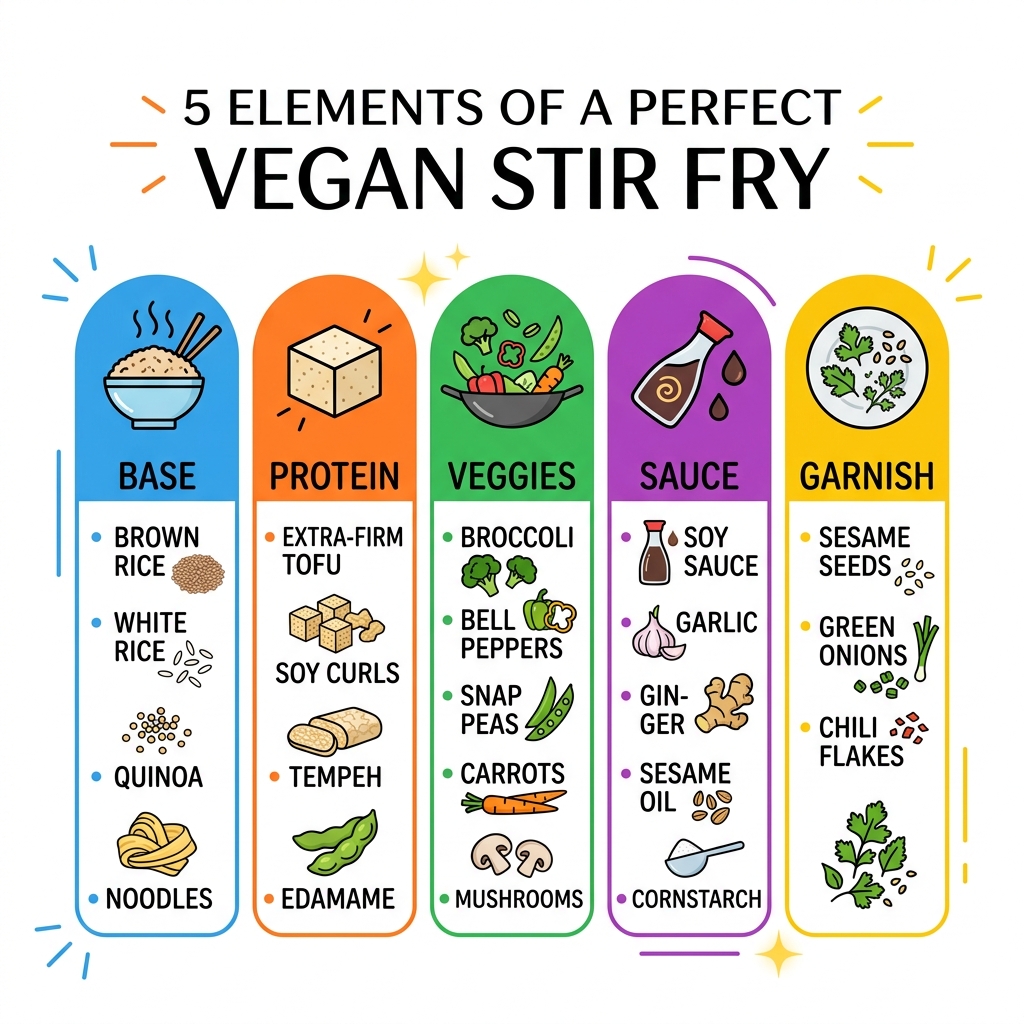
Here’s a quick overview of what you need to make one tonight:
| Element | What to Use |
|---|---|
| Base | Brown rice, white rice, quinoa, or noodles |
| Protein | Extra-firm tofu, soy curls, tempeh, or edamame |
| Veggies | Broccoli, bell peppers, snap peas, carrots, mushrooms |
| Sauce | Soy sauce, garlic, ginger, sesame oil, cornstarch |
| Garnish | Sesame seeds, green onions, chili flakes |
Mix and match from each row, cook everything over high heat for 10-20 minutes, and dinner is done.
The appeal is real. Stir fries have been a go-to weeknight meal for home cooks for decades — and for good reason. They’re flexible, affordable, and a smart way to use up whatever vegetables you have before they go bad.
The best part? You don’t need a wok, a long ingredient list, or any special skills. A large skillet and a handful of pantry staples are all it takes.
In this guide, you’ll learn exactly how to build a great vegan stir fry from scratch — including how to prep tofu, make a simple sauce, and get dinner on the table fast.
Easy vegan stir fry recipes glossary:
The Foundation of Easy Vegan Stir Fry Recipes
At Finance Savex, we believe that cooking shouldn’t be a source of stress. The foundation of a great stir fry isn’t a complex technique; it is a solid set of aromatics and a few high-quality pantry staples. When we talk about easy vegan stir fry recipes, we are talking about meals that rely on the “holy trinity” of Asian-inspired cooking: onion, garlic, and ginger.

Aromatics are the flavor builders. By sautéing diced onions until translucent and then adding minced garlic and fresh ginger, you create a fragrant base that permeates every other ingredient. If you are short on time, don’t be afraid to use pre-minced garlic or frozen ginger cubes. These small shortcuts are exactly what make minimalist stir fry for quick dinners so effective for busy lifestyles.
Beyond the aromatics, you’ll need a few liquid gold items. Sesame oil provides a nutty depth, rice vinegar adds a necessary tang to balance sweetness, and cornstarch is the secret weapon that transforms thin liquid into a glossy, restaurant-style sauce. For those looking for the ultimate simplification, our 4-ingredient veggie stir fry proves you don’t need a crowded cupboard to eat well.
Furthermore, incorporating fresh ginger isn’t just about taste. Scientific research on the health benefits of ginger suggests it has powerful anti-inflammatory and antioxidant effects, making your quick dinner a functional health boost as well.
Essential Vegetables and Cutting Techniques
The “crunch factor” is what separates a mediocre stir fry from a masterpiece. The best vegetables for easy vegan stir fry recipes are those that maintain some structural integrity under high heat. We recommend:
- Broccoli: Its florets act like little sponges for the sauce. Try a simple and healthy garlic broccoli stir fry for a classic experience.
- Bell Peppers: They add sweetness and vibrant color.
- Snap Peas and Carrots: These provide a satisfying snap and natural sugars.
The secret to even cooking is the cut. You want “bite-sized” pieces that are uniform in shape. If your carrots are thick chunks and your peppers are thin slivers, one will be raw while the other is mush. Slice carrots into thin rounds or matchsticks, and break broccoli into small, even florets. For those prepping for work, these simple stir fry lunch ideas focus on hardy veggies that won’t wilt by noon.
Pantry Staples for Quick Assembly
Having a “stir fry kit” in your pantry means you are never more than 20 minutes away from a meal. We always keep low-sodium soy sauce or tamari on hand to control the salt levels. If you are watching your sodium intake, you can learn how to make a salt-free stir fry sauce with real kick using vinegars and spices instead.
For sweetness, maple syrup or agave nectar work beautifully to balance the savory umami of the soy. If you like heat, a pinch of red pepper flakes or a squeeze of Sriracha goes a long way. Having these basics ready allows for a minimalist magic approach where you spend less time measuring and more time enjoying.
Prepping Your Protein: Tofu, Soy Curls, and More
Protein is what makes a stir fry a complete, satiating meal. While many beginners find tofu intimidating, it is actually incredibly versatile once you know a few tricks.
For the best texture in easy vegan stir fry recipes, always reach for extra-firm tofu. The first step is pressing: wrap the tofu block in a clean kitchen towel and place a heavy skillet or a few cans on top for about 15-20 minutes. This removes excess water, allowing the tofu to soak up the marinade and get crispy in the pan.
If you want a more “organic” look that mimics restaurant-style dishes, try the tearing method. Instead of perfect cubes, tear the tofu into bite-sized, craggy pieces. These uneven edges are perfect for gripping the sauce. This technique is a staple in our easy vegan meals under 5 ingredients.
If you aren’t a fan of tofu, consider these alternatives:
- Soy Curls: Made from whole non-GMO soybeans, these have a remarkably meaty texture. Just rehydrate them in broth for 10 minutes, squeeze them dry, and sauté.
- Edamame: You can buy these shelled and frozen. They add a pop of green and a boost of protein with zero prep work.
- Tempeh: This fermented soy product has a nutty flavor and a firm bite that holds up perfectly in a wok.
Check out our guide on fast and furious 30-minute vegan dinners for more protein inspiration.
Mastering the Texture of Easy Vegan Stir Fry Recipes
To get that elusive “crispy on the outside, tender on the inside” finish, we use the cornstarch trick. After pressing and cubing your tofu (or rehydrating soy curls), toss the pieces in a bowl with a tablespoon of cornstarch and a pinch of salt.
When you pan-fry these in a small amount of oil (or air-fry them at 400°F for 15 minutes), the cornstarch creates a thin, crunchy crust. This crust doesn’t just provide texture; it helps the sauce cling to the protein later on. Mastering this timing is essential when learning how to master vegan 30-minute recipes in a flash.
Quick Substitutions for Dietary Needs
We want everyone to enjoy easy vegan stir fry recipes, regardless of dietary restrictions.
- Gluten-Free: Swap soy sauce for tamari or coconut aminos. Always check the label on your vegetable broth as well.
- Nut-Free: Many stir fry sauces use peanut butter for creaminess. You can easily substitute this with sunflower seed butter or simply stick to a classic soy-ginger glaze.
- Sugar-Free: If you are avoiding refined sugars, use a splash of orange juice or a bit of stevia. We have a full list of sugar-free and low-salt stir fry sauce options that still pack a punch.
Step-by-Step Guide to a 20-Minute Meal
Cooking a stir fry is a dance. Because the heat is high, you won’t have time to chop while you cook. The most important rule is: prep everything before the heat goes on.
- The Searing: Start with your protein. Get it crispy, then remove it from the pan and set it aside. This prevents it from getting soggy while the veggies cook.
- The Aromatics: Toss in your onion, ginger, and garlic. Stir constantly for about 30-60 seconds until they smell amazing.
- The Dense Veggies: Add carrots and broccoli first, as they take the longest. If the pan looks dry, add a splash of water or broth instead of more oil.
- The Quick Veggies: Add peppers, snap peas, and mushrooms. These only need 2-3 minutes to become “crisp-tender.”
- The Finish: Return the protein to the pan, pour over your sauce, and toss. The cornstarch in the sauce will bubble and thicken within a minute, coating everything in a glossy glaze.
For a deeper dive, read how to make a healthy vegetable stir fry in 20 minutes.
Wok vs. Sheet Pan: Which is Better?
While the wok is traditional, we often recommend the sheet pan for ultra-busy nights.
| Feature | Wok / Skillet Method | Sheet Pan Method |
|---|---|---|
| Effort | Active (constant stirring) | Passive (set and forget) |
| Texture | Crispy-tender, seared | Roasted, caramelized |
| Cleanup | One pan, but stovetop splatter | One pan with parchment liner |
| Speed | 10 minutes cooking | 20-25 minutes baking |
The sheet pan is a “minimalist magic” favorite because you can toss everything in sauce and let the oven do the work. If you prefer the stovetop, our tips on how to make a 30-minute stir fry without breaking a sweat will keep your kitchen cool.
Mastering the Timing of Easy Vegan Stir Fry Recipes
The biggest mistake beginners make is overcrowding the pan. If you put too many vegetables in at once, the temperature drops and the veggies start to steam in their own juices rather than fry. This leads to the dreaded “soggy stir fry.”
If you are cooking for a large family, cook in batches. Sauté half the veggies, remove them, then do the second half. It adds five minutes to the process but doubles the quality. This is the hallmark of the 30-minute veggie stir fry that actually tastes good.
The Mason Jar Sauce Hack
Efficiency is the name of the game. Instead of whisking sauce in a bowl, we use the Mason Jar Hack. Put your soy sauce, maple syrup, ginger, garlic, and cornstarch into a small jar, screw the lid on tight, and shake vigorously.
You can make a big batch of this on Sunday and keep it in the fridge for up to a week. When you’re ready to cook, just give it a quick shake and pour. This works for everything from a creamy peanut sauce to a zesty orange marmalade glaze. It’s the ultimate tip for making a healthy stir fry that doesn’t taste like sadness.
Healthy Serving Suggestions and Storage Tips
A stir fry is only as good as what it’s served with. While white rice is a classic, there are many ways to boost the nutrition of your meal.
- Brown Rice or Quinoa: These provide more fiber and a nuttier flavor.
- Cauliflower Rice: A great low-carb option that absorbs the sauce beautifully.
- Rice Noodles: Perfect for a “drunken noodle” style vibe.
Garnishing is the final touch. A sprinkle of toasted sesame seeds, a handful of sliced green onions, and a squeeze of fresh lime juice can brighten the entire dish. These small additions are key for those using stir fry for weight loss, as they add flavor without significant calories.
Nutritional Benefits of Easy Vegan Stir Fry Recipes
Stir fries are a nutritional powerhouse. By using a variety of colorful vegetables, you are getting a wide spectrum of micronutrients and antioxidants. According to the American Heart Association, plant-forward eating can significantly lower the risk of heart disease and improve cholesterol levels.
With easy vegan stir fry recipes, you are typically consuming 15-30g of plant protein and upwards of 10g of fiber per serving. If you’re cooking for one, these fast stir-fry meals for one ensure you get your daily veggie intake without any waste.
Meal Prep and Reheating Best Practices
Stir fries are excellent for meal prep. We recommend storing the stir fry and the grains in separate compartments of an airtight container. This keeps the rice from getting too mushy.
- Shelf Life: 3 to 4 days in the refrigerator.
- Reheating: Avoid the microwave if possible. Instead, toss the leftovers into a hot skillet with a tablespoon of water or broth. Cover it for a minute to let the steam revive the vegetables, then stir until hot. This preserves the texture much better than a microwave ever could.
For more on planning your week, check out our budget-friendly stir fry meals guide.
Frequently Asked Questions about Vegan Stir Fry
How can I make my stir fry oil-free?
You can absolutely make a delicious stir fry without a drop of oil. The secret is “water sautéing.” Use a high-quality non-stick pan and add 1-2 tablespoons of vegetable broth or water whenever the vegetables start to stick. For the protein, baking on parchment paper or using an air fryer will give you that crispy texture without the fat. This is a core technique in our healthy stir fry for weight loss guide.
Can I use frozen vegetables for stir fry?
Yes! Frozen vegetables are often frozen at peak ripeness, meaning they are just as nutritious as fresh. The trick is to add them directly to the hot pan while frozen; do not thaw them first, or they will become soggy. Frozen edamame, corn, and peas are particularly great additions. Learn more about making a 20-minute veggie stir fry using freezer staples.
What is the best way to reheat leftovers without them getting soggy?
As mentioned, the stovetop is king. Using high heat and a splash of liquid (water or soy sauce) helps “re-fry” the ingredients. If you must use a microwave, heat in 30-second intervals and stir in between to ensure even heating.
Conclusion
Mastering easy vegan stir fry recipes is a game-changer for anyone looking to eat healthier without spending hours in the kitchen. At Finance Savex, our mission is to provide you with the tools to live a minimalist, high-quality lifestyle through simple cooking. By focusing on fresh aromatics, smart protein prep, and a few pantry staples, you can create restaurant-quality meals that fit your busy schedule and your budget.
Ready to start your plant-based journey? Explore more info about healthy choices on our blog and discover how easy and delicious minimalist cooking can be. Happy frying!
