
Sugar-Free and Low Salt Stir Fry Sauce Options That Actually Taste Good
The Best Low Fat Stir Fry Sauces for Busy, Health-Conscious Cooks
A good low fat stir fry sauce can turn a handful of random vegetables and a protein into a fast, satisfying dinner — no takeout required. The best options keep calories between 16 and 110 per serving, fat at 0–6g, and come together in under 5 minutes.
Top low fat stir fry sauce options at a glance:
| Option | Calories (per serving) | Fat | Best For |
|---|---|---|---|
| Oil-free vegan sauce | 48 | 0g | Plant-based diets |
| Simple 4-ingredient sauce | 33 | 0g | Minimal prep |
| 5-minute pantry sauce | 16 | 1g | Busy weeknights |
| Homemade balanced sauce | 79–110 | 2–6g | Meal prep batches |
All of these can be made at home in minutes using pantry staples like low-sodium soy sauce, rice vinegar, fresh garlic, and ginger.
Here’s the problem most people run into: store-bought stir fry sauces are often loaded with poor-quality oils, added sugar, preservatives, and high sodium. Making your own gives you full control over what goes in — and it genuinely takes less time than a trip to the store.
Whether you’re cooking for one on a Tuesday night or prepping sauces for the whole week, the recipes and options in this guide are built for people who want real flavor without the extra fat, sugar, or complexity.
Why Homemade Low Fat Stir Fry Sauce Beats Store-Bought
We’ve all been there: standing in the international aisle of the grocery store, squinting at the back of a bottle of teriyaki sauce. The ingredient list looks more like a chemistry experiment than a recipe. Between the high-fructose corn syrup, modified food starch, and preservatives we can’t pronounce, those bottles are often a “health halo” trap. They seem convenient, but they are frequently packed with hidden sugars and poor-quality oils that skyrocket the calorie count.
When we make our own low fat stir fry sauce, we become the masters of our own kitchen. We can slash the sodium levels by choosing better base liquids and completely eliminate the need for refined oils. One of our favorite secret weapons is This starch Arrowroot: This starch is derived from a tropical plant. It looks and acts like cornstarch, but is considered healthier since most US corn is genetically modified. Arrowroot thickens the sauce, helps it coat whatever you’re cooking (tofu, veggies, etc.), and gives your stir-fries a beautiful glossy sh…. Unlike many store-bought thickeners, arrowroot provides a beautiful, glossy finish without the grittiness or the GMO concerns associated with standard cornstarch.
Furthermore, making sauce at home is incredibly cost-effective. Most of the ingredients are likely already in your pantry. By using fresh aromatics like garlic and ginger, the flavor intensity of a homemade sauce far surpasses anything that has been sitting on a shelf for six months. We can customize the heat, the sweetness, and the tanginess to suit our specific dietary needs, whether we are going vegan, gluten-free, or strictly oil-free.
Essential Ingredients for a Flavorful Sauce
To create a low fat stir fry sauce that actually tastes good, we need to build layers of flavor. Since we aren’t relying on fat for mouthfeel, we lean heavily on umami and aromatics.
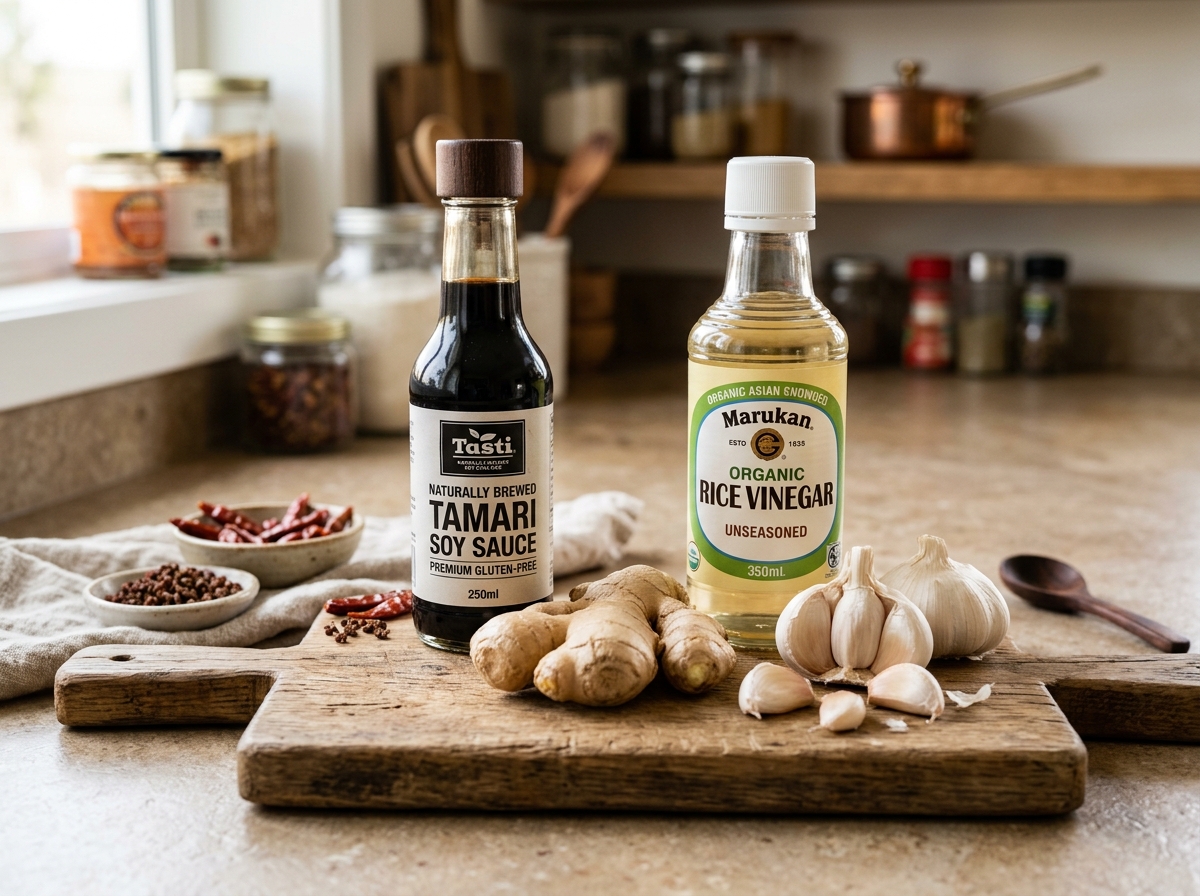
The foundation of any great stir fry sauce is the umami base. We recommend using a reduced sodium soy sauce to keep the salt levels in check. If you are avoiding gluten, tamari sauce is an excellent alternative that offers a richer, deeper flavor. For those looking for a soy-free and lower-sodium option, coconut aminos provide a slightly sweet, savory profile that works beautifully.
To add depth without adding fat, we use:
- Rice Vinegar: This provides the essential “tang” that balances out the saltiness.
- Miso Paste: A small spoonful of miso adds an incredible fermented depth and a “meatiness” to vegan sauces.
- Broth/Stock: Instead of using oil to create volume, we use no salt-added chicken broth or a high-quality vegetable stock. This keeps the sauce light but flavorful.
- Fresh Aromatics: Nothing beats the punch of fresh grated ginger and minced garlic. They are the heart and soul of Asian-inspired cooking.
Smart Substitutions for a Healthier Low Fat Stir Fry Sauce
Creating a low fat stir fry sauce doesn’t mean sacrificing the textures we love. If you miss the creaminess of a peanut sauce, you don’t have to use half a jar of high-fat peanut butter. Instead, try using a small amount of natural peanut butter (the kind with just peanuts and salt) or even sun butter for a nut-free version. A little goes a long way when whisked into a broth base.
For sweetness, we steer clear of white sugar. A drizzle of honey or maple syrup provides a more complex flavor profile and allows us to use much less overall. If you want to kick up the heat, chili flakes or a squeeze of Sriracha can add excitement without adding a single gram of fat.
How to Prepare and Store Your Sauce in Minutes
One of the biggest myths about healthy cooking is that it takes forever. We are busy people, and we know you are too! A homemade low fat stir fry sauce can be prepared in literally five minutes.
Our favorite “life hack” is the jar-shake method. Instead of dirtying a bowl and a whisk, simply toss all your ingredients into Quart Sized Mason Jars, screw on the lid, and give it a vigorous shake. This ensures the thickener is fully incorporated and the aromatics are well-dispersed. If you prefer an ultra-smooth texture—especially if you’re using ginger chunks or miso—a quick pulse in a Ninja blender will do the trick.
For those who like to whisk manually, a small Whisk is perfect for ensuring no clumps of arrowroot or cornstarch remain.
Once made, the sauce can be stored in an airtight container in the refrigerator for up to three weeks. However, if you really want to save time, we recommend batch cooking. We like to make a double or triple batch and freeze the leftovers in Souper Cubes or Stasher Bags. These pre-portioned blocks of sauce can be dropped directly into a hot pan with your veggies, melting down into a perfect glaze in seconds.
Best Thickening Agents for a Glossy Low Fat Stir Fry Sauce
The secret to that “restaurant-quality” look is the thickener. In a low fat stir fry sauce, we don’t have fat to create a thick emulsion, so we rely on starches.
The “slurry technique” is non-negotiable here. Never add dry starch directly to a hot pan, or you’ll end up with unappetizing lumps. Always mix your starch with a tablespoon or two of cold water or broth first.
While cornstarch is the traditional choice, we’ve found that arrowroot starch is superior for low-fat cooking. It creates a clearer, glossier sauce and holds up better if you need to reheat your leftovers.
| Feature | Arrowroot Starch | Cornstarch |
|---|---|---|
| Source | Tropical plant (Maranta arundinacea) | Corn (often GMO) |
| Appearance | Glossy, crystal clear | Slightly opaque/matte |
| Flavor | Neutral | Neutral |
| Reheating | Holds up well | Can become spongy or thin |
| Health Benefit | Easier to digest; non-GMO | Common allergen for some |
Creating Balanced Meals with Healthy Sauces
A sauce is only as good as what it covers! At Finance Savex, we believe in minimalist cooking—using just 4-5 ingredients to create a meal in under 30 minutes.
When pairing your low fat stir fry sauce, look for lean proteins that won’t add unnecessary saturated fat back into the dish. Excellent choices include:
- Chicken Breast: Sliced thin so it cooks in minutes.
- Shrimp: The ultimate fast-cooking protein.
- Tofu or Tempeh: Perfect for soaking up all that umami goodness.
- Lean Beef: Look for top round or flank steak and slice against the grain.
To keep things efficient, we suggest checking out our guides on budget-friendly-stir-fry-meals and fast-stir-fry-meals-for-one. If you’re really in a pinch, our minimalist-stir-fry-for-quick-dinners strategy will show you how to use frozen veggie mixes to get dinner on the table even faster.
Frequently Asked Questions about Low Fat Stir Fry Sauce
How can I make my low fat stir fry sauce gluten-free or vegan?
Making these adaptations is incredibly simple. For a gluten-free sauce, always swap soy sauce for tamari or coconut aminos. For a vegan version, ensure your sweetener is maple syrup or agave instead of honey, and use a vegetable-based broth. If a recipe calls for fish sauce, you can find vegan “no-fish” sauces made from seaweed and mushrooms that provide that same salty, funky punch. Always check your labels, as some brands of miso or pre-packaged broths may contain hidden gluten or animal by-products.
What is the typical nutritional breakdown of a low fat stir fry sauce?
Based on our research, a homemade low fat stir fry sauce is a nutritional powerhouse compared to store-bought versions. A typical serving (about 1/4 cup) ranges from 16 to 110 calories. The fat content is remarkably low, often between 0g and 6g, depending on whether you add a touch of sesame oil or nut butter for flavor. Sodium can be high in any Asian-style sauce, but by using low-sodium bases, you can keep it around 500–800mg per serving, which is significantly lower than the 1,500mg+ found in many commercial brands.
How do I prevent my sauce from becoming lumpy?
Lumps are the enemy of a good stir fry! As mentioned before, the “slurry” is your best friend. Mix your arrowroot or cornstarch with cold liquid until it’s completely smooth before adding it to the rest of the sauce. When you pour the sauce into your hot wok, whisk or stir continuously. The heat will activate the starch almost instantly. If you do happen to get lumps, don’t panic—you can pour the sauce through a fine-mesh strainer before serving.
Conclusion
At Finance Savex, our mission is to make healthy eating accessible for everyone, no matter how busy your lifestyle is. We specialize in minimalist, time-saving recipes that don’t require a culinary degree or a massive grocery budget. By mastering a simple low fat stir fry sauce, you’re taking a huge step toward better health and more efficient meal prepping.
Ready to simplify your kitchen even further? You can find More info about budget meals on our site to help you eat well without breaking the bank. Happy cooking!
