
The 30 Minute Veggie Stir Fry That Actually Tastes Good
The Fastest Path to a Healthy Weeknight Dinner
A 25 minute healthy stir fry is one of the best meals you can make on a busy weeknight. High heat, fresh vegetables, a simple sauce, and one pan are all you need.
Here’s what makes it work in 25 minutes:
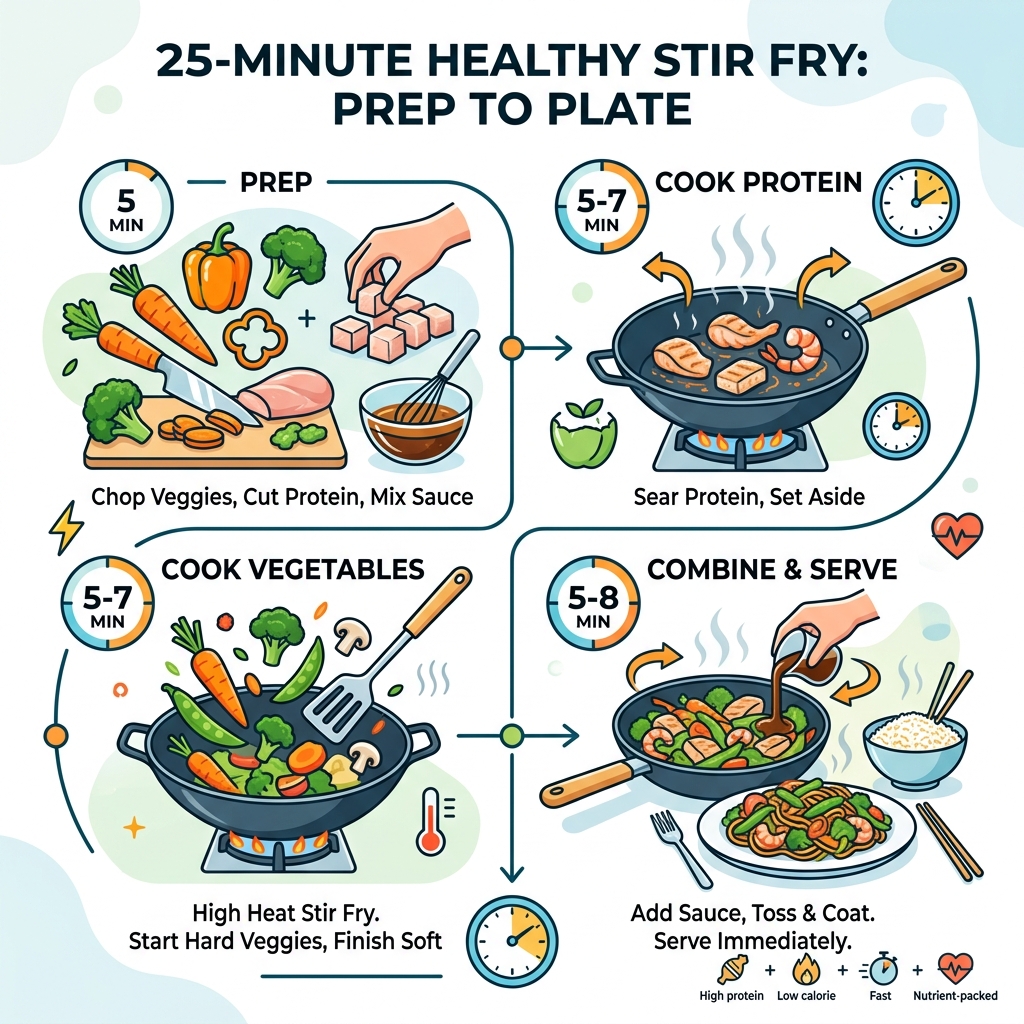
- Prep (5 min): Chop vegetables, cube your protein, whisk your sauce
- Cook protein (5-7 min): Sear chicken, tofu, shrimp, or beef, then set aside
- Cook vegetables (5-7 min): Start with hard veggies, finish with soft ones
- Add sauce (2-3 min): Toss everything together until coated and glossy
- Serve: Over rice, noodles, or on its own
That’s it. No complicated steps. No fancy equipment required.
Stir frying is one of the few cooking methods that is both fast and nutritious. Because vegetables cook quickly over high heat, they hold on to more of their vitamins and minerals. A single serving can deliver up to 9g of protein and 6g of fiber, with around 200 calories, depending on what you add.
The biggest mistake most home cooks make? A pan that isn’t hot enough. That one problem turns a crisp, flavorful stir fry into a soggy, steamed mess. We’ll show you exactly how to avoid it.
The Anatomy of a Perfect 25 Minute Healthy Stir Fry
To create a 25 minute healthy stir fry that truly satisfies, we need to look at the balance of the plate. At Finance Savex, we believe that Healthy Choices shouldn’t be a chore. A perfect stir fry balances macronutrients—protein, healthy fats, and complex carbohydrates—to keep you full without the “heavy” feeling of traditional takeout.
Scientific research consistently shows that high-fiber diets are essential for digestive health and weight management. By loading your wok with fiber-rich vegetables, you’re not just making a meal; you’re fueling your body. The beauty of the stir-fry method is nutrient preservation. Because the cooking time is so brief, the heat doesn’t have time to break down the heat-sensitive vitamins (like Vitamin C and B vitamins) found in fresh produce.
We aim for a high nutrient density with a lower calorie density, meaning you can eat a large, satisfying portion that supports your health goals. A typical vegetable-heavy version provides about 6g of fiber and 9g of protein per serving, while a tofu-based version can jump to 10g of protein while keeping calories around 150-200 per serving.
Essential Ingredients for a 25 Minute Healthy Stir Fry
The secret to speed is choosing ingredients that play well with high heat. For those looking for Quick Recipes, we recommend focusing on these staples:
- Lean Proteins: Chicken breast (sliced thin) or extra-firm tofu are our top picks. Chicken provides about 28g of protein per serving, while tofu is a fantastic plant-based powerhouse.
- Hard Vegetables: Broccoli florets and carrots take the longest to cook, so they go in first.
- Snap Peas and Peppers: These add a satisfying crunch and a burst of Vitamin C.
- Aromatics: Fresh garlic and ginger are non-negotiable. While jarred versions exist, the punch of flavor from fresh ginger is what makes a homemade stir fry taste like a professional dish.
Choosing High-Heat Oils and Equipment
You cannot make a restaurant-quality 25 minute healthy stir fry in a lukewarm pan with butter. You need high-heat oils and equipment that can take the “ferocious heat” required for a proper sear.
- The Oil: Use oils with a high smoke point. Avocado oil is our favorite because it can withstand temperatures up to 520°F without burning or releasing harmful compounds. Peanut oil is another classic choice with a smoke point of 450°F. Avoid extra virgin olive oil or butter, as they will smoke and turn bitter at these temperatures.
- The Pan: A carbon steel wok is the gold standard for heat distribution and “wok hei” (the breath of the wok). However, if you don’t have one, a large cast iron skillet is an excellent alternative. Cast iron has incredible heat retention, which prevents the pan temperature from dropping when you add cold ingredients.
Master the Technique: How to Avoid Soggy Vegetables
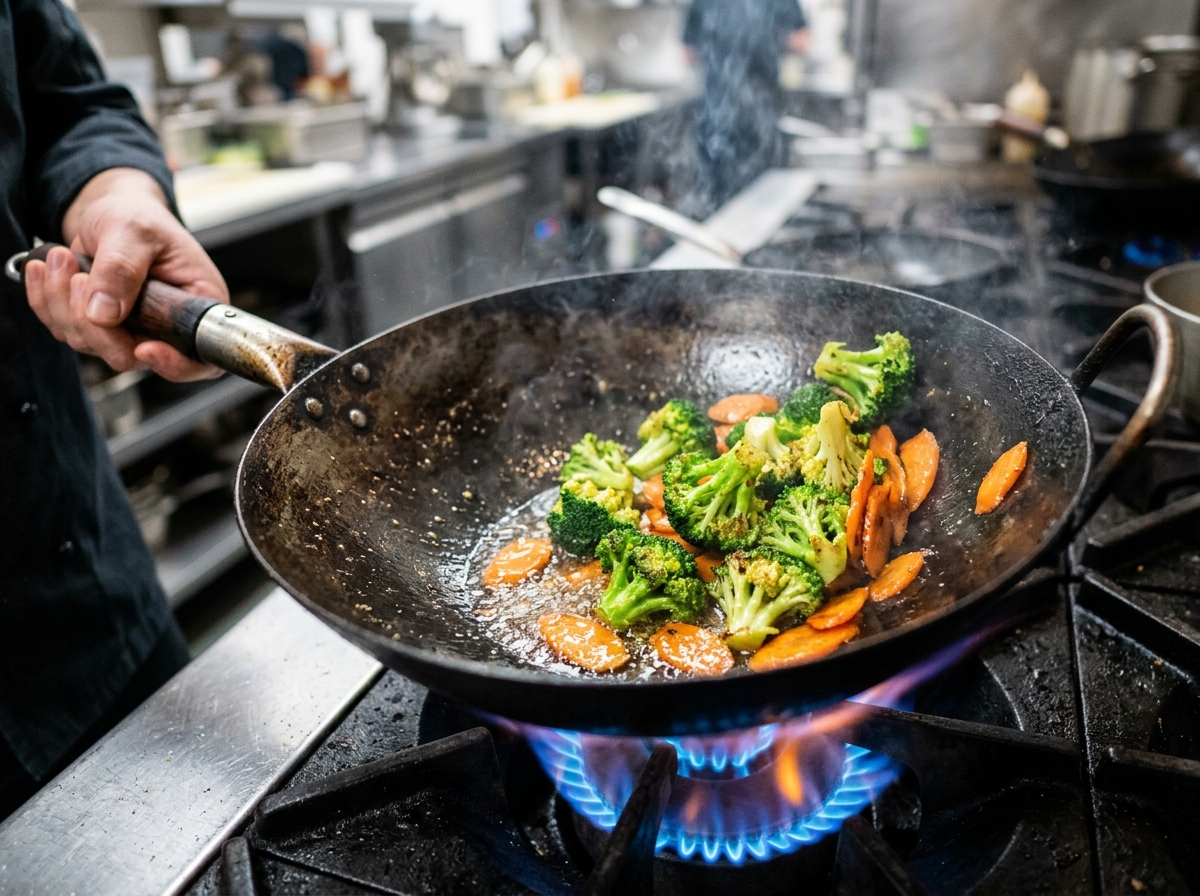
We’ve all been there: you want a crisp dinner, but you end up with a “sad, soggy pile of lukewarm vegetables.” To avoid this, you must follow our favorite Cooking Tips.
The most important rule is Mise en Place. This is fancy chef talk for “getting everything ready before the heat is on.” Since the actual cooking takes less than 10 minutes, you won’t have time to chop a carrot while the garlic is frying. If you try, you’ll burn the garlic.
Batch cooking is another secret. If you crowd the pan, the moisture released by the vegetables has nowhere to go. Instead of searing, the veggies will steam in their own juices. If your pan isn’t massive, cook the protein first, remove it, then cook the veggies in two smaller batches.
The Secret Sequence for a 25 Minute Healthy Stir Fry
To ensure everything reaches the plate at the perfect texture, follow this sequence:
- Protein First: Sear your chicken or tofu until golden. Remove it from the pan so it doesn’t overcook and become rubbery.
- Hard Veggies: Add broccoli and carrots. Let them sit for 60-90 seconds without moving them to get a nice char.
- Softer Veggies: Add bell peppers, snap peas, or mushrooms.
- Aromatics Timing: Create a “well” in the center of the pan. Add your garlic and ginger here. Cook for only 30 seconds until fragrant, then toss with the rest of the veggies.
- The Sauce and Slurry: Pour in your sauce. If you want that glossy, takeout look, ensure your sauce has a little cornstarch (a “slurry”). It will thicken in 30-60 seconds.
- Garnish: Finish with green onions and sesame seeds for a professional presentation.
Preventing Common Stir-Fry Mistakes
- Low Temperature: If the oil isn’t shimmering or faintly smoking before you start, wait.
- Excess Water: Pat your vegetables completely dry after washing. Water is the enemy of a good sear.
- Overcooking Protein: Chicken breast dries out quickly. Remove it the moment it’s no longer pink in the center.
- Sauce Evaporation: If your heat is too high and your sauce is too thin, it will disappear. Add a splash of water or broth if the pan looks dry.
Better Than Takeout: A Simple 4-Ingredient Sauce
Forget the bottled sauces loaded with preservatives and sugar. You can make a “clean eating” sauce using pantry staples that tastes significantly better and costs pennies.
The Finance Savex 4-Ingredient Base:
- Low-sodium soy sauce: Provides the umami (savory) base without the massive sodium hit.
- Rice vinegar: Adds the necessary acidity to cut through the salt.
- Toasted sesame oil: This is a finishing oil. It adds a deep, nutty aroma.
- Honey or Maple Syrup: Just a touch to balance the vinegar.
Using coconut aminos instead of soy sauce can reduce sodium content by a staggering 70%. This is a huge win for heart health and reducing bloating.
| Feature | Homemade Sauce | Restaurant Takeout |
|---|---|---|
| Sodium | ~400mg | ~1,300mg+ |
| Sugar | 2-5g (Natural) | 15g+ (Refined) |
| Oil Quality | High (Avocado/Peanut) | Low (Soybean/Vegetable) |
| Cost | < $1.00 per serving | $12.00 – $18.00 |
Customizing Your Stir Fry for Every Diet
One of the reasons we love a 25 minute healthy stir fry is its versatility. It can be adapted to almost any dietary need:
- Gluten-Free: Swap soy sauce for tamari or coconut aminos.
- Vegan/Vegetarian: Use extra-firm tofu or tempeh. Scientific research on the benefits of plant-based proteins highlights their role in reducing the risk of chronic diseases while providing essential amino acids.
- Keto/Low Carb: Skip the rice and noodles. Use cauliflower rice or simply double the “low-carb” veggies like bok choy, zucchini, and bell peppers. Avoid honey in the sauce and use a keto-friendly sweetener or just extra ginger and garlic for flavor.
- Paleo: Use coconut aminos and honey, and serve over a bed of sautéed greens.
Frequently Asked Questions about Quick Stir-Fries
How do I keep my chicken from drying out?
The secret is a Chinese technique called velveting. Before cooking, toss your thinly sliced chicken in a bowl with a tablespoon of soy sauce and a teaspoon of cornstarch. The cornstarch creates a thin protective barrier that seals in moisture during the high-heat blast. Also, always slice your chicken against the grain to break up tough muscle fibers, ensuring every bite is tender.
Can I use frozen vegetables for this recipe?
Yes, you can! Frozen vegetables are often frozen at the peak of freshness, so they are nutritionally excellent. However, do not thaw them first, as they will become mushy. Add them directly to the screaming-hot pan. They will release more water than fresh veggies, so keep the heat at maximum and cook for an extra minute to allow that moisture to evaporate.
What is the best way to reheat leftovers?
Whatever you do, avoid the microwave if you want to keep the texture! Microwaving makes the vegetables rubbery and the protein tough. Instead, use the skillet method. Heat a teaspoon of oil in a pan over medium-high heat, add the leftovers with a tiny splash of water or broth to create steam, and toss for 2-3 minutes until heated through.
Leftovers typically stay fresh in an airtight container in the fridge for 3-5 days. If you’re into meal prep, you can even freeze the stir fry (minus the rice) for up to 2 months. For more ideas on fast meals, check out our Quick Recipes section.
Conclusion
At Finance Savex, our mission is to prove that “adulting” doesn’t have to mean spending hours in the kitchen or settling for unhealthy convenience foods. A 25 minute healthy stir fry is the ultimate minimalist meal prep solution. It’s fast, budget-friendly, and packed with the nutrients your body needs to thrive.
By mastering the heat, prepping your ingredients in advance, and using a simple homemade sauce, you can put a dinner on the table that beats delivery in taste, cost, and health. Ready to start your journey toward a simpler, healthier kitchen? Explore more of our Healthy Choices to find your next favorite weeknight superhero meal. Happy cooking!
