
The Only Healthy Chicken and Vegetable Stir Fry Recipe You Need
The Fastest Way to Eat Healthy Tonight
Chicken and vegetable stir fry healthy meals are one of the best weeknight dinners you can make — ready in 30 minutes, packed with protein and nutrients, and endlessly customizable.
Here’s what you need to know at a glance:
- Prep time: 10-15 minutes
- Cook time: 15-20 minutes
- Calories per serving: as low as 156-285 kcal
- Protein per serving: 22-38g
- Key nutrients: up to 146% daily Vitamin C per serving
- Equipment needed: one wok or large skillet
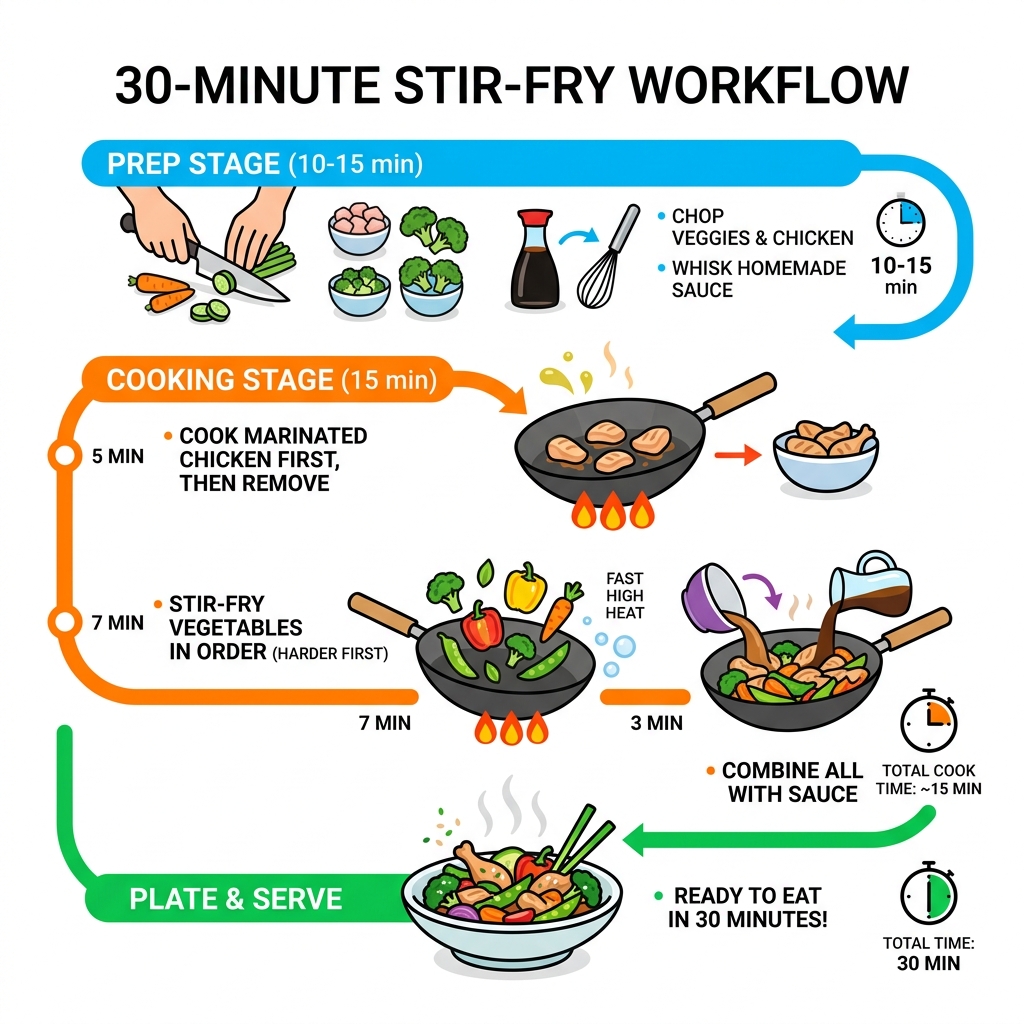
The core idea is simple: cook marinated chicken first, remove it, stir fry your vegetables in order of hardness, then combine everything with a homemade sauce. That’s it.
This approach beats takeout on every front — lower sodium, no mystery ingredients, and it costs a fraction of the price.
The dish works because stir frying is a high-heat, fast-cooking method that preserves nutrients while keeping vegetables crisp and chicken juicy. You get a filling, nutrient-dense meal without spending an hour in the kitchen.
Whether you’re gluten-free, low-carb, or just trying to eat cleaner without giving up flavor — this recipe adapts easily to what you have on hand.
Why This Chicken and Vegetable Stir Fry Healthy Recipe Works
At Finance Savex, we believe that healthy eating shouldn’t be a chore or a drain on your wallet. This recipe works because it utilizes a centuries old cooking technique designed for speed and efficiency. By cooking small pieces of food rapidly over high heat, we lock in flavors and maintain the structural integrity of our ingredients.
A chicken and vegetable stir fry healthy enough for daily rotation is a nutritional powerhouse. We focus on lean protein and a “rainbow” of vegetables to ensure you’re getting a wide spectrum of vitamins and minerals. Because we use minimal oil and a homemade sauce, the calorie count stays impressively low — some versions clock in at just 156 calories per serving while providing 22g of protein. It fits perfectly into our Category: Healthy Choices for those looking to maintain a balanced lifestyle without sacrificing taste.
Nutritional Benefits of a Chicken and Vegetable Stir Fry Healthy Meal
When you opt for this dish, you aren’t just eating; you’re fueling. The high protein content (up to 38g in some variations) provides long-lasting satiety and supports muscle repair, making these great Quick High-Protein Dinners for One.
The vegetable components are equally vital. Broccoli and bell peppers are loaded with antioxidants and Vitamin C — in fact, one serving can provide 146% of your daily Vitamin C needs. The high fiber content from the veggies aids digestion and helps regulate blood sugar, preventing that post-dinner energy crash. This is the ultimate metabolism-boosting meal that keeps you feeling light yet energized.
Pro Tips for Tender-Crisp Perfection
The difference between a soggy mess and a restaurant-quality stir fry lies in the technique. Here is how we achieve that elusive “tender-crisp” texture:
- High Heat is Mandatory: Your pan should be shimmering hot before any food touches it. This sears the outside of the chicken and veggies instantly.
- Constant Motion: As the name implies, you must “stir-fry.” Keep the ingredients moving to prevent burning.
- Batch Cooking: If you crowd the pan, the temperature drops, and your food will steam instead of sear. Cook the chicken in two batches if necessary.
- Uniform Slicing: Cut all your chicken pieces and vegetable slices to a similar size so they cook at the same rate. This is especially helpful for Fast Stir-Fry Meals for One where every second counts.
Essential Ingredients for a Healthy Stir Fry
To keep things minimalist and efficient, we focus on high-impact ingredients. For the protein, boneless skinless chicken breast is the gold standard for lean health, though chicken thighs offer a juicier alternative if you have the room in your macro budget.
For the “vegetable” half of our chicken and vegetable stir fry healthy equation, we recommend a mix of:
- Broccoli: Great for soaking up sauce.
- Bell Peppers: Adds sweetness and crunch.
- Snap Peas: Provides a fresh, earthy pop.
- Carrots: Adds color and essential Vitamin A.
Fresh vs. Frozen: Which is Better?
While fresh is often preferred for texture, frozen vegetables are a massive time-saver and are nutritionally comparable since they are flash-frozen at peak ripeness.
| Vegetable Type | Fresh Cooking Time | Frozen Cooking Time | Tip |
|---|---|---|---|
| Broccoli | 3-4 Minutes | 5-6 Minutes | Thaw frozen slightly first |
| Carrots | 4-5 Minutes | 3-4 Minutes | Fresh should be sliced thin |
| Bell Peppers | 2-3 Minutes | 4-5 Minutes | Frozen can become soft quickly |
| Snap Peas | 2 Minutes | 3 Minutes | Add at the very end |
How to Make a Healthy Stir Fry Sauce from Scratch
Store-bought sauces are often hidden sugar and sodium bombs. Making your own takes five minutes and gives you total control. Our Easy Seasoning Tips for Simple Meals always emphasize balance: salty, sweet, sour, and spicy.
- The Base: Use low-sodium soy sauce or Coconut Aminos (Soy-Free/Gluten-Free) for a soy-free alternative.
- The Thickener: A small amount of cornstarch or arrowroot powder creates that glossy, restaurant-style finish.
- The Aromatics: Freshly minced ginger and garlic are non-negotiable for authentic flavor.
- The Liquid: Use a splash of chicken broth to add volume without extra oil.
Best Oils for High-Heat Cooking
Not all oils are created equal. Since stir frying requires high temperatures, you need an oil with a high smoke point to prevent the fats from breaking down and releasing bitter flavors or harmful compounds.
- Avocado Oil: Our top pick. It has a very high smoke point (520°F) and a neutral flavor.
- Grapeseed Oil: Another excellent high-heat option that won’t overpower the ingredients.
- Refined Coconut Oil: Good for a subtle tropical hint, but ensure it is “refined” to handle the heat.
Avoid extra virgin olive oil or unrefined sesame oil for the actual frying; save the sesame oil for a flavorful garnish at the end. For more minimalist ideas, check out our Budget Chicken Recipes Under 5 Ingredients.
Step-by-Step Guide to the Perfect Stir Fry
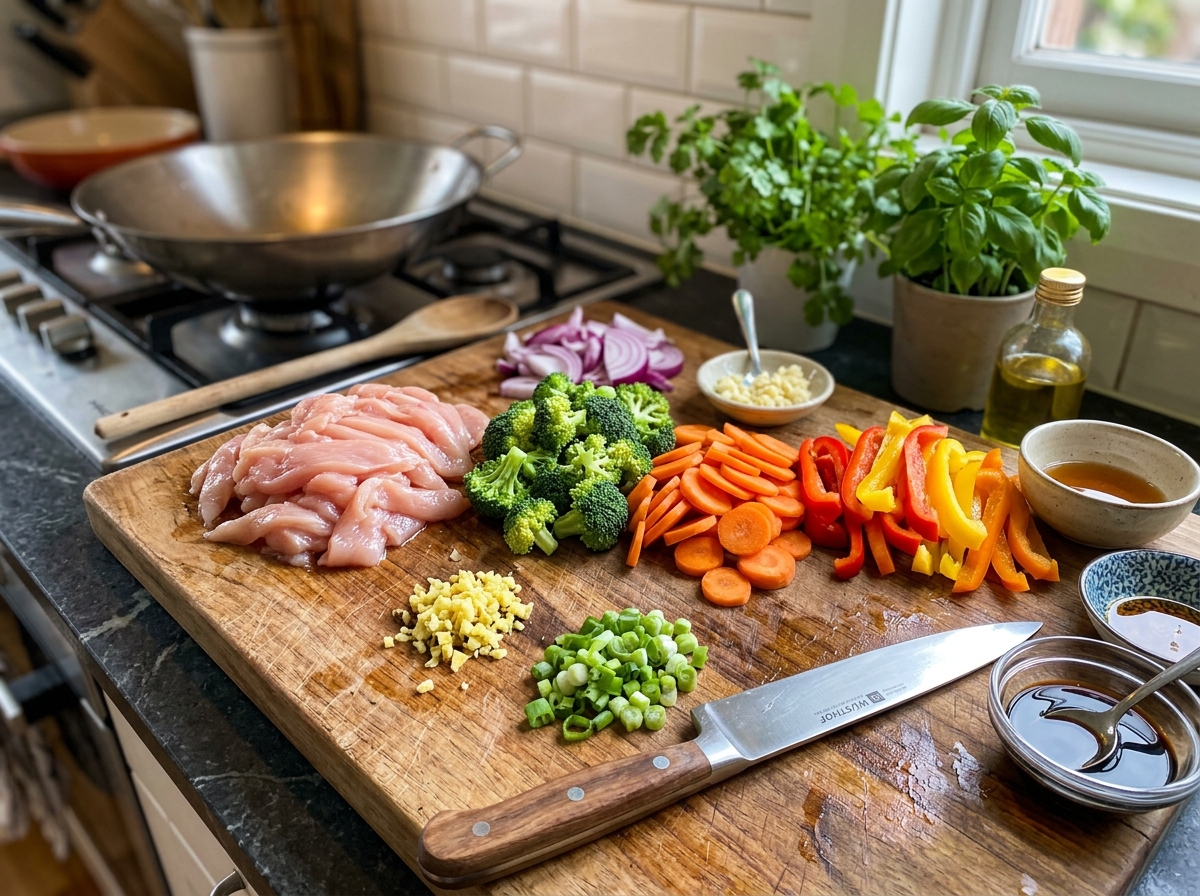
The #1 rule of stir frying is mise-en-place. Because the cooking happens so fast, you cannot be chopping carrots while the chicken is already in the pan. Have everything sliced, diced, and whisked before you turn on the stove.
While a cast iron wok is the traditional tool of choice for its heat retention and high sides, a large stainless steel or ceramic skillet works perfectly well. We love Minimalist Stir-Fry for Quick Dinners because they require very little cleanup.
The Proper Cooking Order for Chicken and Vegetables
To ensure nothing is overcooked or underdone, follow this sequence:
- Sear the Protein: Add oil to the hot pan, then the chicken. Cook until browned and just cooked through. Remove the chicken and set it aside on a plate. This prevents it from becoming rubbery while the veggies cook.
- Hard Vegetables First: Add a bit more oil if needed. Toss in the “hard” veggies like carrots and broccoli stems. These need the most time.
- Medium Vegetables: Add bell peppers, broccoli florets, and onions.
- Aromatics: Push the veggies to the side and add your garlic and ginger to the center for 30 seconds until fragrant.
- The Reunion: Return the chicken to the pan along with any soft veggies (like snap peas or spinach).
- The Sauce: Whisk your sauce one last time (cornstarch settles!) and pour it over. Toss everything constantly for 1-2 minutes until the sauce bubbles and thickens.
This “staged” approach is one of our favorite Tips for Easy One-Pot Meals.
Serving Suggestions and Healthy Bases
Your chicken and vegetable stir fry healthy masterpiece deserves a great foundation. While white rice is traditional, there are many nutrient-dense alternatives:
- quinoa: Higher in protein and fiber than rice.
- shirataki noodles: Virtually zero calories and great for soaking up sauce.
- Cauliflower Rice: The ultimate low-carb choice that adds an extra serving of veggies.
- Brown Rice or Rice Noodles: Great for a heartier, gluten-free meal.
For those on a strict time budget, these Simple Chicken Recipes Under 5 Ingredients can often be served as-is for a light dinner.
Customizing Your Stir Fry for Dietary Needs
One of the reasons we love this dish is its versatility. You can easily pivot to meet any dietary requirement:
- Gluten-Free: Swap standard soy sauce for Tamari (Gluten-Free) or coconut aminos. Ensure your thickener is cornstarch or arrowroot.
- Low-Carb / Keto: Use a sugar-free sweetener (like liquid stevia or monk fruit) in the sauce instead of honey or sugar, and serve over cauliflower rice.
- Paleo: Use coconut aminos, honey as the sweetener, and arrowroot powder as the thickener. Stick to avocado oil for frying.
These swaps make for excellent Budget-Friendly Stir-Fry Meals that don’t require expensive specialty “diet” products.
Storage and Reheating Tips
Stir fry is a meal prep hero. You can store leftovers in airtight containers in the refrigerator for up to 3-4 days.
To reheat:
- Microwave: Use 50% power to prevent the chicken from becoming rubbery. Cover the dish to trap steam, which helps “revive” the vegetables.
- Stovetop: A quick 2-minute toss in a hot skillet with a teaspoon of water will bring back some of that original texture.
Avoid freezing your chicken and vegetable stir fry healthy leftovers if possible; the vegetables often lose their crispness and become mushy upon thawing. For more prep strategies, read our guide on How to Meal Prep for Healthy Eating.
Frequently Asked Questions about Healthy Stir Fry
Can I use frozen vegetables in a chicken and vegetable stir fry healthy dish?
Yes! Frozen stir-fry blends are a staple for Cheap Healthy Meals for Busy Adults. The trick is to partially thaw them and drain any excess water before they hit the pan. If they are too wet, they will lower the pan temperature and steam rather than fry. Add an extra 2-3 minutes to the cooking time compared to fresh veggies.
What is the best way to slice chicken for stir fry?
For the most tender results, slice your chicken against the grain. If you have time, put the chicken in the freezer for 15-20 minutes before slicing; this “semi-frozen” state makes it much easier to get uniform, paper-thin slices. This is a key secret for Quick Dinner Ideas Under 20 Minutes.
How do I prevent my stir fry from becoming soggy?
Sogginess is usually caused by overcrowding the pan or using heat that is too low. If you see liquid pooling in the bottom of your wok, your heat isn’t high enough. Work in small batches and wait to add the sauce until the very end. The sauce should only be in the pan long enough to thicken and coat the ingredients.
Conclusion
Mastering the chicken and vegetable stir fry healthy method is a game-changer for anyone looking to save time and money without compromising on nutrition. At Finance Savex, we are dedicated to helping you navigate a healthy lifestyle through minimalist cooking and smart choices. By ditching the takeout menu and reaching for a wok instead, you’re taking a major step toward better health and a happier budget.
Ready for more? Explore our collection of Budget-Friendly Meals to keep your kitchen efficient and your body fueled!
