Decorative Storage Ideas for a Small Apartment: Baskets, Boxes and Trays
Seven kinds of container that hold everyday things and add to the room, compared in one table, with advice on matching materials to your palette, repeating one material and keeping the number of types low.
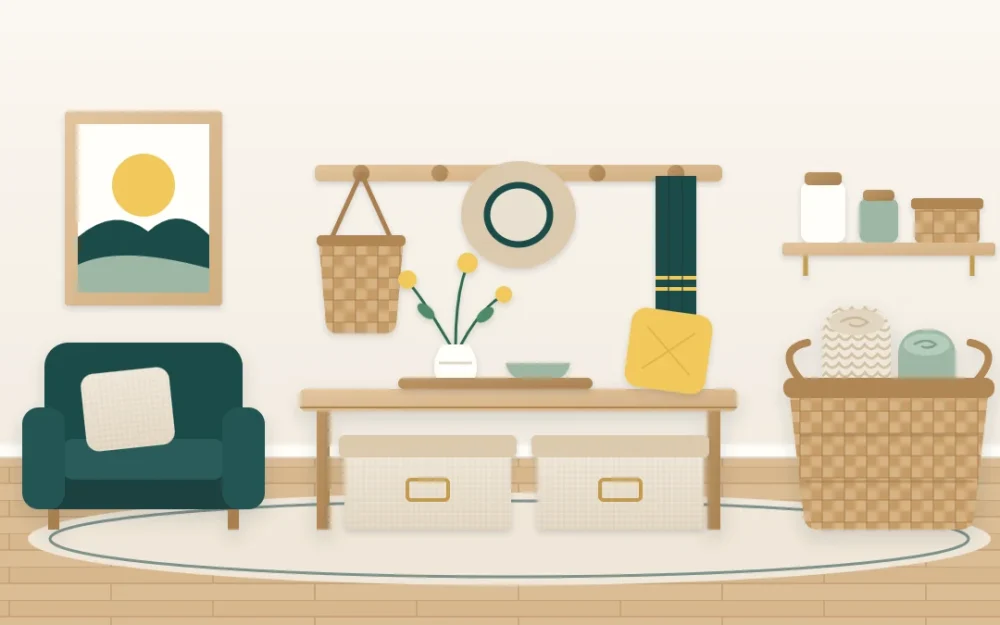
Keys, remotes, chargers, throws, mail, shoes: everyday things need somewhere to land, and in a compact home that somewhere is nearly always on show. There is no spare room where an ugly plastic tub can hide.
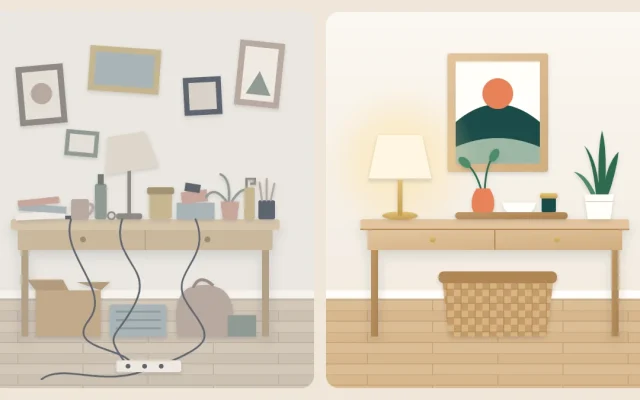
The most useful decorative storage ideas treat the container as part of the decor. A basket, box or tray is chosen the way you would choose a vase or a cushion, for its material, color and shape, and it happens to hold things as well. Done this way, storage adds to a small apartment instead of merely being tolerated in it.
Choose the container the way you choose decor
Before thinking about what goes inside, look at the room. Which materials are already there: pale wood, black metal, linen, rattan, glazed ceramic? Which two or three colors make up the palette? A container that picks up one of those materials or colors will look as if it belongs. One that introduces a new color and a new texture at the same time will look like storage.
Scale matters too. In a small room, one large basket reads as a calm, single shape, while four little ones read as four more objects. When in doubt, go bigger and fewer.
Seven containers compared
Each of these suits different contents and a different spot in the room.
| Container | Good for | Where it looks best |
|---|---|---|
| Open woven basket | Throws, cushions, magazines | On the floor beside the sofa or an armchair |
| Lidded box | Cables, papers, small odds and ends | On open shelves, in pairs or threes |
| Tray | Remotes, keys, a small vase, a dish | Coffee table, console, dresser top |
| Storage ottoman or bench | Bedding, shoes, games | At the foot of the bed, under a window, by the door |
| Lidded basket as a side table | Spare blankets, yarn, toys | Next to a chair, with a tray on top |
| Hooks and pegs | A tote, a hat, a scarf, an apron | Entry wall, back of a door, kitchen end wall |
| Glass or ceramic jars | Dry goods, cotton pads, brushes, pens | Kitchen shelf, bathroom ledge, desk |
Baskets and lidded boxes
A woven basket brings texture to a room that is mostly smooth surfaces, which is why it flatters a plain sofa or a painted wall. Use an open one for things that look good on their own. A throw rolled, not stuffed, with one edge showing is a decorative object in its own right.
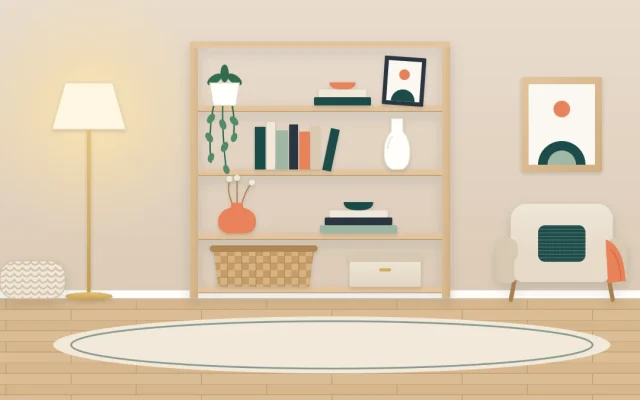
Lidded boxes are for contents nobody needs to see. On open shelving, two or three identical boxes side by side form one quiet block that balances the busier shelves around them. Fabric, woven or wood-look boxes all work; what matters is that they match each other. For how they fit in with books and objects, see this method for arranging shelves as decor.
Trays turn many things into one
Five small items scattered across a coffee table are five things to look at. The same five on a tray become a single object with a clear edge. That is the whole trick, and it works on any surface.
- Choose a tray that covers no more than about a third of the surface it sits on, so the table still has clear space.
- Give it a mix of heights: something tall such as a small vase, something flat such as a book or coaster stack, and one small dish for the truly loose bits.
- Pick a shape that contrasts with the table: a round tray on a rectangular table, a rectangular one on a round table.
Tip
If a tray keeps overflowing, it is a sign that something on it needs a closed home elsewhere. A tray holds what you want to see, not everything you use.
Furniture that hides things
Some storage works best when it does not look like storage at all. A storage ottoman stands in for a coffee table or extra seat and swallows bedding or board games. A slim bench with space beneath gives shoes a place by the door and offers a surface for a cushion. Choose upholstery or wood that repeats something already in the room, so the piece reads as furniture first.
A large lidded basket can double as a side table next to an armchair. Check that the lid is flat and firm, set a tray on top to make a steady surface for a cup or a small lamp, and keep heavier items on proper furniture.
Hooks, pegs and jars: storage you can see
Open storage only looks decorative when the things on it are worth looking at. A peg rail with one good tote, a straw hat and a scarf is a small display. The same rail under six coats is a heap. Limit what hangs there to a few pieces in colors that suit the room, and move the rest to a closet. The guide to creating an entry where there is none shows how hooks combine with a mirror, a shelf and a mat.
Jars follow the same rule. Clear glass shows off contents with a pleasing shape or color, such as pasta, cotton pads or wooden spoons. Opaque ceramic is the better choice for anything messy-looking. Keep to one style of jar per shelf.
Before you hang anything
Hooks and peg rails fixed to a wall need hardware chosen for your wall type and the weight they will carry, fitted by the manufacturer’s instructions. Get help if you are unsure, and check your lease or ask before making changes.
Repeat one material and limit the types
Two habits keep containers from becoming clutter themselves.
- Repeat one material three times. If you choose seagrass, let it appear as a floor basket, a box on the shelf and a small tray on the console. The repetition ties separate corners of the room together.
- Keep to two or three container types per room. For example woven baskets, pale lidded boxes and one wooden tray. A different container for every job is one of the quieter causes of a busy-looking room; there is more on that in this guide to reducing visual clutter.
Finally, place each container where the thing gets dropped anyway. A key dish belongs by the door and the throw basket beside the seat where you actually sit in the evening. Storage that follows your habits gets used, and storage that gets used keeps the surfaces around it clear.
Frequently asked questions
How do I keep storage baskets from looking messy?
Choose baskets large enough that nothing spills over the rim, and stay with one weave and color family across the room. Use open baskets only for things that look tidy when rolled or stacked, such as throws and magazines, and switch to a lidded basket or box for anything with cords, packaging or many small parts.
What should go on a coffee table tray?
Three or four things with different heights is usually enough: something tall such as a small vase of stems, something flat such as a book, and a small dish for remotes or keys. Leave part of the tray empty so it looks arranged, and keep most of the table surface clear around it.
Do all my storage containers need to match?
Not exactly, but they should relate. Two or three container types per room is a comfortable limit, and repeating one material in several places helps the room feel coordinated. Containers that sit side by side on the same shelf look best when they are identical, since a matched row reads as a single block.