Renter-Friendly Apartment Decor: Ideas You Can Take With You
Seven ways to make a rental feel like your own using only things that move out with you: textiles, lamps, leaning art, colorful furniture, shelving units and plants, plus an honest note on adhesive hooks.
White walls you cannot paint, flooring you did not choose and a home you may leave in a year or two: a rental can feel like someone else’s place for a long time. The good news is that most of what gives a room its character was never attached to the building in the first place.
Renter-friendly apartment decor works on one principle: put your effort into things that leave with you. The seven ideas below are ordered from the largest visual effect to the smallest, so you can stop wherever the room starts to feel like yours. Before changing anything that belongs to the apartment itself, check your lease or ask.
1. Let textiles do the work of paint
Fabric covers more surface than anything else you own, which makes it the closest substitute for wall color. A rug changes the floor. Curtains change a whole wall. A throw and cushion covers change the sofa.
Start with the rug, because it hides the most of what you did not choose. Then look at the windows. Standard rental blinds can stay in place while fabric panels in front of them soften the room, and the guide to curtains for a small apartment covers length, color and options for when drilling is not possible.
Pick two or three colors and repeat them across all the textiles. Against plain white walls, that repetition is what makes a room look planned.
2. Light the room with lamps you own
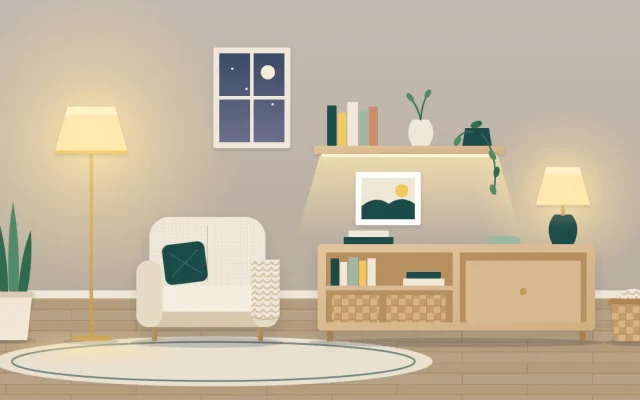
Most rentals come with one overhead light per room, and it flattens everything beneath it. Two or three plug-in lamps at different heights do more for atmosphere than almost any other change, and they pack into a box when you move.
A floor lamp in a dark corner, a table lamp on a shelf and a small rechargeable light on a bookcase are enough for a living room. Choose shades in a material that suits your palette, since a lamp is a decorative object in daylight too. Anything involving the building’s wiring is a job for a licensed electrician and needs the landlord’s permission, so plug-in and battery options are the practical route.
3. Lean large art and mirrors
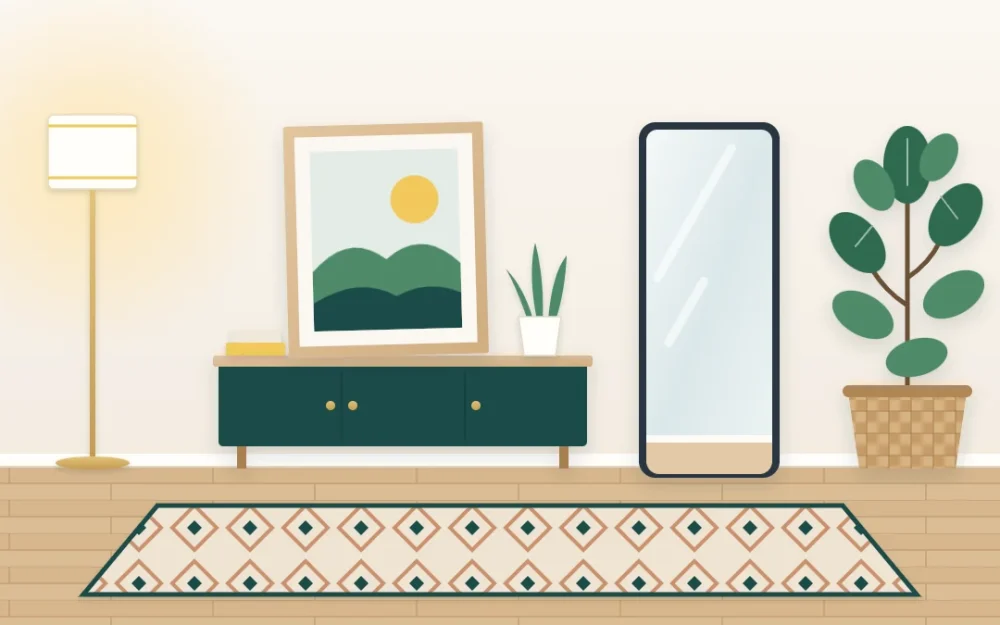
One generously sized piece resting on the floor, a low cabinet or a console gives a wall a focus without touching it. Leaning also looks relaxed and deliberate, particularly when a smaller frame overlaps the corner of a larger one.
A tall floor mirror propped beside a window repeats the daylight and adds depth to a narrow room. Set the base on a non-slip surface, place it where it will not be bumped, and follow the maker’s guidance on securing it. For a heavy mirror, get help if you are unsure.
If you would like a collected display that you can rearrange freely, a single shallow shelf for frames keeps wall fixings to a minimum, as described in the guide to styling a picture ledge. Anything fixed to a wall needs hardware chosen for the wall type, the weight of the object and the manufacturer’s instructions, and it is worth asking before you drill.
4. Use furniture as your color
When the walls must stay neutral, let a piece of furniture be the bold element. A deep green armchair, a painted side table, a rust-colored headboard or a set of dining chairs in a strong tone reads from across the room in the way a feature wall would.
One colored piece per room is usually enough in a small space. Echo its color once or twice in something smaller, such as a cushion or a vase, so it looks connected to its surroundings.
5. Choose freestanding shelving over built-ins
A bookcase or open shelving unit gives you a whole vertical surface to style with books, ceramics and framed prints, all without relying on the walls. A tall narrow unit also draws the eye upward, which helps a low room read as loftier.
Follow the maker’s guidance on securing tall freestanding furniture. Treat the unit as a display: leave some shelves partly empty and repeat your textile colors in the objects.
6. Add plants for shape and softness
A rental often has hard lines everywhere: flat doors, square windows, straight counters. Plants break that up with irregular outlines and a color that suits nearly any palette. One tall plant in a basket beside the sofa can fill a corner that would otherwise need furniture.
The pots matter as much as the leaves. Matching two or three containers in material or color keeps a group from looking scattered. There are more arrangements in the guide to using plants as decor in tight spaces.
7. Swap small hardware only with permission
Cabinet knobs, drawer pulls and a shower curtain are small details that date a rental quickly. Changing them can lift a kitchen or bathroom noticeably, but they belong to the apartment, so ask first.
If you get a yes, keep every original piece and its screws together in a labeled bag, and store the bag somewhere you will find it on moving day. Choose replacements that fit the existing holes so nothing new needs to be drilled. Putting the originals back is then a short job.
An honest word on adhesive hooks and strips
Adhesive hooks and strips are often presented as the renter’s answer to everything. They are useful for light items, but they are not predictable. Paint finishes and wall surfaces vary a great deal from one apartment to the next, and so does the age of the paint, which affects how any adhesive behaves when it is pulled away.
Good to know
Test any adhesive product in a hidden spot first, such as inside a closet, and leave it for a few days before removing it as directed. Follow the manufacturer’s instructions for surface preparation, for what the product is intended to carry and for removal.
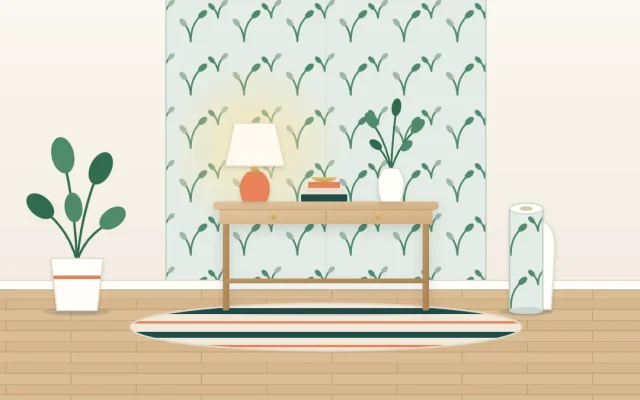
If the test patch goes well, keep adhesives for small, light things and continue to lean or stand anything larger. For pattern and color on the walls themselves, the same caution applies to removable wallpaper and decals, which are compared in the guide to temporary wall decor.
A home built this way has one more advantage. On moving day, the rug rolls up, the lamps unplug, the art goes under your arm, and the next apartment starts with all of it already chosen.
Frequently asked questions
How can I add color to a rental when the walls have to stay white?
Move the color onto things you own. A rug, curtains and cushion covers cover a large share of what you see, and one piece of furniture in a strong tone can play the role of a feature wall. Repeating the same two or three colors across those items makes the white walls look like a deliberate backdrop.
Are adhesive hooks a reliable choice for rental walls?
They can be handy for light items, but results are not predictable because paint finishes, wall surfaces and the age of the paint all differ. Try one in a hidden spot for a few days, follow the manufacturer's instructions for use and removal, and keep leaning or standing anything larger.
What should I do with the original knobs and fittings if I am allowed to swap them?
Keep every original piece together with its small parts in a labeled bag, and store it somewhere easy to find. Choose replacements that fit the existing holes so the originals can go straight back before you move out. Always ask before changing anything that belongs to the apartment.