Small Apartment Lighting Ideas: Layered Light With Plug-In Lamps
How to build general, task and accent light in a small apartment using only plug-in, clamp and rechargeable lamps, with advice on bulb color, glare and cords.
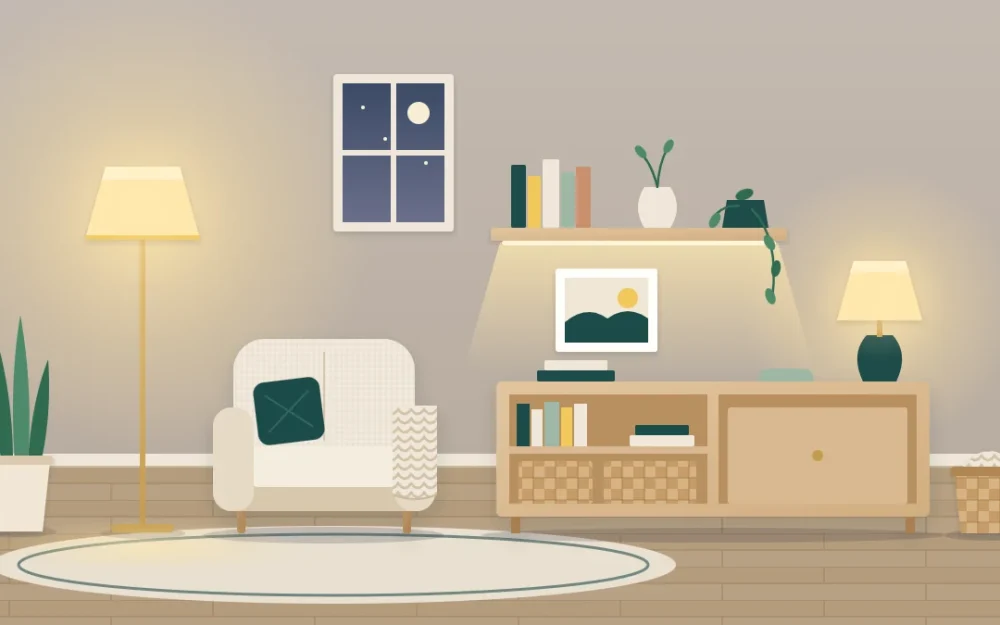
One ceiling light in the middle of the room is the usual starting point in a rental, and it is the reason so many apartments feel flat after sunset. Light from a single high source flattens every surface, leaves the corners dim and gives the room one mood only: on.
The small apartment lighting ideas below all rely on lamps that plug into an outlet or run on batteries, so nothing about the apartment itself has to change. The method is simple: build three layers of light, spread them around the room at different heights, and keep the bulbs consistent.
The three layers, in plain terms
- General light fills the room softly so you can move around. A floor lamp that throws light up or outward does this well.
- Task light is aimed at one activity: reading, cooking, working, getting dressed.
- Accent light is the smallest and most decorative. It picks out a picture, a shelf or a plant and gives the room depth.
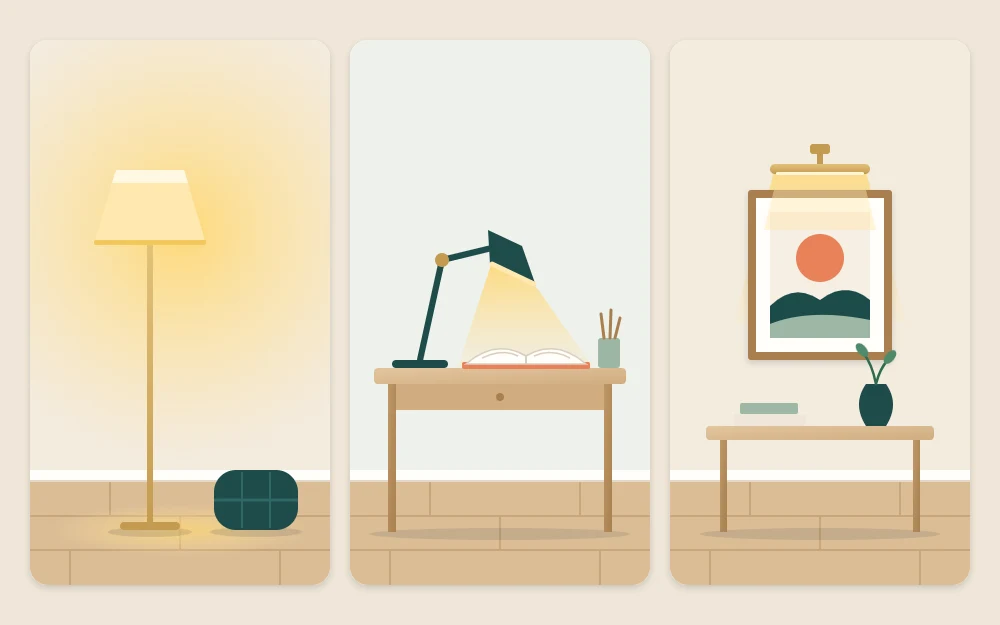
A compact room rarely needs more than three or four sources. What matters is that they do different jobs, so that you can switch the ceiling light off in the evening and still see comfortably.
Plug-in and battery options compared
| Type | Layer | Good spot | Worth knowing |
|---|---|---|---|
| Floor lamp | General | A dark corner or beside the sofa | Takes a little floor, so choose a slim base |
| Table lamp | General or task | Side table, console, dresser | The shade decides how soft the light is |
| Plug-in wall lamp | Task | Beside the bed or above a reading chair | Needs wall fixings and leaves a visible cord |
| Clamp lamp | Task | Shelf edge, headboard, desk | No fixings; moves whenever you do |
| Battery or rechargeable picture and shelf lights | Accent | Above art, under a shelf, inside a bookcase | Needs recharging or fresh batteries |
| String lights | Accent | Along a shelf, around a mirror, in a glass jar | Best in one place, not all around the room |
Spread the light at different heights
Think of the room in three bands: low (below the knee), middle (table height) and high (above the head). A single ceiling light only covers the high band. Add a table lamp for the middle and a small light on a low shelf or the floor behind a plant, and the room gains depth because some surfaces are bright and others fall into gentle shadow.
Try to place lamps in a loose triangle rather than a row. In a living room that might be a floor lamp at one end of the sofa, a table lamp across the room on a console and a small accent on a shelf. There are more ways to use this in the guide to decorating a small living room without crowding it.
Give dark corners a lamp of their own
An unlit corner makes the walls seem to close in at night. A lamp placed there, especially one that washes light up the wall, lets you see the full depth of the room, which helps it read as more open. If the corner has no outlet nearby, a rechargeable lamp on a stool or shelf does the job without a cord crossing the floor.
The same thinking works in a bedroom with no space for nightstands. A clamp lamp on the headboard or a plug-in wall lamp frees the surface completely, as described in the guide to styling a compact bedroom.
Pick one bulb color for each room
Bulbs are sold as warm, neutral or cool, and the label describes the tint of the light. The background is explained under color temperature, but the practical rule is short: warm bulbs give a yellowish, relaxed light that suits living rooms and bedrooms, while cooler bulbs look crisp and are easier to work under.
Whichever you choose, keep every bulb in the same room the same. A warm lamp next to a cool one makes one look dingy and the other harsh. If your desk shares the bedroom, a warm bulb with a focused shade is usually a comfortable compromise. For the colder months, lower and warmer light is the first step in making a small apartment feel cozy.
Tip
Check the maximum bulb rating printed on each lamp and stay within it. Dimmable bulbs only dim properly in lamps made for them.
Shades and glare
If you can see a bare bulb from where you sit, the light will feel harsh no matter how warm it is. Three quick fixes:
- Choose fabric or paper shades for general light. They glow and spread the light sideways.
- Use opaque or metal shades for task light, so the beam goes down onto the page and not into your eyes.
- Set table lamps so the bottom of the shade sits at about eye level when you are seated.
Light bounced off a wall or ceiling is softer than light aimed straight into the room. Turning an adjustable lamp toward a pale wall is the quickest way to calm a glaring corner.
Keep the cords tidy
Lamps add cords, and loose cords add visual noise. Run each one down the back of a furniture leg or along the baseboard, gather the slack with a reusable tie and keep cords out of walking paths. For a plug-in wall lamp, a slim cord cover in the wall color turns the cord into a neat vertical line.
Good to know
For a wall lamp, choose fixings for your wall type and the weight of the lamp, and follow the manufacturer’s instructions. Many cord covers stick on: paint finishes and surfaces vary, so test in a hidden spot first and follow the manufacturer’s directions for use and removal. Avoid overloading power strips.
What stays out of reach
Changing a ceiling fixture, adding a dimmer switch or doing anything else that touches the building wiring is a job for a licensed electrician, and in a rental it needs the landlord’s permission first. The good news is that you rarely need it. With three or four well-placed lamps, the ceiling light becomes something you use for cleaning and little else.
Frequently asked questions
How many lamps does a small living room need?
Three or four sources is a comfortable starting point for most compact living rooms: one for general light, one for reading or another task and one or two small accents. The number matters less than having them at different heights and in different parts of the room.
Are warm or cool bulbs better in a small apartment?
Warm bulbs usually suit living rooms and bedrooms because the light feels relaxed in the evening, while cooler bulbs can be helpful where you work or cook. The more important point is consistency: use one bulb color throughout a room so the lamps do not clash.
How can I light a room with no outlet in the corner?
A rechargeable table lamp or a battery shelf light can sit anywhere, so it is the simplest answer for a corner without an outlet. Charge it during the day and place it on a stool or shelf in the evening. Adding an outlet is work for a licensed electrician.