Mixing Textures in a Small Bedroom: A Simple Layering Formula
A neutral bedroom that looks flat usually needs texture, not color. Use this simple formula of three to five textures, each repeated twice, on the bed, floor, window and one accent.
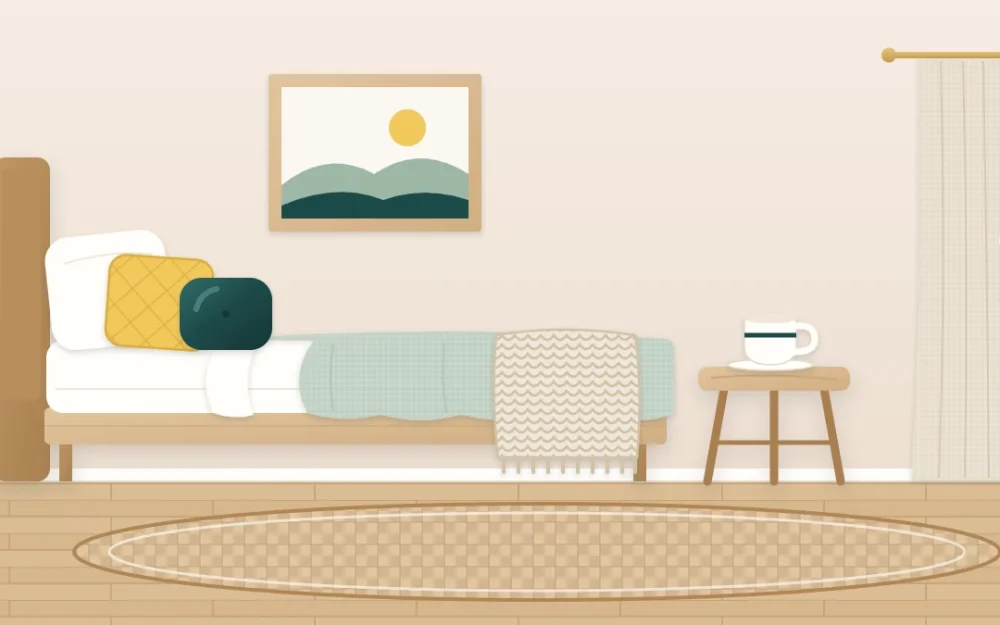
A small bedroom in white, cream and sand should feel restful. Often it just feels unfinished, as if someone stopped halfway. The usual reaction is to add a bright cushion or another object, and in a compact room both make things busier without making them better.
Mixing textures is the quieter answer. When color stays restrained, the surface of things is what gives the eye something to enjoy: the weave of a blanket, the grain of a stool, the glaze on a cup. What follows is a simple formula you can apply in an afternoon, mostly with what you already own.
Why a neutral room falls flat
Flatness is rarely about color. It happens when every surface in the room has the same finish. Smooth cotton sheets, a smooth painted wall, a smooth laminate nightstand and a smooth shade all reflect light in the same even way, so nothing stands out from anything else.
Texture changes how light lands. A nubby surface catches small shadows, a glazed one gives back a highlight, and a matte one absorbs. Place those side by side and a room in three shades of beige suddenly has depth.
Three contrasts worth pairing
You do not need to memorize materials. Think in opposites, and make sure each pair shows up somewhere in the room:
- Smooth with rough. Crisp sheets against a chunky knit, or a sleek lamp base on a rough wooden stool.
- Matte with a little shine. A chalky ceramic vase near a glazed dish, a brushed metal frame on a flat painted wall. A little is the point: one or two glints, not a row of them.
- Soft with hard. A wool cushion beside a wooden headboard, a woven rug under a metal bed leg.
If the room only has one side of any pair, that is your gap.
The formula: three to five textures, each used twice
A small room has a limit. One or two textures look flat, and seven look like a fabric sample table. Three to five is a comfortable range, treated as a loose guide.
- List what is fixed. The floor, the bed frame and any large furniture already contribute a texture. Wood counts. So does a painted metal frame.
- Choose a soft base. This is the largest textile, usually the bedding: washed linen or smooth cotton.
- Add one heavy texture. A chunky knit, a quilt with visible stitching or a looped wool throw.
- Add one hard, natural texture. Ceramic, stone or unfinished wood on the bedside surface.
- Finish with one woven fiber. A jute or seagrass basket, a rattan shade or a flat-woven rug.
Then repeat each one at least twice. A single basket looks like an object that wandered in. The same woven fiber in a basket and a lampshade looks like a decision. The repeats do not need to match, only to belong to the same family.
Tip
Test your mix by gathering one sample of each texture on the bed: a pillowcase, the throw, a cup, a basket. If the pile looks good as a still life, it will look good spread around the room.
Apply it in four places
The bed
The bed is the largest surface, so it carries most of the formula. Start with smooth sheets, add a duvet or coverlet with a slightly different finish, then fold the heavy texture across the lower third. Two or three cushions are enough: one quilted, one with a velvet-like pile, and nothing more. Arranging the bed as the centerpiece of the room is covered in the guide to decorating a small apartment bedroom.
The floor
A hard floor needs something soft with a visible weave. A flat-woven rug or a pair of runners in wool or cotton brings the “rough” side of the contrast to a part of the room that is otherwise all smooth. If the bedroom is carpeted, the texture is already there, so keep additions low and plain.
The window
Curtains are a tall expanse of fabric, and their finish matters more than their color. Linen-look fabric with a slubby weave adds texture without pattern. If the curtains you have are smooth and plain, balance them with a rougher texture nearby, such as a woven shade on the bedside lamp.
One accent
This is where the bit of shine goes. A glazed ceramic cup, a small brass dish, a glass carafe or a mirror with a thin metal frame. Keep it to one or two pieces on the bedside surface, where lamplight will find them in the evening.
Vary the scale of the textures
Texture has scale in the same way pattern does. A chunky knit is large-scale: you can read it from the doorway. Fine linen is small-scale: you only notice it up close. A room where every texture is the same scale still feels monotonous, even if the materials differ.
Aim for one large, one or two medium and the rest fine. In a compact bedroom, the large-scale texture should be a single item, usually the throw. Two chunky pieces in a small room compete, and the bed begins to look heavy.
The same thinking applies to color. Keep the textures within two or three close tones so the contrast comes from the surfaces. A rough texture in a strong contrasting color reads as a color statement, and the subtle layering around it disappears.
Common slips and how to correct them
- Everything is soft. A bed piled with knits and fleece against a padded headboard needs something hard: a wooden tray, a ceramic lamp base.
- Too much shine. Satin bedding, a mirrored nightstand and a glass lamp together feel cold. Swap one for a matte version.
- One of everything. If no texture repeats, remove one type and add a second piece of another.
Carry the formula into the living area
In a small apartment the bedroom is often visible from the sofa, so using the same family of textures in both rooms helps the home feel connected. Keep the list and change the proportions: in the living area the woven fiber may be the largest element, as a rug, and the knit shrinks to a single throw on the sofa arm.
Because the rug becomes the main texture there, its size matters as much as its weave, and the guide to choosing a rug size for a small living room explains how to get that right. When the cold months arrive, the same layers can simply be made heavier, as described in these cozy ideas for fall and winter.
Frequently asked questions
How many textures should a small bedroom have?
Three to five is a comfortable range for a compact room, used as a loose guide. Fewer tends to look flat and more can start to feel busy. Count the fixed surfaces too, such as a wooden floor or a metal bed frame, since they already contribute a texture before you add any textiles.
Can I mix textures if everything in my room is the same color?
Yes, and that is where texture is most useful. In a single-color room the contrast comes entirely from surfaces: smooth beside rough, matte beside a small glint of shine, soft beside hard. Keeping the tones close actually lets those differences show more clearly than they would in a colorful scheme.
Why does my layered bed still look messy?
Usually there are too many large-scale textures or nothing repeats. Keep one chunky piece, such as a single throw folded across the lower third, and let the rest be finer. Then check that each material appears at least twice somewhere in the room so the mix looks chosen instead of accidental.