How to Use Vertical Space in a Small Apartment as Decor
Seven ways to draw the eye upward when the floor is full, from high-hung curtains to stacked art and a tall plant, plus how to balance tall pieces with low ones so the room feels taller, not top-heavy.
When every bit of floor is spoken for, the walls above shoulder height are usually still empty. Most rooms get furnished up to about the top of the sofa and then abandoned, which leaves the ceiling feeling lower than it is and the room looking squat.
Using vertical space in a small apartment is less about stacking storage up high and more about giving the eye a reason to travel upward. A few tall lines, placed deliberately, help a room feel taller and more intentional without taking another inch of floor.
Why the upper half of the room matters
The eye follows lines. A low sofa, a low table and one small picture create a single horizontal band around the room, and everything above it reads as leftover wall. Add something that runs from low to high, such as a long curtain, a slim bookcase or a column of frames, and the eye moves from floor to ceiling and takes in the full height of the room.
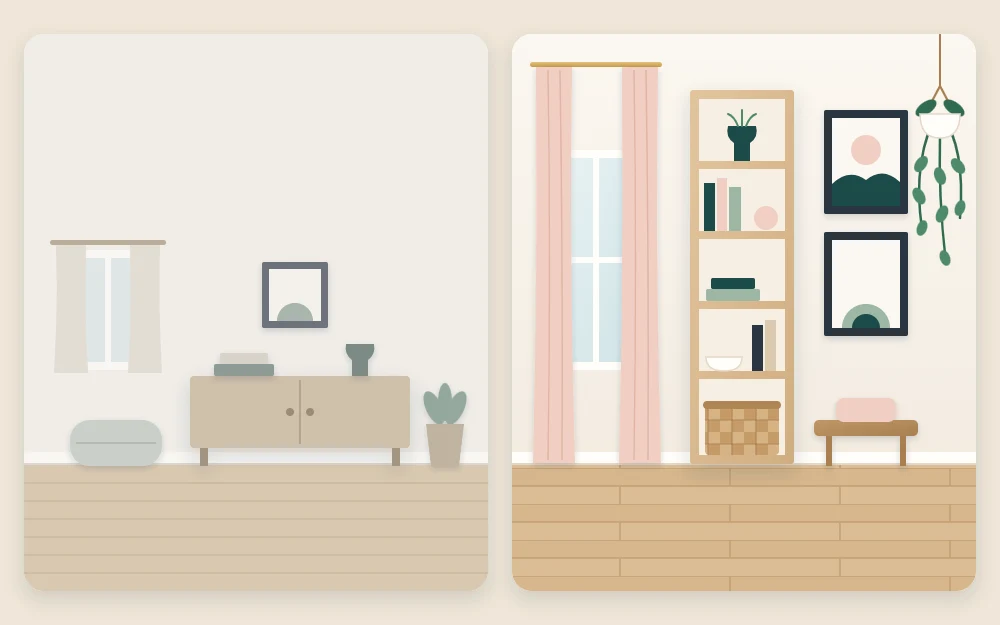
You do not need all of the ideas below. Two or three in one room is plenty.
Seven ways to lead the eye upward
1. Hang curtains high
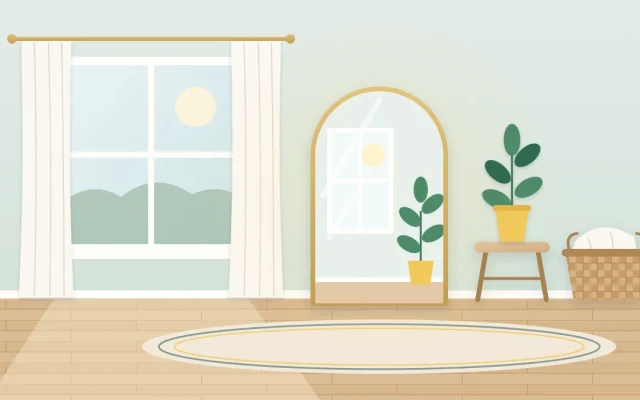
A rod placed close to the ceiling, rather than at the top of the window frame, turns the curtains into two floor-to-ceiling lines, the tallest decor in the room. The guide to curtain length and hanging height has the details.
2. Choose one tall, narrow bookcase
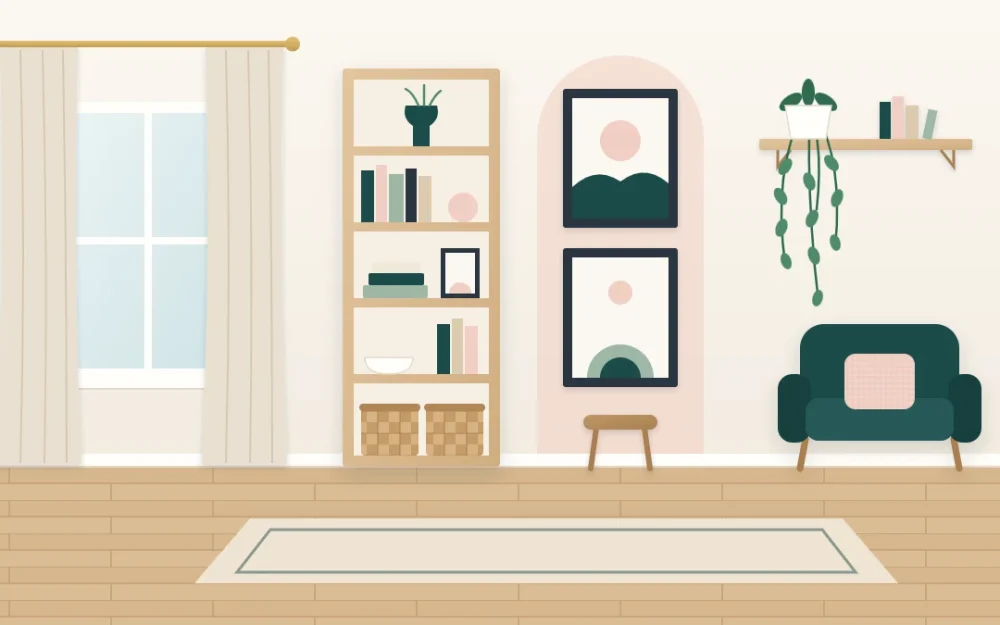
A slim, tall unit occupies about the floor area of a side table and gives you a full-height feature. Stand it toward a corner or the edge of a wall, and follow the maker’s guidance on securing it. Fill it loosely; these shelf styling steps show how to keep it from becoming a wall of stuff.
3. Stack art vertically
On a narrow wall between two doors or beside a window, two or three frames arranged one above the other suit the shape far better than a single small picture floating in the middle. Keep the gaps small and equal, roughly 2 to 3 in (5 to 8 cm) as a starting point, so the column reads as one tall piece.
4. Add a tall plant, or put one up high
A floor plant with an upright habit fills a corner from the ground up. A trailing plant does the reverse: set on a high shelf or the top of a bookcase, its stems draw a soft line downward. Either one adds an organic shape among all the straight edges.
5. Use a floor lamp with some height
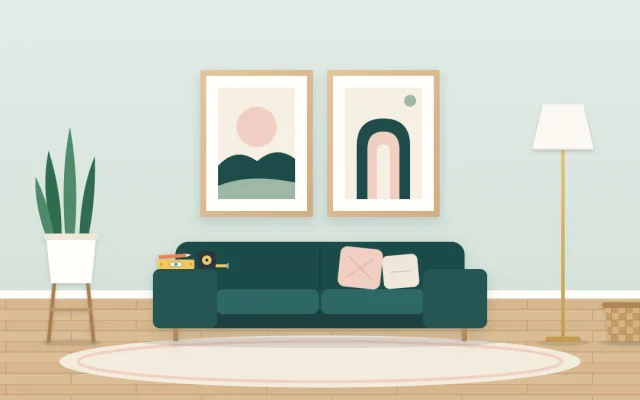
A tall plug-in floor lamp is a vertical line by day and, in the evening, puts a pool of light on the upper wall and ceiling. Lighting that upper zone is what stops a room from feeling like it ends at head height once the sun goes down.
6. Bring in vertical stripes or a painted panel
Stripes that run up and down, on curtains or a long textile hanging, quietly stress height. A painted panel does it more boldly: a single band of color behind a desk or bed, about the width of the furniture and running from floor to ceiling. Painting is a change to the apartment, so check your lease or ask first.
7. Style one shelf above a door or desk
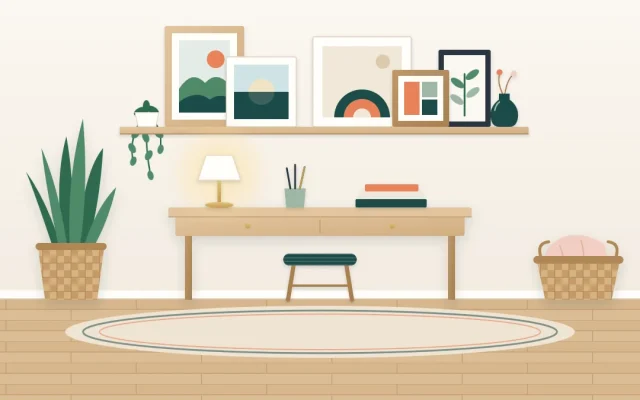
A single shelf above a doorway or high over a desk claims wall that would otherwise go unnoticed. Treat it as a display, not as overflow: a short row of books, one basket, a plant. Lightly dressed, it looks deliberate; loaded with boxes, it looms.
Height without putting anything on the wall
If fixings are not an option, several of these ideas still work. The bookcase, floor lamp and tall plant are all freestanding. A large artwork can lean on the floor or on top of a low cabinet. A full-length mirror leaned against the wall adds a tall, bright shape as well; where it should go depends on what it reflects, which is covered in the guide to placing mirrors.
Before you hang anything
Curtain rods, shelves, frames and hanging planters all need hardware chosen for your wall type and the weight involved, fitted according to the manufacturer’s instructions. If a shelf will carry books, or you are unsure about the wall, get help.
Balance tall elements with low ones
A room where everything is tall feels as awkward as one where everything is low. It turns top-heavy, as if the walls are leaning in. A few habits keep the balance:
- Pair tall with low. A tall bookcase beside a low armchair, or a column of art above a small stool, lets each emphasize the other.
- Keep visual weight low. Dark, solid and bulky things belong near the floor. Higher up, choose lighter colors, open shapes and smaller quantities.
- Limit tall pieces to one or two per wall. Leave some of the wall at a single, lower level so the tall elements stand out.
- Step the heights. Low, medium and tall pieces arranged like a skyline are easier on the eye than one tall item towering over a row of low ones.
- Mind the windows. Tall furniture set against the window edge blocks daylight; keep it on the walls farther from the glass.
Keep the upper zone calm
What sits above eye level is seen from a distance and from below, so detail is lost and clutter is not. Up there, fewer and larger works best: one basket instead of five small boxes, one big plant instead of a row of tiny pots. Colors close to the wall color recede and keep the ceiling line quiet.
Leave the top of a bookcase or wardrobe empty, or give it one object. Gaps matter as much as the pieces. The stretch of bare wall between a high shelf and the ceiling is part of what makes the shelf look placed, not squeezed in.
A quick check from the doorway
Stand at the door and let your eyes go soft. They should be pulled upward at one or two points, not everywhere. If nothing lifts your gaze, add one tall element. If you cannot find a calm patch of upper wall, take one away.
Tip
Start with the curtains. They are usually the tallest thing in the room already, and raising them changes how every other tall piece reads.
Frequently asked questions
How do I make a low ceiling feel higher with decor?
Add a few uninterrupted vertical lines and keep them simple. Curtains that start near the ceiling and reach the floor do the most, followed by a slim tall bookcase or a column of frames. Keep furniture fairly low and the upper walls light in color so the contrast between low and tall is clear.
Will tall furniture make a small room feel crowded?
It can if there is too much of it or it is deep and dark. One or two tall, narrow pieces placed toward corners and away from the windows usually help more than they hurt. Leave some wall at a lower level, and follow the maker's guidance on securing any tall freestanding unit.
What should go on a shelf above a door?
Very little. A short run of books, a single basket or a trailing plant is enough, because the shelf is seen from below and at a distance. Choose larger, lighter-looking items over many small ones, and pick fixings for your wall type and the weight the shelf will carry, following the manufacturer's instructions.