Small Dining Corner Ideas for an Apartment Without a Dining Room
Where to fit a table for two when there is no dining room, which table shape suits each spot, seating that tucks away, and how a lamp, one artwork or a rug makes the corner look intended.
At a glance
- Difficulty
- Easy
- Time
- About 1 to 2 hours to plan and set up
- Best for
- Apartments with no dining room and a free corner, window wall or counter end
- Renter note
- No fixings needed with a freestanding table and a floor lamp; a bar ledge or ceiling hook needs fixings chosen for your wall type, so ask first
What you need
- Tape measure
- Painter's tape
- Compact table
- Two seats that tuck in
- Plug-in lamp
- Low vase or tray
Eating on the sofa works until the day you want to sit across from someone, spread out a newspaper or serve a meal with more than one plate. You do not need a dining room for that. A small dining corner, roughly the footprint of an armchair and a side table, is enough for two people to eat properly, and it gives the apartment one more place that looks finished.
The whole decision comes down to three choices made in order: where the corner goes, which table shape fits that spot, and what kind of seating can tuck out of the way. After that, a lamp and a few details make it look like a deliberate part of the room.
Three places a table can hide
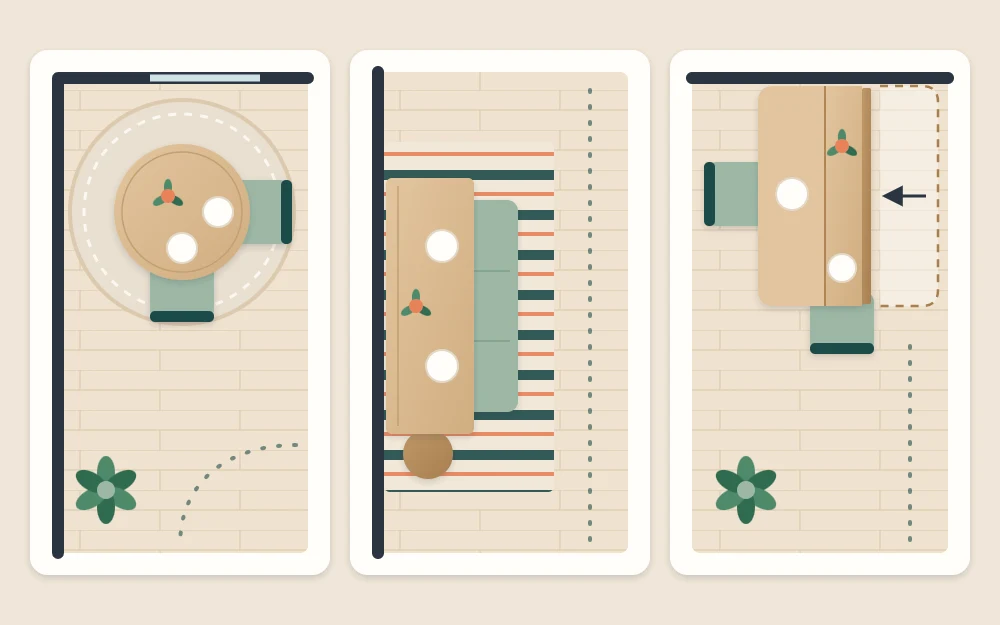
Walk the apartment looking for a patch of floor about 48 in (120 cm) square that nobody walks through. Three spots turn up again and again.
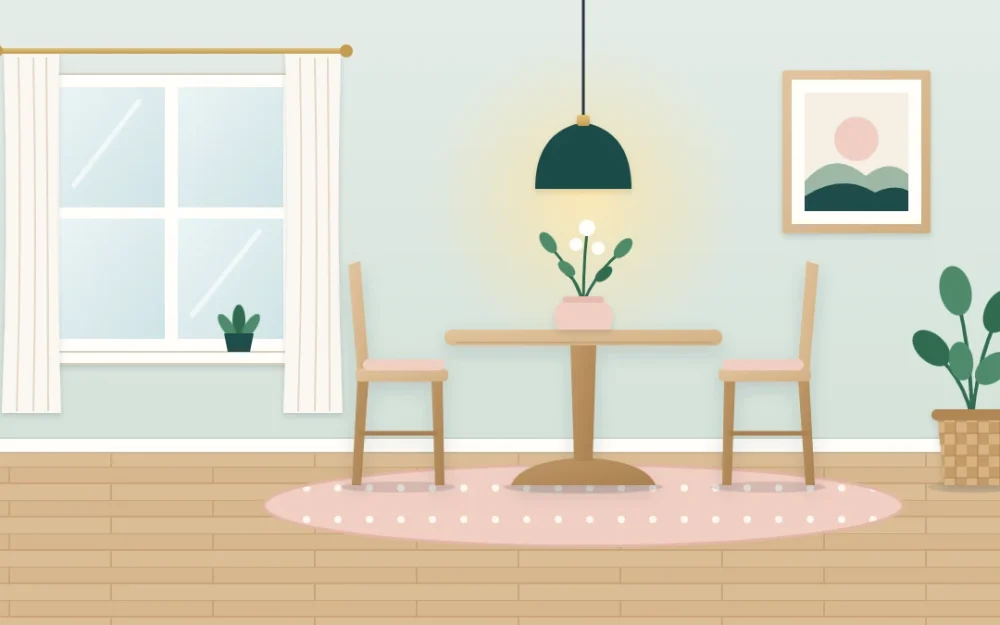
- By a window. Daylight and a view make even a tiny table feel generous. A table pushed against the wall under the sill uses space that furniture rarely fills.
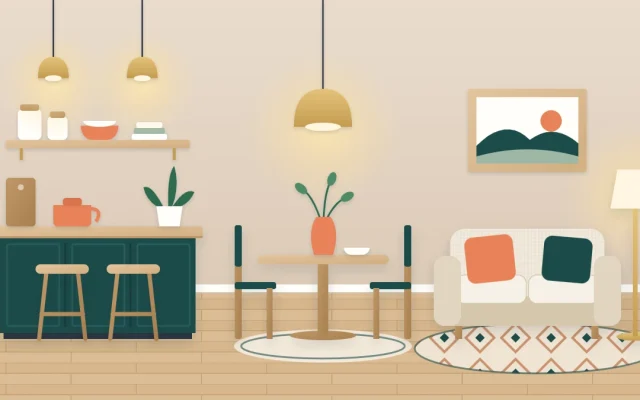
- At the end of the kitchen counter. Food has the shortest trip, and the table lines up with something that is already there, so it looks built in.
- Beside or behind the sofa. The dead corner next to the sofa arm, or the strip behind a sofa that floats in the room, will often take a narrow table and two stools.
Before you commit, check that the main walking path stays open with the chairs pulled out. The reasoning behind paths and clearances is in the guide to furniture placement in tight rooms.
Which table shape fits which spot
Shape matters more than size. The same floor area can feel roomy with one table and blocked with another.
| Table | Why it works | Best spot | Watch for |
|---|---|---|---|
| Round pedestal | No corners to walk around and no legs in the way of knees | A corner or a window bay | Wastes a little space when pushed against a wall |
| Drop-leaf | Sits slim against the wall, opens for meals or guests | A wall you need to walk past | Leg positions when the leaves are up |
| Narrow rectangle | Hugs a wall and pairs well with a bench | Under a window or behind a sofa | Depth: too shallow and plates feel cramped |
| Bar ledge | Uses a strip of wall and almost no floor | The end of the counter or a window wall | Needs stools at the right height and secure fixing |
As loose starting points: a round top about 30 to 36 in (75 to 90 cm) across seats two comfortably, and a rectangular top feels usable from about 24 in (60 cm) deep. Mark the outline on the floor with painter’s tape and set two chairs in place before buying anything.
Before you hang anything
A bar ledge or wall-fixed fold-down table has to carry plates, elbows and people leaning on it. Choose the hardware for your wall type and the weight involved, follow the manufacturer instructions, get help if you are unsure, and check your lease or ask before making changes. A freestanding narrow table gives a similar look with no fixings.
Seating that tucks in or doubles up
Chairs are what make a dining spot feel crowded, so choose seating that takes up little room when nobody is eating.
- A bench against the wall. It slides fully under the table, seats two on a short length, and with a couple of cushions it looks like a small banquette.
- Stools. Backless stools disappear under a table or ledge and serve as side tables or plant stands elsewhere.
- Good-looking folding chairs. Wood or metal folding chairs in a color from your palette can stay out as everyday seating, with spares stored flat for guests.
- Armless chairs with open backs. You see through them, so they add less visual weight than solid upholstered chairs.
Two different seat types, such as a bench on the wall side and two chairs facing it, often look more relaxed than a matched set, as long as they share a color or a material.
Mark the corner so it reads as a room
A table on its own can look parked. One or two of these markers turn it into a place.
A light above the table
Light centered over a table is the strongest signal that this is where meals happen. A pendant-style plug-in lamp, with its cord draped from a hook to the nearest outlet, gives the effect without touching the building’s wiring. Choose the hook for the wall type and the weight of the lamp, and follow the manufacturer instructions. A plug-in wall lamp with a swing arm, or a slim floor lamp arching over the table, does the same job with less fixing. Anything wired into the ceiling is a job for a licensed electrician and needs the landlord’s permission in a rental. For bulb warmth and shade choices, see the guide to layered lighting with plug-in lamps.
One artwork
A single framed print on the wall beside the table gives the corner a backdrop. Center it on the table, not on the wall, so the two read as a pair.
A small rug
A flat-woven rug under the table draws the edge of the corner on the floor. It should be large enough that chair legs stay on it when pulled out; if it cannot be, skip the rug and let the lamp and art do the marking. In a studio, this kind of floor and light marker is one part of a wider zoning plan for the whole room.
Style the table between meals
A bare table collects mail. A styled one stays clear. Keep it simple enough to move in one trip:
- A low vase with a few stems or a small plant, kept below eye level so you can talk across it.
- A tray or shallow bowl that holds salt, pepper and napkins as one object.
- A runner or two placemats left in place, in a color that repeats something from the sofa area.
Tip
Push the chairs fully in after every meal. It takes a few seconds and it is the single habit that keeps a small dining corner looking neat.
Frequently asked questions
What table shape is best for a small dining corner?
A round pedestal table suits a corner or window bay because there are no corners to walk around and no legs in the way. Against a wall you need to pass, a drop-leaf or narrow rectangular table usually fits better, since it sits flat to the wall between meals and opens when needed.
Where can I put a dining table in an apartment with no dining room?
Look for a patch of floor nobody walks through: beside a window, at the end of the kitchen counter, or next to or behind the sofa. Tape the table outline on the floor, set two chairs in place and walk past them before deciding, so the main path through the room stays clear.
How do I make a tiny dining area look intentional?
Give it a marker that belongs only to the table: a plug-in lamp centered above or beside it, a single framed print on the nearest wall, or a small flat rug underneath. Then keep one simple arrangement on the table, such as a low vase, so the surface does not become a drop zone.