Small Apartment Decorating Mistakes: 10 Common Problems and Easy Fixes
Ten common small apartment decorating mistakes, each with the sign to look for, why it happens and a simple fix, plus a quick doorway check to find the one affecting your room.
Sometimes a room is clean, the furniture is decent, and it still looks slightly wrong. You cannot point to the problem, so you buy another cushion, and nothing changes.
Most small apartment decorating mistakes come from sensible instincts: buy small things for a small room, keep the middle clear, hang pictures where there is space. The ten below are grouped by where they show up. Each has a quick sign to look for, the reason it happens and a fix you can try without starting over.
On the floor
1. The rug is too small
The sign: the rug sits alone under the coffee table, with every piece of seating standing off it.
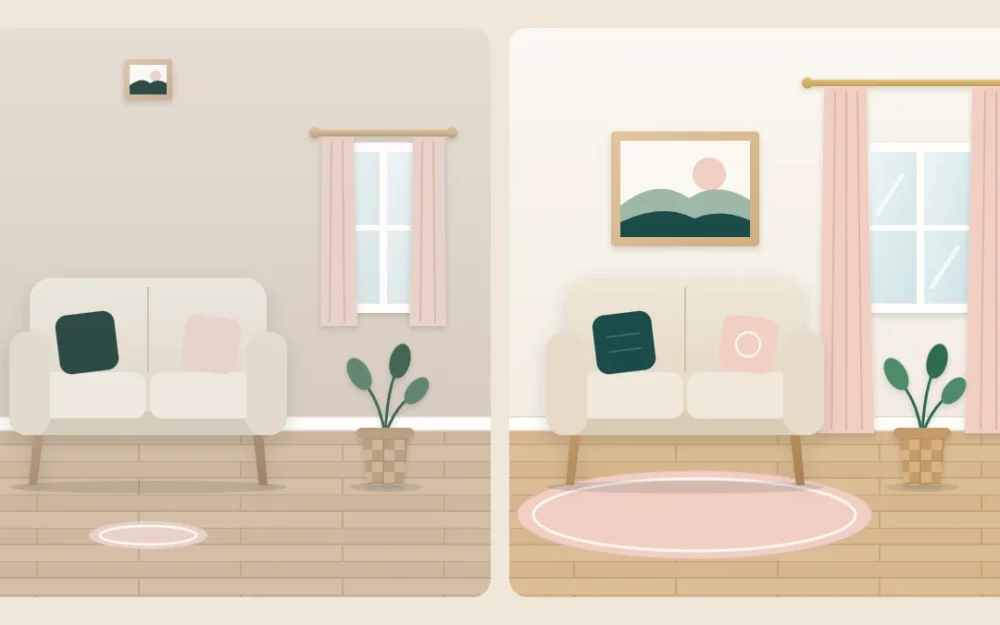
Why it happens: a smaller rug seems a safer fit for a smaller room. In practice it draws a little rectangle in the middle of the floor and makes everything around it look disconnected.
The fix: go up a size, so at least the front legs of the sofa and chairs rest on the rug. The guide to rug size for a small living room shows how to tape out the outline first.
2. Everything is pushed against the walls
The sign: an empty middle, and seats too far apart for easy conversation.
Why it happens: clearing the center feels like making space. It often produces a dance floor nobody uses.
The fix: pull the seating into a group around the rug. Even a few inches between the sofa and the wall, and a chair angled inward, changes how the room reads.
3. The furniture is out of scale
The sign: either one deep, bulky sofa swallows the room, or a set of tiny pieces makes it look like a dollhouse.
Why it happens: pieces come from a previous, larger home, or everything was bought small “to fit.”
The fix: aim for a few medium pieces with slim arms and visible legs. If the big sofa must stay, remove a side piece and let it be the only large item in the room.
At the window
4. Curtains hung low and narrow
The sign: the rod sits right on the window frame, and the panels cover part of the glass even when open.
Why it happens: the frame is the obvious place to put a rod, and many rentals come with one already there.
The fix: a rod placed higher and wider than the frame lets the fabric stack against the wall and the window read as larger. Heights, widths and no-drill options are covered in curtains for a small apartment.
5. Something is blocking the window
The sign: a tall chair back, a bookcase or a stack of boxes cuts across the glass.
Why it happens: the wall under and beside a window is often the last free spot.
The fix: keep the window zone for low pieces such as a bench, a side table or a plant, and move tall storage to the wall farthest from the light.
On the walls
6. Art hung too high
The sign: you tilt your head up to look at a picture, or a frame floats far above the sofa with a wide gap of bare wall between them.
Why it happens: standing on a chair with a frame in hand, higher feels right. Seen from the sofa, it is not.
The fix: lower it so the center sits near eye level, or so the frame relates clearly to the furniture below. The measurements are in how to arrange art on a small wall.
7. Ignoring the upper half of the room
The sign: everything of interest sits below shoulder height, and the top of the room is a blank band.
Why it happens: furniture is low, and it is natural to decorate only at the level you touch.
The fix: add one or two things that lead the eye up: a tall plant, a floor lamp, a slim bookcase, or two frames stacked one above the other.
Before you hang anything
Moving a rod or a picture means new fixings. Choose hardware for your wall type and the weight of the item, follow the manufacturer instructions, and check your lease or ask before making changes. Get help with heavy pieces if you are unsure.
In the light and color
8. One harsh ceiling light and nothing else
The sign: at night the room is bright in the middle, shadowy at the edges, and everyone looks tired.
Why it happens: the overhead light was there on moving day, and it works.
The fix: add two or three plug-in lamps at different heights, with warm bulbs, and use them in place of the overhead light in the evening. Changing the ceiling light itself involves the building’s wiring, which is a job for a licensed electrician and needs the landlord’s permission in a rental.
9. Too many colors
The sign: you can count seven or eight unrelated colors from the sofa.
Why it happens: things arrive one at a time, each chosen because it was nice on its own.
The fix: pick the one or two accents you like most and repeat them. Move the strays to another room, or cover them: a neutral cushion cover or a plain throw is a fast edit.
On the surfaces
10. Too many small accessories
The sign: every shelf and tabletop holds a row of little objects, and dusting takes a long time.
Why it happens: small things are easy to bring home, and each one seems harmless.
The fix: clear one surface completely, then put back only three things of different heights. Group the rest on a tray or store them and rotate. If the room still looks busy after that, the article on reducing visual clutter goes further into cords, containers and pattern.
A five-minute check from the doorway
To find which of the ten applies to you, stand at the entrance to the room and answer these in order.
- Is the window fully visible, with the glass clear?
- Does the seating share one rug and face something?
- Is there a clear route across the room?
- Is there something to look at above shoulder height, placed at a comfortable level?
- Can you name the palette in four or five colors?
- Is at least one surface nearly empty?
The first “no” is the place to start. Fix that one thing and look again before touching anything else; a single correction often makes two other problems disappear.
Frequently asked questions
Why does my small apartment look cluttered even when it is tidy?
Tidy and calm are different things. A room can be clean and still show too many colors, too many small objects or too many furniture legs and edges at once. Reducing the number of separate things in view, by grouping, repeating colors and clearing one surface, usually helps more than further tidying.
What is the most common decorating mistake in a small living room?
A rug that is too small is one of the easiest to spot, closely followed by seating pushed flat against every wall. Both leave the furniture looking unrelated. Bringing the seats together on a larger rug tends to make the biggest visible difference for the least effort.
Can I fix decorating mistakes without buying anything?
Often, yes. Regrouping the seating, lowering a picture, clearing the window, removing extra accessories and editing the colors on show all use what you already own. Try those first. Afterward it becomes clear whether one purchase, such as a larger rug or an extra lamp, is still worth making.